

AI CERTS
4 hours ago
Verification Standard Failure: Kamala Harris Deepfake Returns
Moreover, foreign influence networks continue amplifying identical clips across X, TikTok, and encrypted channels. Industry professionals need clear insights, not rumor or partisan noise. This article unpacks events, statistics, detection science, and practical safeguards. Therefore, readers will gain actionable strategies to navigate future synthetic media storms.
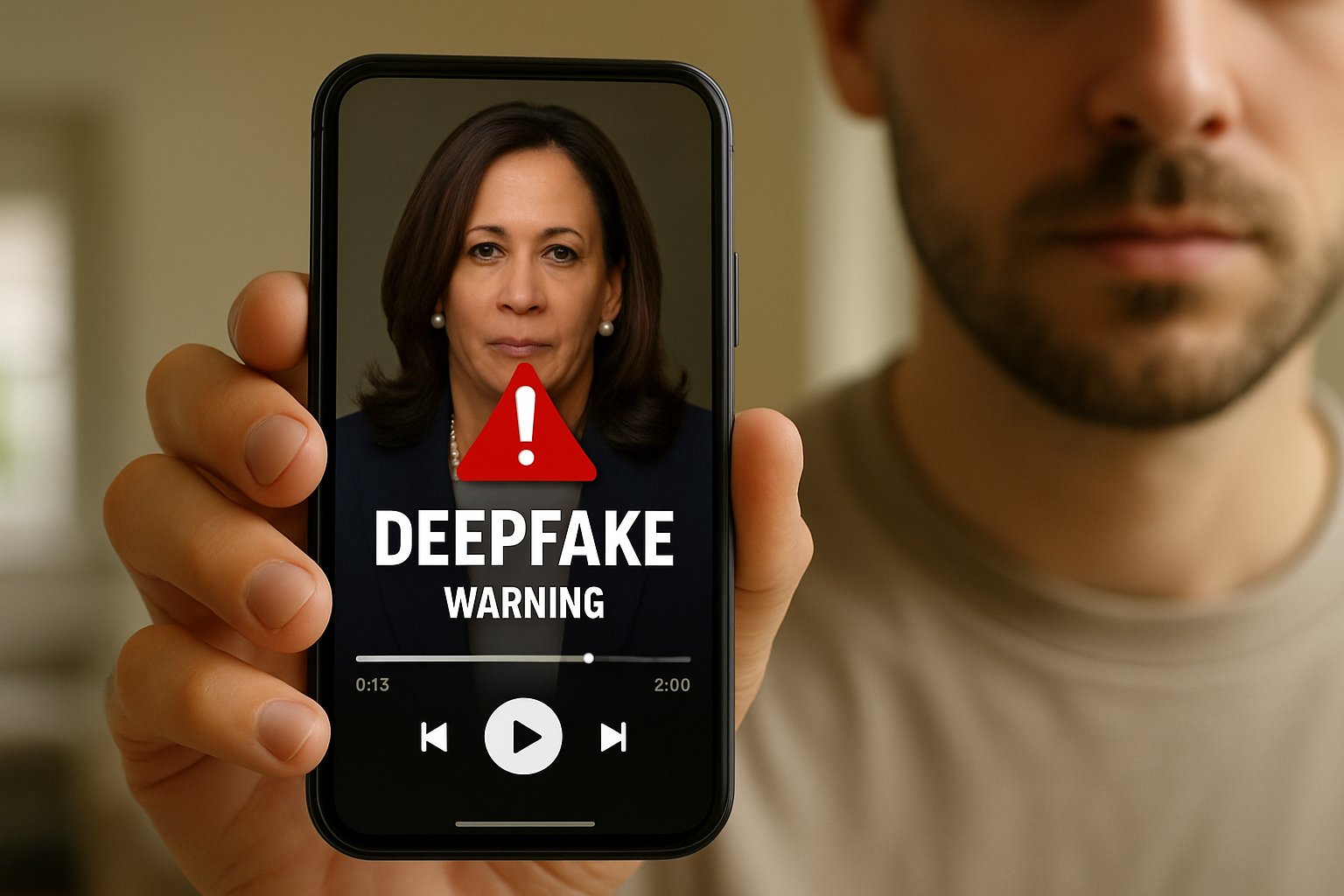
Deepfake Timeline Overview Now
Recorded Future traced the first Kamala Harris audio spoof back to fringe video boards in 2023. Subsequently, parody creators uploaded polished versions to YouTube, marking the opening salvo. Views remained modest until July 2024, when the clip reappeared on X without any disclaimer. Elon Musk retweeted that post, propelling reach beyond 100 million impressions within 24 hours. Consequently, mainstream outlets scrambled to verify authenticity. Fact-checkers quickly flagged a second Verification Standard Failure when platform labels lagged several days.
- Elon Musk repost logged roughly 31 million views during the first hour on X.
- Newsweek counted 2,300 TikTok uploads containing the doctored audio before removal.
- Recorded Future uncovered 300 fake media domains pushing the clip across Western audiences.
These numbers illustrate the velocity achievable through coordinated amplification. However, they only hint at the systemic weaknesses examined next.
Influence Campaigns Persisting Online
Foreign actors exploited the vacuum left by each Verification Standard Failure. Storm-1516, also branded CopyCop, created fresh sites replicating respectable news site designs. Moreover, the network seeded identical audio deepfakes through local Facebook groups and Telegram channels. Researchers observed Russian IP clusters coordinating overnight repost bursts to outrun platform moderators.
Meanwhile, domestic partisan accounts framed the clip as satire, insisting any disclaimer would chill speech. Musk liked several posts using that argument, reinforcing a permissive narrative on X. Consequently, cross-platform tracking became harder, because reposts frequently omitted the initial satire label. The rising fog benefited influence actors pursuing strategic deceptions ahead of the 2026 cycle.
Foreign and domestic amplification intersected, blurring accountability lines. Therefore, policy responses must address both vectors, as the next section reveals.
Platform Response And Loopholes
TikTok removed thousands of posts within 48 hours after public pressure intensified. In contrast, X applied a delayed disclaimer only after significant political backlash. Meta placed a warning label but allowed sharing inside private groups. Consequently, identical content hopscotched across ecosystems faster than moderators could react.
Experts call this repeated lapse another Verification Standard Failure, because policy wording outpaces enforcement muscle. Moreover, platform API changes have restricted independent auditors, hindering transparent accountability metrics. Researchers report that the platform no longer exposes reliable view statistics to outsiders. Nevertheless, leaked dashboards suggest Musk tracks reach internally with granular precision.
These enforcement inconsistencies undermine public trust. Therefore, legislators increasingly step in, as discussed below.
Legal Landscape Rapidly Shifts
California’s AB 2839 now prohibits materially deceptive election ads within 120 days of balloting. Governor Gavin Newsom cited the Harris audio as motivation during the signing ceremony. Meanwhile, more than 30 states have introduced similar deepfake bills. The FCC recently proposed a six-million-dollar fine for Biden robocall impersonation, setting a precedent.
Litigators foresee First Amendment tests challenging these statutes. However, courts may uphold narrowly tailored rules targeting demonstrable Verification Standard Failure harms. Policy analysts therefore recommend federal harmonization to reduce jurisdictional fragmentation. Additionally, advocacy groups push platforms to integrate robust prepublication review for paid political ads.
Legislatures are moving, yet practical enforcement mechanisms remain scarce. Consequently, technical countermeasures grow even more critical, as the following analysis shows.
Detection Science Arms Race
University teams published improved convolutional and spectral detectors during 2025. However, adversaries began layering background music, reducing acoustic artifacts. Microsoft MTAC researchers warn that each breakthrough triggers a counter breakthrough within months. Consequently, no detector presently provides flawless assurance against another Verification Standard Failure.
Practitioners therefore combine algorithmic scores with provenance checks and human review. Hany Farid suggests listening for missing inhalations when evaluating high-profile clips. Moreover, services like DeepFake-o-meter now offer API integrations for newsroom media workflows. Professionals can enhance detection expertise through the AI Cloud Architect™ certification.
Detection tools are improving, yet adversaries adapt fast. Therefore, enterprises must pair technology with strong governance, as the business section outlines.
Business Impact And Risks
Corporate brands increasingly feature political figures in media marketing collaborations. A sudden Verification Standard Failure could misquote an executive, crash share prices, and erode customer trust. Moreover, contractual indemnity clauses may not cover synthetic voice impersonation yet. Boardrooms consequently invest in deepfake monitoring dashboards and crisis communication drills.
- Establish rapid response teams with legal, media, and security leads.
- Embed automatic audio hashing to flag reused clips on internal content servers.
- Require supplier contracts to include explicit deepfake disclaimer obligations.
These controls limit exposure and demonstrate proactive governance to regulators. However, even strong programs falter without clear executive sponsorship, prompting the strategic guidance below.
Strategic Steps For Professionals
Security leaders should perform quarterly threat modeling that includes deepfake scenarios. Additionally, communications officers must prepare preapproved statements referencing potential Verification Standard Failure events. Legal teams can monitor state legislation dashboards to anticipate divergent disclosure rules. Meanwhile, product managers should integrate watermarking APIs into any generative content tools they release.
Furthermore, executives ought to pursue specialized learning pathways. Certification programs anchored in cloud AI can close knowledge gaps quickly. Consequently, many enroll in the AI Cloud Architect™ course for practical governance frameworks.
Small upfront investments build resilient cultures that withstand manipulated media shocks. Therefore, organizations should act before the next viral deepfake strikes.
Conclusion: Deepfake technology will continue advancing faster than governance mechanisms. Consequently, each future campaign may confront yet another Verification Standard Failure endangering democratic discourse. Platforms, lawmakers, and enterprises must therefore coordinate detection, disclosure, and rapid response. Moreover, embedding clear disclaimer frameworks across social networks and other media ecosystems will reduce confusion.
Professionals should upskill through certifications and scenario exercises before crises erupt. Therefore, pursuing the AI Cloud Architect™ program offers structured guidance against Verification Standard Failure. Act now, safeguard truth, and build resilience before the next synthetic voice goes viral.


