

AI CERTS
3 hours ago
Urgent Safety Protocol speeds India’s deepfake response
Cybercrime losses crossed ₹22,845.73 crore in 2024, heightening pressure for decisive action. Meanwhile, civil society debates the balance between safety and free expression. Platforms, lawyers, and victims agree on one point. Deepfakes travel faster than traditional abuse material. Therefore, speed now defines effective protection. However, the compressed timeline raises operational, legal, and ethical dilemmas for every stakeholder. These challenges form the core of this analysis.
Deepfake Crisis Escalates Fast
Deepfakes have matured from novelty to widespread weapon within three years. Moreover, improved diffusion models let low-skill actors generate convincing nude clones in minutes. Victims suffer reputational ruin, blackmail, and offline harassment.
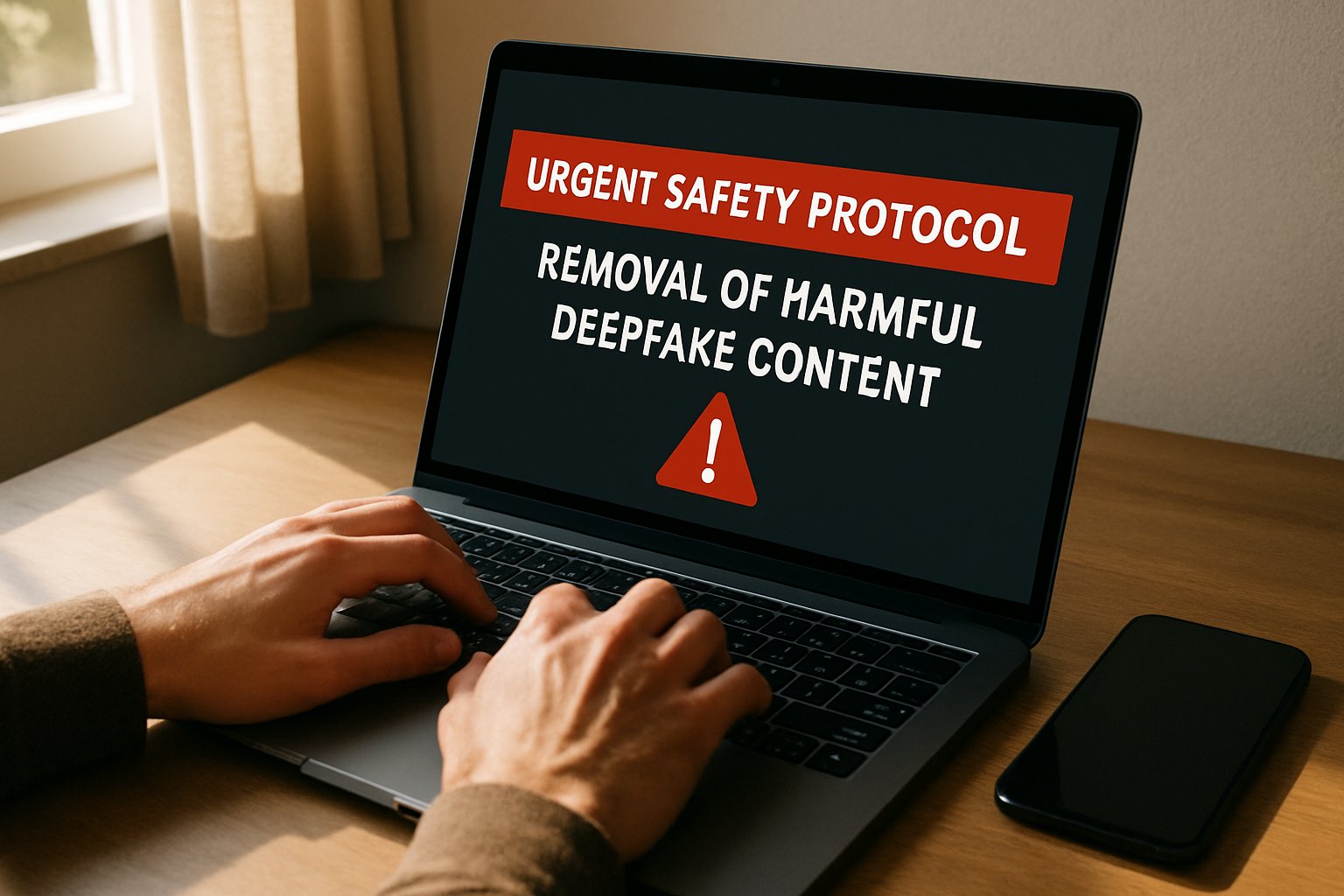
Government officials cite 2.2 million 2024 cybercrime complaints to justify the crackdown. Additionally, law enforcement reports show intimate imagery circulating across encrypted groups before takedown requests arrive. Consequently, each hour of delay multiplies harm and Trauma for targets. These realities pushed MeitY to accelerate redress. Such urgency underpins the second reference to the Urgent Safety Protocol within policy speeches.
Swift victim rescue depends on shrinking exposure time. Therefore, the rule's speed limits are not merely symbolic.
Key IT Rules Amendments
Rule 3(2)(b) now instructs Intermediaries to pull non-consensual intimate imagery within two hours of notice. In contrast, the previous version allowed 24 hours for removal. Similarly, Rule 3(1)(d) slashes court-order response from 36 to three hours.
Furthermore, fresh provisions define Synthetically Generated Information and impose provenance labels on permitted content. Significant Social Media Intermediaries must capture user declarations and run automated verification before publication. Consequently, default workflows require redesign.
MeitY argues that rapid removal preserves safe harbour, provided that platforms meet every Compliance checkpoint. Moreover, the ministry says the measures embody the Urgent Safety Protocol.
These statutory tweaks collectively tighten platform obligations. Subsequently, stakeholders must grasp granular deadlines and evidence requirements.
Every amended clause compresses decision windows. Next, we examine operational fallout for Intermediaries.
Operational Pressure On Intermediaries
Large platforms already run twenty-four-hour moderation centers. However, a two-hour ultimatum forces real-time escalation workflows. Automation alone cannot judge nuanced consent questions.
Therefore, companies must embed specialist teams with regional language skills and trauma-informed training. LiveMint quoted executives warning of spiraling staffing costs. Additionally, smaller Indian startups fear unsustainable overhead.
Software changes include priority queues, classifier integration, and immutable metadata stamping pipelines. Consequently, engineering roadmaps now list the Urgent Safety Protocol as a top system requirement. Cloud expenses will spike as video hashing indexes expand.
Meeting statutory clocks demands relentless vigilance. Moving forward, we explore the human Trauma behind the numbers.
Victim Trauma And Relief
Survivors describe relentless anxiety between report submission and content removal. Moreover, every share compounds humiliation and economic harm. The shorter window offers psychological first aid by limiting viral spread. Victims welcome the Urgent Safety Protocol for its promise of faster relief.
Clinical psychologists note that swift deletion may reduce intrusive memories and self-harm risk. Nevertheless, they caution that deepfakes can resurface on mirror sites within hours. Consequently, continuous monitoring remains essential.
Civil society groups want a victim liaison cell inside every platform. Additionally, they recommend a public transparency dashboard tracking removal latency and appeal outcomes.
Faster takedowns ease emotional wounds but cannot erase the internet's memory. The next part weighs legal rights against Compliance burdens.
Balancing Rights And Compliance
Law firms praise the intent yet doubt proportionality. Bhatt & Joshi Associates warn that two-hour deadlines threaten due process. Executives acknowledge the Urgent Safety Protocol but question resource allocations. In contrast, MeitY insists the safeguards preserve constitutional scruples.
Furthermore, the appeal mechanism remains unchanged, leaving users to petition grievance officers after removal. Platforms may therefore over-erase borderline satire to avoid penalties.
Internet Freedom Foundation urges calibrated standards to align free speech, privacy, and platform Compliance. Moreover, commentators predict High Court challenges invoking the Shreya Singhal precedent.
Legal friction seems inevitable as cases accumulate. Subsequently, attention shifts to technical execution pathways.
Technical Roadmap For Platforms
Chief technology officers must transform content pipelines before the February 2027 audit season. Consequently, many now map architecture around the Urgent Safety Protocol to prove real-time readiness.
- Deploy NCII and deepfake classifiers with sub-second inference latency.
- Embed permanent provenance metadata unalterable by downstream tools.
- Create two-hour escalation dashboards for authorised officer notices.
- Archive takedown logs for seven years to satisfy IT Rules investigations.
Additionally, Significant Social Media Intermediaries must integrate user declaration prompts and cross-check hashes. Therefore, onboarding flows will change for 460 million Indian account holders.
Professionals can enhance expertise through the AI Customer Service™ certification.
These engineering mandates define the concrete core of Compliance. Next, we consider looming litigation and geopolitical fallout.
Future Litigation And Outlook
Legal petitions are expected within months of enforcement. Moreover, petitioners will test whether the Urgent Safety Protocol justifies curtailed notice periods. Judges must interpret the amended IT Rules alongside constitutional speech protections.
Internationally, regulators in Australia and Brazil monitor India's model for possible replication. Consequently, measurable success of the Urgent Safety Protocol could influence foreign draft bills.
Stakeholders should watch three leading indicators:
- Platform compliance rates published in transparency reports.
- Median takedown latency measured by civil society audits.
- Volume of constitutional writs challenging the Urgent Safety Protocol.
Furthermore, MeitY plans annual reviews to refine obligations based on technical feasibility. Nevertheless, the ministry has warned that non-conformity will end safe harbour for platforms.
These future tests will determine the rule's staying power. The concluding section revisits overarching lessons and next steps.
India has chosen speed over caution in its fight against malicious deepfakes. Consequently, the two-hour deadline redefines global norms for platform accountability. Victims gain rapid relief, yet platforms shoulder heavier Compliance burdens and potential over-removal risks. Courts, civil society, and engineers must collaborate to calibrate safeguards during implementation.
Nevertheless, the Urgent Safety Protocol offers a clear north star for industry action. Professionals who master moderation tooling and policy nuances will unlock new career opportunities. Consider deepening expertise through the AI Customer Service™ certification and allied resources. Stay informed, stay prepared, and help build a safer digital public square.


