Palantir Faces NHS Contract Backlash Amid Data Deal Turmoil
Nevertheless, privacy advocates warn that public confidence remains fragile. Consequently, ministers are now studying a break clause that could end the seven-year agreement early. This article unpacks the forces fuelling the NHS Contract Backlash and evaluates potential outcomes for patients and taxpayers. Furthermore, we examine performance claims, adoption metrics, and legal challenges surrounding the controversial deployment. In contrast, supporters highlight projected savings of £150m by 2030. Subsequently, any parliamentary decision will test the government's appetite for high-profile data innovation.
Wider NHS Contract Backlash
The current dispute erupted after executives labelled some critics “ideologically motivated” on 31 March 2026. Subsequently, newspapers revealed ministers had quietly sought advice on activating the break clause. Therefore, the NHS Contract Backlash gained fresh momentum within Westminster and beyond. Campaign alliances spanning doctors, unions, and legal groups intensified pressure through petitions and court filings. Meanwhile, health officials faced repeated questions about procurement transparency and value for money. These developments illustrate how trust concerns, rather than pure technology, drive the continuing NHS Contract Backlash.
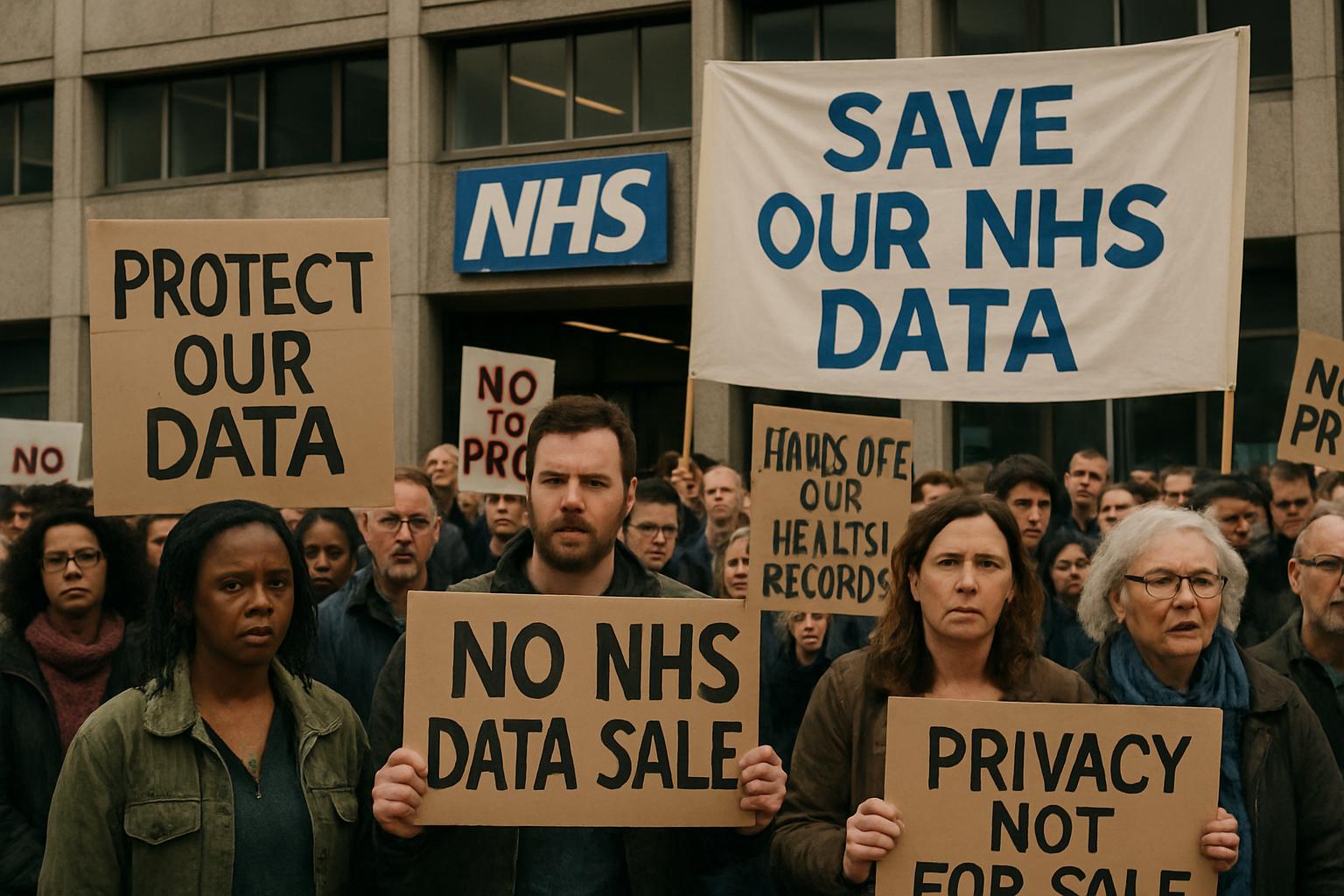
Concerned citizens protest NHS's data partnership amid rising contract backlash.
In short, public sentiment remains volatile.
Consequently, the company has mounted a vigorous defence.
Palantir Firmly Defends Performance
Palantir executives cite tangible operational wins since the platform's 2023 deployment. For example, company statements claim 99,000 extra operations and 15% faster discharge processes. Moreover, projections forecast £150m in savings by 2030, or £5 returned for every pound spent. In contrast, health officials have not yet released independent audits verifying those numbers. Nevertheless, the supplier argues delays now risk eroding cumulative benefits for frontline staff.
99,000 additional operations delivered, according to vendor data.
15% reduction in discharge delays, pending external confirmation.
£150m projected savings by 2030, assuming full deployment.
The data appears promising yet remains largely unverified.
Subsequently, critics continue to raise ethical flags.
Campaigners Voice Ethical Concerns
Civil-society groups argue the supplier's defence contracts contradict NHS care values. Furthermore, privacy advocates highlight potential access under the US CLOUD Act. Doctors warn patients might withhold information if association with intelligence tools persists. Meanwhile, legal teams from Foxglove and Good Law Project pursue judicial reviews on procurement grounds. Consequently, sustained pressure keeps the NHS Contract Backlash in news cycles.
Opponents focus on trust and legality.
Therefore, political leaders face urgent choices.
Ministers Weigh Break Clause
Internal briefings leaked in February warned reputation issues could hinder platform deployment. Consequently, adoption goals slipped from 240 trusts to only 151 by early spring. Moreover, some ministers now examine cost-benefit scenarios for terminating the deal before 2027. Any decision would trigger compensation negotiations and fresh procurement cycles. Nevertheless, supporters caution that disruption could stall cancer pathway analytics during winter pressures.
Political arithmetic behind the NHS Contract Backlash remains finely balanced.
Meanwhile, usage data paints a mixed picture.
Adoption Metrics Still Lagging
Latest figures show 151 organisations using the system, far below year-end targets. Additionally, training bottlenecks and integration hurdles slow deployment in rural trusts. Health officials admit reputation worries sometimes deter local boards from signing data-sharing agreements. Consequently, forecast savings rely on accelerated deployment during the next 18 months.
Slow uptake threatens projected ROI.
In contrast, privacy guarantees could reassure holdouts.
Privacy Safeguards Under Scrutiny
NHS England states data remains under local control inside segregated “federated” environments. However, campaigners argue tooling ownership still creates functional lock-in. Moreover, privacy groups demand guarantees against secondary algorithm training. Health officials insist contractual clauses forbid data exploitation beyond direct care analytics. Professionals can enhance their expertise with the AI+ Healthcare Specialist™ certification to navigate such governance frameworks. Subsequently, improved literacy could strengthen oversight across future procurements.
Robust privacy policy could ease the NHS Contract Backlash.
Therefore, strategic implications extend far beyond healthcare.
Strategic Stakes For Government
Palantir also holds a £240.6m defence analytics contract with the Ministry of Defence. Consequently, any termination could reverberate across national security collaborations. Moreover, global investors watch whether Britain remains open to high-growth data firms. In contrast, a decisive stance might signal tougher ethical lines on sensitive citizen data. Nevertheless, ministers must weigh perceived sovereignty gains against immediate operational disruptions.
Strategic calculations will shape the NHS Contract Backlash precedent.
Consequently, the saga enters a decisive phase.
Ultimately, the NHS Contract Backlash crystallises a wider debate over innovation, ethics, and trust. Furthermore, adoption lags, data anxieties, and political headwinds combine to threaten projected savings. Meanwhile, supplier advocates emphasise unverified yet impressive performance metrics. Consequently, ministers must decide whether to double down on the current deployment or reset the strategy.
Nevertheless, informed scrutiny rather than pure ideology should guide the outcome. Professionals seeking deeper insight can strengthen oversight skills through the AI+ Healthcare Specialist™ certification. Therefore, take the next step, expand your governance expertise, and help shape responsible data transformation.