

AI CERTs
3 hours ago
How Data Centers Reshape the Power Grid With Nuclear Restarts
An unprecedented wave of data-center growth is rewriting America’s resource playbook.
Consequently, utilities and policymakers face mounting pressure to deliver round-the-clock electricity that remains carbon free.
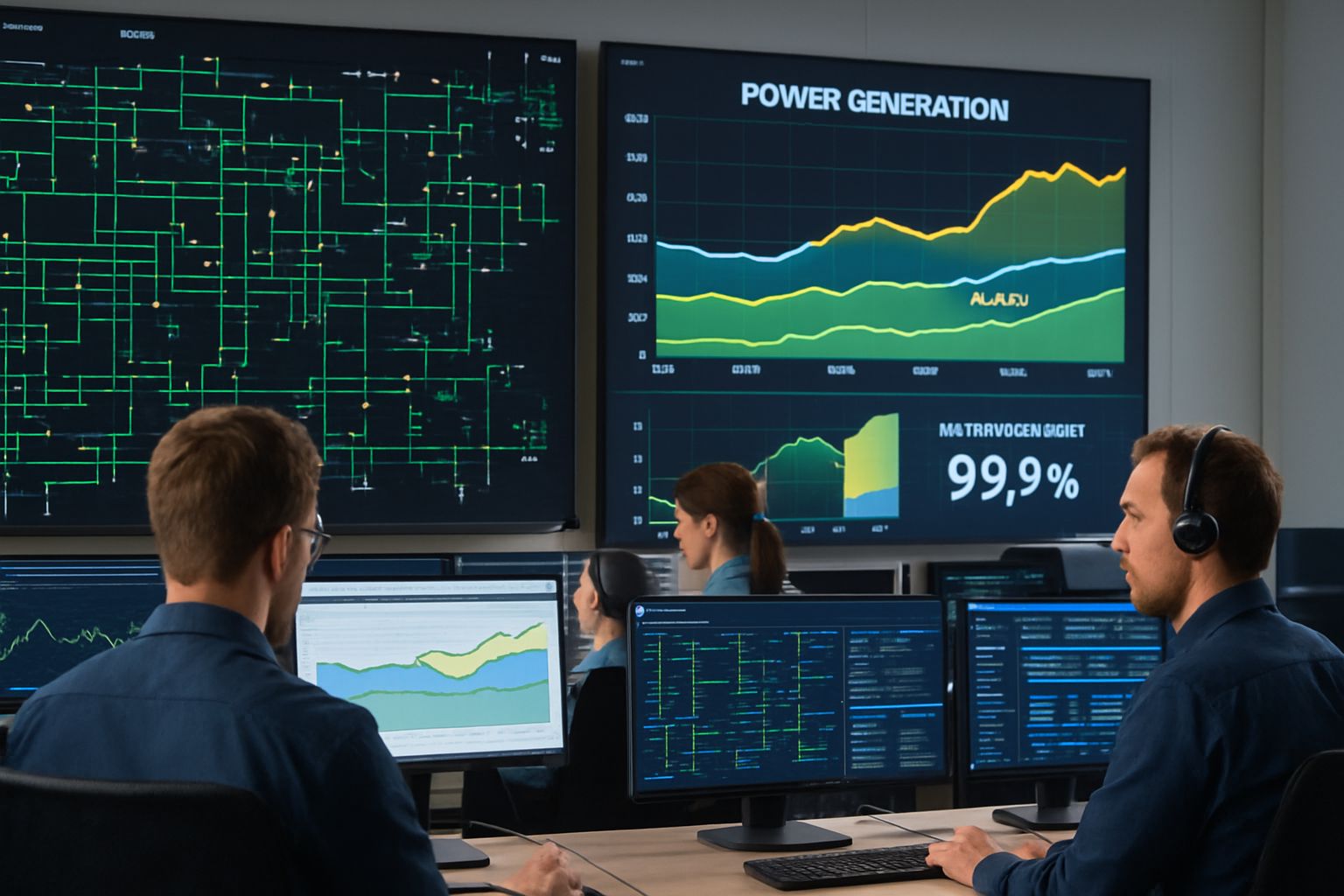
Nuclear restarts now attract big-tech capital because turbines can spin long before new plants are built.
Microsoft and Google have already inked multidecade power purchase agreements to revive dormant reactors.
These deals could reshape the Power Grid by injecting steady megawatts into congested regional markets.
However, critics warn that taxpayers may carry hidden costs if budgets slip again.
Meanwhile, regulators must confirm each facility can operate safely after years in dormancy.
This article explores the drivers, hurdles, and implications of bringing shut reactors back online.
It examines economics, policy levers, environmental debates, and the technologies that manage thermal and Infrastructure demands.
Furthermore, it assesses how these restarts influence corporate Sustainability objectives and national decarbonization goals.
Professionals can also expand knowledge through the forthcoming certification link included later.
Data Centers Drive Demand
Global data-center electricity use reached roughly 415 TWh in 2024, according to the IEA.
Moreover, analysts expect consumption to double by 2030 as artificial intelligence workloads proliferate.
The United States hosts nearly half of current capacity, with clusters emerging near affordable renewables.
However, those wind and solar farms produce intermittently, forcing operators to secure firm supply elsewhere.
Baseload nuclear offers consistent output, aligning neatly with hyperscaler service level agreements.
Consequently, Microsoft signed a 20-year agreement with Constellation to support the Crane Clean Center restart.
Google followed with a 25-year deal that underwrites NextEra’s Duane Arnold project in Iowa.
Both corporations cite 24/7 carbon-free objectives and grid reliability as decisive factors.
Their purchasing power signals a structural shift in how the Power Grid finances large generators.
These commitments also influence regional planning studies filed with PJM and MISO.
Demand from digital platforms therefore accelerates nuclear reconsideration.
The next section unpacks the mechanics that make restarts financially attractive.
Nuclear Restarts Gain Traction
Restarting a shut reactor differs fundamentally from constructing a new build.
Operators retain existing containment, switchyard, and Cooling water systems, cutting lead times.
Holtec’s Palisades blueprint shows how owners leverage legacy Infrastructure while replacing aging components.
Additionally, the Department of Energy’s Loan Programs Office provided a $1.52 billion guarantee, lowering financing costs.
Inflation Reduction Act credits 45Y and 48E further enhance cash flows through transferable tax incentives.
Constellation estimates the Crane restart will require about $1.6 billion yet still undercuts greenfield nuclear expenses.
Meanwhile, NextEra reports strong customer interest, citing Duane Arnold’s 600 MW capacity and favorable grid location.
These precedents encourage other licensees to revisit mothballed assets.
Consequently, industry groups forecast multiple restart petitions within five years.
Nevertheless, every proposal must convince the Nuclear Regulatory Commission that safety margins remain intact.
Financial carrots therefore propel the movement, but compliance hurdles loom large.
Economics behind plant revival appear next.
Economics Behind Plant Revival
Project economics hinge on capital requirements, credit structures, and long-term revenue certainty.
Besides federal loans, multidecade PPAs anchor debt packages by guaranteeing predictable cash inflows.
Moreover, hyperscalers often accept indexed pricing, shielding owners from wholesale volatility on the Power Grid.
Investors love that risk profile, especially when tax credits deliver additional upside.
In contrast, new nuclear projects lack operating histories, making banks demand higher equity contributions.
A restart can deploy existing turbines and condenser towers, slashing fabrication and logistics spending.
IEA data suggest restarts achieve levelized costs near $45 per megawatt-hour before incentives.
That figure competes favorably with gas peakers once carbon abatement costs are considered.
The headline numbers illustrate the gap:
- Crane Clean Center: 835 MW, $1.6 billion estimated restart cost
- Palisades Station: 800 MW, $1.52 billion DOE-backed loan guarantee
- Duane Arnold: 600 MW, 2029 target commercial operation date
Consequently, analysts predict robust internal rates of return if schedules remain intact.
Economic levers therefore align, yet regulatory scrutiny can still derail timelines.
Regulatory pathways and associated risks follow.
Regulatory Pathways And Risks
The NRC created restart panels to coordinate extensive licensing, inspection, and environmental review activities.
Applicants must answer requests for additional information covering seismic, security, and Cooling performance questions.
Furthermore, each plant must rebuild operational staffing and training programs to meet current standards.
Public meetings allow local stakeholders to contest safety claims, sometimes extending review calendars.
In contrast, political support has accelerated Treasury rule-making for tax credit eligibility.
Nevertheless, no permanently retired U.S. reactor has yet completed this journey back to service.
Consequently, every schedule remains provisional until the final fuel-load authorization arrives.
Unexpected component degradation could force expensive replacements, eroding financial margins.
Critics highlight Three Mile Island’s troubled history as evidence caution is warranted.
Regulatory uncertainty therefore persists, creating investor risk premiums.
Environmental and social debates emerge next.
Environmental And Social Debates
Supporters argue restarts advance national Sustainability goals by delivering zero-carbon baseload electricity.
Moreover, steady output eases integration of variable renewables, strengthening overall Power Grid stability.
Opponents counter that subsidies divert funds from cheaper solar and storage projects.
They also question whether corporate PPAs merely reassign attributes while the physical electrons mix regionally.
Environmental groups raise familiar waste concerns and call for stricter groundwater monitoring near spent-fuel pools.
Meanwhile, local residents anticipate job creation but worry about property values and emergency preparedness.
Transparency around PPA pricing and federal loan terms could alleviate some suspicion.
Consequently, companies now publish annual Sustainability reports that describe 24/7 matching methodologies in detail.
Debate remains heated, yet momentum continues because corporate demand outpaces objections.
Cooling infrastructure challenges illustrate remaining engineering hurdles.
Cooling Infrastructure Key Challenges
Restarting reactors requires refurbishing condensers, pumps, and intake structures often idle for years.
Additionally, stricter thermal discharge permits sometimes necessitate upgraded Cooling towers or closed-loop systems.
Those retrofits must integrate with existing Infrastructure without disrupting surrounding wetlands or community water rights.
Power-hungry AI servers also generate significant onsite heat, demanding sophisticated data-hall Cooling coordination.
Therefore, planners model combined thermal loads to avoid unforeseen temperature spikes.
Engineering solutions exist, yet careful sequencing remains vital for licensing approval.
Broader strategic implications now come into focus.
Implications For Energy Strategies
Corporations view nuclear restarts as hedge instruments against volatile renewable generation profiles.
Moreover, regional transmission operators welcome dispatchable capacity that mitigates congestion on the Power Grid.
State policymakers see restarts as economic development tools capable of retaining union labor.
However, future wholesale price curves remain uncertain, especially if large demand response programs mature.
Treasury guidance on 45Y implementation may also shift valuations if credit adders change.
Consequently, investors monitor congressional elections for possible revisions to IRA provisions.
Professionals can enhance expertise through the AI Security Level-1 certification.
Such credentials support informed project oversight across Infrastructure, Finance, and cybersecurity domains.
Additionally, they help organizations meet rigorous Sustainability reporting requirements.
Looking ahead, combined nuclear and renewable portfolios could dominate hyperscaler Energy procurement.
Strategic diversification therefore guides corporate roadmaps amid accelerating digital growth.
The concluding section synthesizes principal lessons.
Conclusion And Outlook
Data-center expansion shows no sign of slowing.
Consequently, nuclear restarts present a pragmatic pathway to bolster the Power Grid without fresh carbon emissions.
Federal incentives, corporate PPAs, and existing Infrastructure combine to create compelling economic cases.
However, rigorous oversight remains essential to protect taxpayers and uphold public confidence.
Transparent reporting can strengthen Sustainability claims while fostering community trust.
Meanwhile, improved Cooling solutions and cyber-secure controls will safeguard plant performance.
Professionals should track regulatory dockets, loan disbursements, and market signals across the Power Grid for insights.
Ultimately, strategic collaboration can deliver reliable Energy and unlock a cleaner Power Grid by decade’s end.
Nevertheless, the Power Grid will require ongoing investment to integrate rising AI demand effectively.
Stay informed and certify your skills to shape tomorrow’s resilient Power Grid.


