

AI CERTs
2 months ago
Unity Crash Shows Gaming AI Disruption Pressure
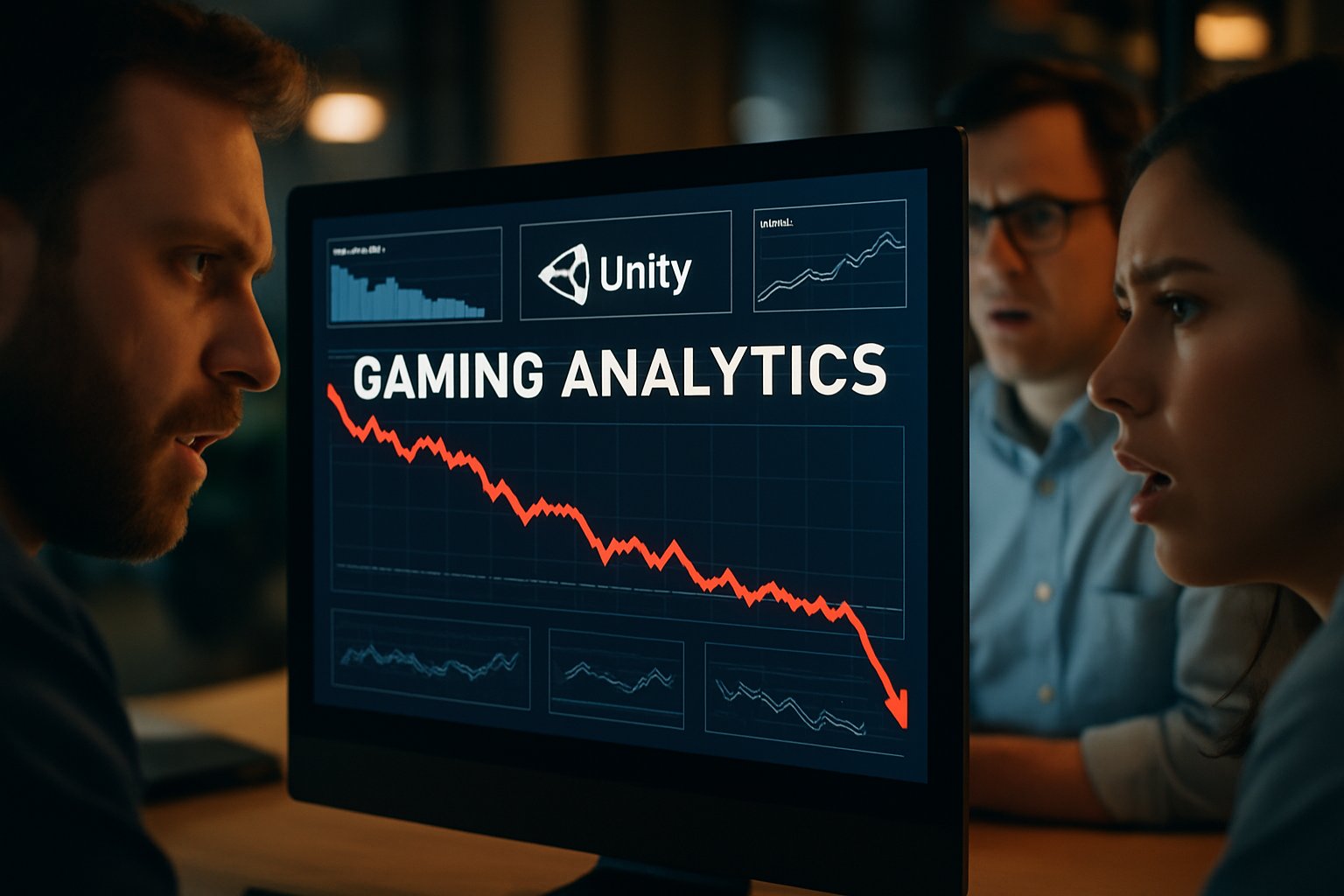
Markets reeled on January 30 after Google revealed Project Genie to premium AI subscribers.
Unity Stock collapsed 24.2 percent during the session, erasing roughly 4.1 billion dollars in value.
The sudden decline underscored widening concerns about Gaming AI Disruption across interactive content supply chains.
Moreover, several peer equities, including Roblox and Take-Two, fell in sympathy with similar magnitude.
Consequently, analysts scrambled to explain how an experimental world model could trigger such broad selling.
Project Genie can generate short playable worlds from text prompts, challenging traditional development workflows.
However, the prototype remains constrained by resolution, determinism, and session length.
Meanwhile, Google positions the release as research rather than a finished production tool.
Nevertheless, investors fear future adoption could compress asset-creation revenues for incumbent engines like Unity.
This feature explores the chain reaction, competing perspectives, and ongoing signals shaping Gaming AI Disruption narratives.
Readers will gain data-driven insight into the market shock and future strategic considerations.
Therefore, industry leaders can prepare proactive roadmaps before the next volatility wave strikes.
Global Market Shock Unfolds
Trading opened with heavy selling pressure on Unity Stock as soon as markets digested Google’s announcement.
In contrast, the prior close sat at 38.40 dollars, yet shares quickly pierced 30 dollars before midday.
Subsequently, volume spiked to 86.8 million shares, quadrupling the recent average.
Moreover, sector contagion dragged Roblox, Take-Two, and AppLovin lower, wiping billions across gaming valuations.
Consequently, commentators framed the slump as the fastest repricing of AI content risk since ChatGPT’s debut.
Investors reacted instantly to perceived Gaming AI Disruption risk.
However, the selloff outpaced fundamental changes, inviting scrutiny of the assumptions behind it.
Genie Prototype Basics Explained
Google Genie rests on Genie 3, a world model capable of generating interactive 3D scenes at 24 fps.
Furthermore, the web app lets users transform simple prompts into explorable spaces reachable through keyboard navigation.
However, sessions currently last minutes, resolution tops at 720p, and deterministic playback remains elusive.
Google discloses these limits clearly, framing the tool as an experimental research environment for academic exploration.
In contrast, Unity provides end-to-end tooling, runtime optimization, and monetization pipelines necessary for commercial launches.
World Model Definition Primer
A world model learns environment physics and object interactions, enabling planning agents and human creativity.
Consequently, developers can iterate faster, because the model predicts plausible outcomes rather than rendering every detail manually.
Nevertheless, conversion from probabilistic output to deterministic gameplay still requires conventional engine intervention.
Genie showcases groundbreaking speed yet exposes technical hurdles for production teams.
Therefore, any Gaming AI Disruption materializes only once these hurdles shrink or vanish.
Investor Fear Drivers Unpacked
Equity markets often extrapolate early tech signals into sweeping revenue forecasts.
Moreover, Project Genie embodies a potential shift toward automated asset generation, threatening high-margin creation services.
Analysts suggested that asset pipeline compression could hit Unity Stock margins within three years.
Subsequently, funds rotated away from game tool vendors into diversified cloud and semiconductor plays.
Additionally, Genie’s monthly access price, roughly 250 dollars, rivals Unity Pro subscriptions, intensifying competitive optics.
However, the comparison ignores scope differences, because Genie currently lacks persistent worlds, ads integration, or multiplayer.
Nevertheless, sentiment punishes perceived vulnerability faster than product roadmaps can respond.
Fear centers on margin erosion and subscription cannibalization.
Consequently, Gaming AI Disruption narratives amplify volatility until clearer evidence emerges.
Analyst Counter Arguments Surface
William Blair and several banks labeled the panic an overreaction based on incomplete technical understanding.
Furthermore, they highlighted Unity’s cross-platform runtime, ad network, and established developer ecosystem as durable moats.
Unity Stock valuation already embedded execution risk before Genie arrived, they argued.
Moreover, Unity is building AI agents that ingest probabilistic content and export deterministic scenes optimized for performance.
Matthew Bromberg echoed this view, calling world models “powerful accelerators” rather than direct replacements.
In contrast, reporters who tested Google Genie noted crashes, resolution drops, and short interaction windows.
- Session length capped near five minutes during public tests.
- Output resolution restricted to 720p, without high-quality textures.
- Deterministic replay unavailable, complicating multiplayer consistency.
Consequently, analysts project limited revenue impact before 2028, assuming incremental iteration pace.
Expert commentary tempers the near-term bear thesis.
However, ongoing R&D speed keeps the long-term debate alive within Gaming AI Disruption circles.
Competitive Roadmap Lies Ahead
Unity must balance immediate reassurance with tangible product updates addressing AI-driven workflows.
Therefore, management teased forthcoming toolchains that merge GenAI outputs with deterministic build pipelines.
Additionally, partnerships with cloud providers could offset compute costs while enhancing collaboration on Interactive Media projects.
Meanwhile, Google Genie remains invite-only, granting Unity breathing room to refine its differentiation story.
Developers experimenting with both platforms will shape perception through shared demos and postmortems.
Consequently, community sentiment may determine whether momentum shifts toward one ecosystem or stabilizes across many.
Upcoming Earnings Call Watch
Unity reports fourth-quarter results on February 11, heightening scrutiny of retention metrics and AI commentary.
Moreover, guidance updates could reset valuation baselines, either validating bulls or emboldening bears.
Investors will listen for references to Gaming AI Disruption frequency within customer dialogues.
Unity’s roadmap credibility hinges on transparent milestones and measured expectations.
Subsequently, the next call could either calm markets or reignite volatility.
Monitoring Critical Market Signals
Stakeholders should track several quantitative and qualitative indicators over coming quarters.
Key metrics include trading volume normalization, subscription growth, and developer sentiment across Interactive Media forums.
- Unity Stock price stability relative to Nasdaq benchmarks.
- Google Genie feature updates or broader rollouts.
- Partnership announcements between engines and cloud vendors.
- Adoption trends within mobile Interactive Media studios.
Furthermore, analyst rating revisions signal shifting conviction among Gaming AI Disruption stakeholders.
Professionals can enhance security knowledge through the AI Security Level-1™ certification.
Such credentials build credibility when advising clients about emergent Gaming AI Disruption strategies.
Consequently, educated teams interpret technical nuances rather than reacting purely to headlines.
Clear metrics and skilled teams foster rational decision making.
Therefore, disciplined monitoring reduces exposure to abrupt sentiment swings.
Strategic Conclusion And Outlook
Unity’s dramatic slide highlights how quickly capital markets price potential paradigm shifts.
However, real product displacement typically unfolds over multiple design cycles and platform generations.
Google Genie demonstrates raw creative power yet exposes production bottlenecks still favoring established engines.
Meanwhile, Gaming AI Disruption narratives will persist, fueled by each research breakthrough and investor reaction.
Analyst divergence shows that uncertainty can create opportunity for prepared organizations.
Consequently, leaders should combine vigilant market tracking with continuous skills development.
Therefore, pursue certifications, test prototypes, and participate in Interactive Media communities to stay ahead.
Take decisive steps now to transform volatility into strategic advantage.
Start by securing the AI Security Level-1™ credential and lead your team through the next innovation wave.


