

AI CERTS
4 months ago
Agent Identity: Securing Autonomous AI Agents
Consequently, a new vendor wave has emerged. A specialist startup leads the pack with an identity and policy plane designed for agents. Meanwhile, incumbents like CyberArk and Okta retrofit platforms to govern delegated actions. MarketsandMarkets projects identity spending to hit $34.3 billion by 2029, and analysts expect agent-specific slices to swell fastest.
This report traces the rise of Agent Identity and examines market forces. It also evaluates technical foundations and offers pragmatic guidance for security architects. Moreover, regulatory teams warn that uncontrolled prompts may breach data residency mandates, increasing pressure for verifiable machine credentials.
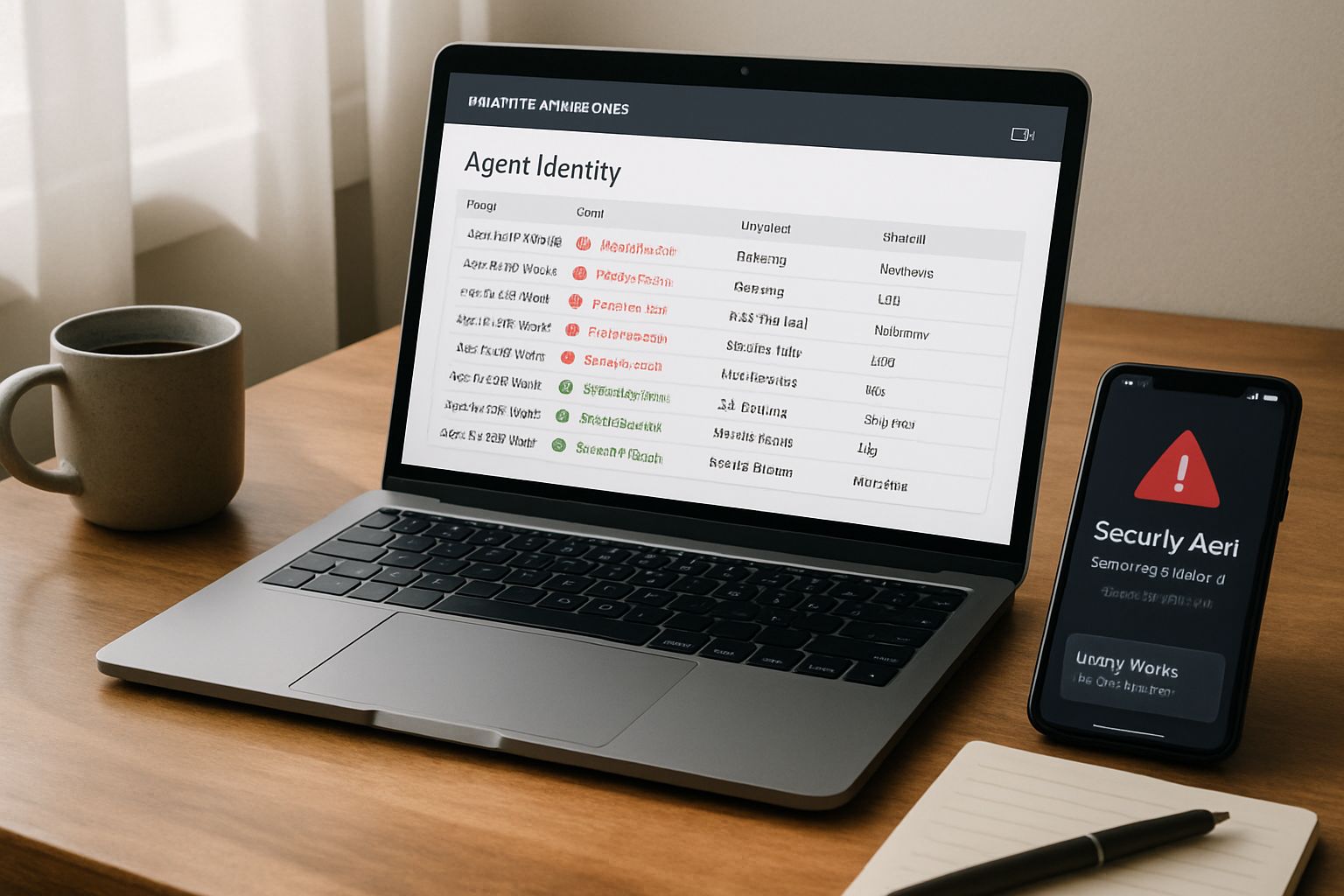
Rise Of Agent Identity
Initially, enterprises tried mapping agents to existing human accounts. Nevertheless, audit teams quickly lost clarity when thousands of ephemeral bots appeared. Keycard founder Ian Livingstone argued in 2025 that agents deserve first-class credentials, not borrowed secrets. Consequently, the idea of Agent Identity gained traction across conferences and architecture reviews.
Under the model, every agent receives an identifier, ownership metadata, and an expiring token scoped to a single task. Moreover, delegation chains record who instructed the agent, creating a cryptographic audit trail. Therefore, security teams can revoke faulty agents instantly without harming others.
These principles restore visibility and reduce standing privileges. However, practical hurdles still slow broad adoption. Consequently, the next section explores the forces shaping adoption.
Market Drivers And Gaps
Market momentum comes from both risk and reward. CyberArk research shows 76 percent of firms plan to run agents within three years. Yet fewer than 10 percent feel confident about dynamic authorization. Moreover, CrowdStrike’s $740 million SGNL purchase signals heavy investment in machine credential tooling.
- IAM market forecast: $34.3 billion by 2029, CAGR 8.4%.
- A leading startup secured $38 million for token innovation.
- Incumbent launches: CyberArk, Okta, Akeyless entered production in 2025.
- MCP vulnerabilities sparked urgent patch cycles across Cloud Security pipelines.
Nevertheless, analysts warn of lingering gaps. In contrast to human IAM, many platforms still lack discovery for orphaned agents or support for zero-trust policy enforcement. Enterprises therefore juggle fragmented dashboards, increasing integration cost.
Demand accelerates thanks to automation pressure and stark breach headlines. However, fragmented tooling complicates execution. Subsequently, startups like Keycard attempt to bridge that divide.
Startup Spotlight On Keycard
Keycard emerged from stealth in late 2025 with $38 million combined seed and Series A funding. Furthermore, the company acquired Runebook to deepen SDK integration with Anthropic’s MCP.
It positions itself as an identity and Access plane purpose-built for agents. Ian Livingstone states that borrowed credentials mask accountability. Therefore, Keycard issues ephemeral, identity-bound tokens containing task scope, owner reference, and expiry metadata. Additionally, the platform enforces policy at each MCP call, limiting data exposure per action.
Integration choices also matter. The platform supports OIDC federation, Cloud Security posture feeds, and behavioral analytics to flag anomalies. Professionals can enhance their expertise with the AI Security Level 1 certification, ensuring teams interpret token traces correctly.
Keycard prioritizes least-privilege Agent Identity design and developer convenience. Consequently, early adopters report faster audits and fewer credential leaks. Nevertheless, incumbents are racing to defend territory.
Incumbents Join The Race
CyberArk, Okta, and Akeyless repackaged existing secrets vaults and privilege brokers for autonomous agents. Meanwhile, CyberArk’s Secure AI Agents product offers discovery, lifecycle governance, and policy automation.
Okta’s Cross App Access fabric links agent tokens to user context, while Akeyless builds secrets distribution for containerized workloads. Moreover, Token Security and Incode target compliance controls around biometric ownership binding.
In contrast, these vendors retain large customer bases and channel muscle. Consequently, they can embed Agent Identity features inside established Cloud Security bundles, narrowing the startup’s differentiation.
Competitive pressure intensifies across identity portfolios. However, shared standards will determine long-term interoperability. Therefore, technical protocols deserve close inspection.
Technical Foundations And Standards
The Model Context Protocol now acts as a universal connector between agents and external services. Consequently, identity vendors hook controls into MCP servers and clients.
Academic teams propose Agentic JWTs that embed delegation proofs. Additionally, decentralized identity schemes leverage zero-knowledge attestations to tie actions to user intent. Agent Identity concepts thus extend into cryptography research.
Interoperability, however, depends on widespread library adoption. Moreover, recent MCP Git server flaws exposed injection paths until patches shipped across Cloud Security pipelines.
Standards progress reduces vendor lock-in and audit gaps. Nevertheless, unresolved protocol nuances still pose migration risks. Consequently, risk management deserves focused attention.
Risk Landscape And Mitigations
Prompt injections, stolen tokens, and over-permissioned policies dominate threat models. Michael Sentonas warned that prompts resemble malware in their potential reach.
Therefore, robust monitoring becomes essential. The platform streams behavioral telemetry to SIEM tools, while CyberArk enforces anomaly-based privilege revocation. Moreover, continuous scans of Access logs help uncover compromise within seconds.
Security leaders also recommend layered controls: discovery, vetted libraries, signed artifacts, and dependency pinning. Consequently, Cloud Security and identity teams must collaborate on shared runbooks.
However, process alone cannot replace strong cryptographic foundations. Additional research into verifiable delegation will strengthen Agent Identity implementations over time.
Threat vectors evolve as quickly as agents themselves. Nevertheless, layered defense and rapid revocation limit blast radius. With risks contextualized, leaders can plan strategy.
Conclusion And Next Steps
Agent Identity now sits at the heart of safe agent deployment. Market data, vendor moves, and research advances confirm the trend. Furthermore, Keycard’s design, incumbent responses, and MCP standards illustrate both momentum and complexity. Cloud Security integration remains vital, while disciplined Access governance ensures least-privilege posture.
Therefore, security architects should pilot time-boxed tokens, refine delegation proofs, and evaluate platform fit. Professionals seeking deeper skills can pursue the linked certification to strengthen defense strategies and champion modern Agent Identity programs. Consequently, organizations that act early will unlock automation safely and gain a durable competitive edge.
Disclaimer: Some content may be AI-generated or assisted and is provided ‘as is’ for informational purposes only, without warranties of accuracy or completeness, and does not imply endorsement or affiliation.


