

AI CERTs
5 months ago
LinkedIn Unveils Verified AI Skills Certificates
Hiring managers increasingly demand proof of practical AI fluency. However, many résumés still rely on unverified claims. LinkedIn now proposes a data-driven alternative.
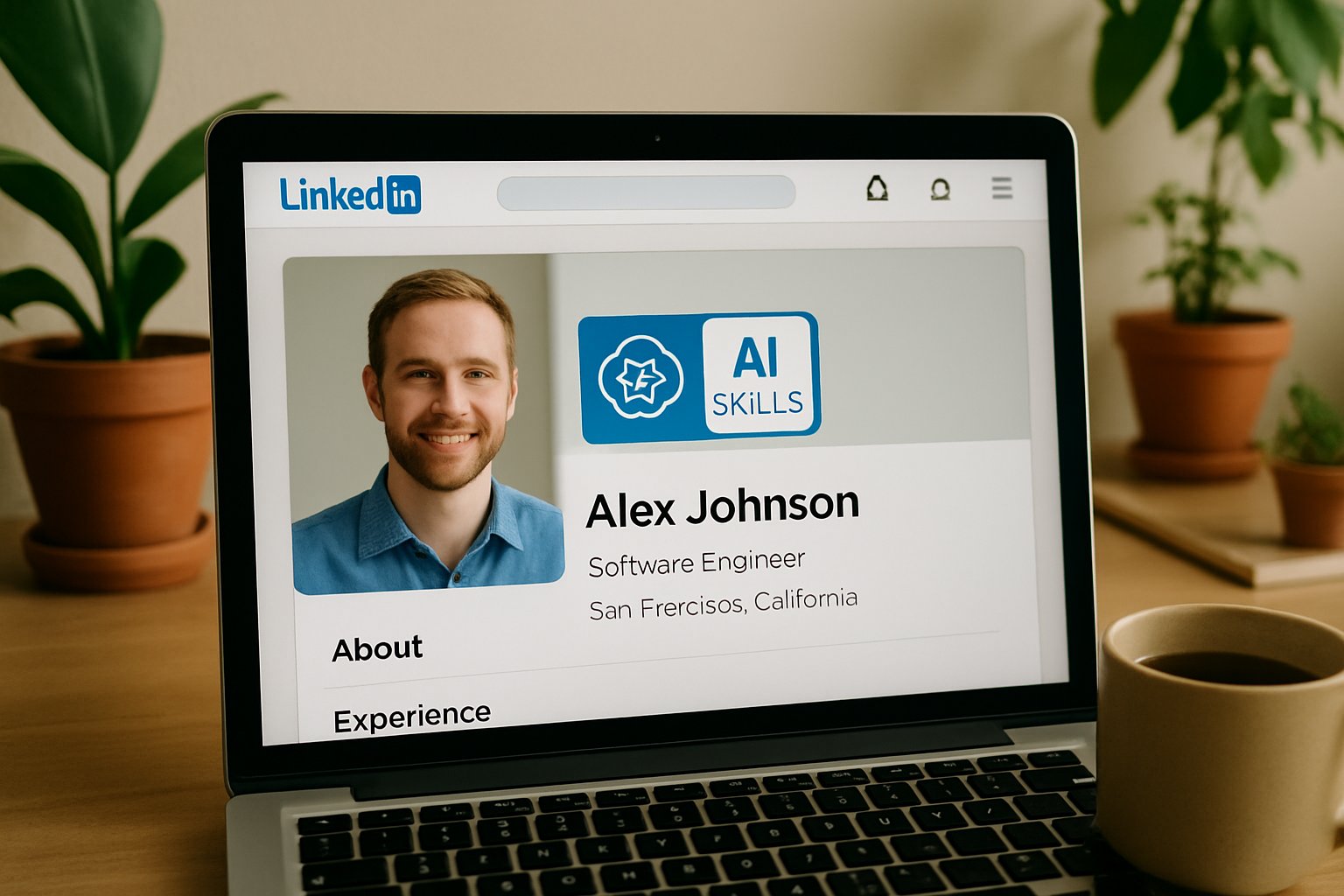
On 26 January 2026, the platform launched verified AI skills certificates with four launch partners. Consequently, professionals can showcase tool mastery based on real product usage rather than self-reported quizzes. The move arrives amid surging demand for generative AI talent across industries. Indeed’s latest tracker shows 4.2% of US postings now mention AI.
Moreover, LinkedIn reports weekly English AI job searches topping 25 million. These converging signals underline the market’s appetite for validated competence. The following analysis unpacks how verified skills work, their benefits, and the unresolved concerns.
Why Verified Skills Matter
Digital hiring relies on trust signals. Previously, endorsements and self-authored summaries dominated profiles. Nevertheless, recruiters struggled to gauge day-to-day tool proficiency.
Verified skills introduce an objective yardstick tied to product telemetry. Partners, including Descript and Replit, examine usage frequency, feature breadth, and output quality. Subsequently, a dynamic certificate reflecting the current proficiency tier appears on the member profile.
Therefore, recruiters see evidence that candidates actually perform tasks, not merely claim familiarity. LinkedIn positions the badge as a complement to degrees, micro-credentials, and on-the-job Education initiatives.
Consequently, the feature may shift early screening toward proven skill execution. Verified skills provide a measurable trust layer for AI tool fluency. Meanwhile, understanding the underlying mechanics reveals how the certificates stay current.
Program Mechanics Explained Clearly
Each partner maintains its own assessment rubric. For example, Descript tracks multitrack edits, transcription accuracy, and publish rates. Once thresholds are met, users receive an in-app notification.
After consent, OAuth links the partner and the member profile. Only the badge name and proficiency level travel to LinkedIn, according to Descript’s help guide.
Moreover, badges update automatically as the user’s activity evolves. Gamma, GitHub, and Zapier will join the ecosystem in coming months, extending sector coverage.
Importantly, partners promise no raw project data or private content leaves their platform. Dynamic data piping keeps certificates fresh without extra user effort. Consequently, the next question concerns tangible benefits for candidates worldwide.
Benefits For Global Jobseekers
Employers increasingly filter applicants via automated talent tools. Therefore, any verifiable boost within those algorithms improves visibility.
LinkedIn states that U.S. professionals now use AI tools twice as often as eighteen months ago. Displaying a badge helps candidates signal up-to-date competency between formal Education cycles.
Additionally, certificates cater to self-taught practitioners who learned through projects rather than classrooms.
- Lower friction, no separate exam fees
- Automatic updates reflecting ongoing mastery
- Visibility in recruiter search filters
- Alignment with fast-moving AI release cycles
Consequently, badges could reduce signal gaps that disadvantage nontraditional talent. Verified certificates expand access to recognized credentials across diverse Education backgrounds. However, recruiters and vendors also face new responsibilities.
Recruiter And Vendor Impact
Recruiters may soon integrate certificate presence into LinkedIn screening dashboards. Engadget reports that hiring teams already view the badges as evidence of daily tool use.
Nevertheless, experts warn against checklist hiring. Competence still requires contextual problem solving and soft skills.
Vendors receive a retention incentive. Users who risk losing a badge are likely to reopen the product regularly.
Moreover, partner branding gains prime real estate on millions of profiles, creating indirect marketing value. Recruiters gain sharper filters while vendors gain engagement loops. In contrast, several risks demand close scrutiny before adoption.
Risks And Open Questions
Transparency tops the list of concerns. LinkedIn and partners have not published full scoring rubrics.
Consequently, outsiders cannot yet audit how quantity versus quality influences proficiency levels.
Privacy also matters. Although Descript shares only badge metadata, advocates still ask what other vendors might collect.
Credential inflation poses another challenge. Employers may overtrust badges and skip deeper code or security evaluations.
- Unknown anti-gaming safeguards
- Regional access disparities
- Potential bias toward English interface data
These issues highlight the need for independent oversight and clearer Education around badge interpretation. Future improvements and third-party audits could mitigate many objections.
Upskilling Paths And Certifications
Professionals eager to deepen expertise have multiple avenues.
LinkedIn Learning already hosts hundreds of generative AI micro-courses. Furthermore, external credentials complement the new badges.
Professionals can enhance expertise through the AI Executive Essentials™ certification.
Such courses provide structured Education while the partner badges capture applied practice. Consequently, combining both signals creates a layered profile showcasing knowledge and execution.
Balanced upskilling strategies blend theoretical study with continuous real-world validation. The final section considers long-term market implications.
Future Outlook Summary Findings
Industry watchers expect rapid partner expansion during 2026.
Additionally, recruiters will likely pressure LinkedIn to integrate badge filters into Talent Solutions dashboards.
Meanwhile, regulators may push for transparency standards similar to skills-based hiring guidelines.
Tool vendors must maintain fair metrics and respect member privacy to retain trust.
Therefore, success depends on collaboration between the platform, partners, and academic institutions. Consequently, the program’s evolution will hinge on transparency, adoption, and sustained value for all stakeholders.
Verified AI skills certificates mark a significant shift in digital credentialing. They merge partner telemetry with LinkedIn’s vast professional graph to build stronger hiring signals. However, transparency, privacy, and balanced evaluation remain critical. Employers should treat badges as one data point, supported by portfolio reviews and interviews. Meanwhile, professionals can combine the badges with structured courses and independent projects to stand out. Consequently, early adopters will likely benefit as the ecosystem matures and recruiter tools catch up. Explore advanced learning paths today and secure your edge through verified credentials and industry-recognized certifications. Visit the certification page to begin your journey toward demonstrable AI leadership.
Disclaimer: Some content may be AI-generated or assisted and is provided ‘as is’ for informational purposes only, without warranties of accuracy or completeness, and does not imply endorsement or affiliation.


