

AI CERTS
2 months ago
Microsoft Security Breach: BitLocker Escrow Alarms Industry
The warrant gave the FBI lawful access, yet critics claim the process exposes a hidden architectural weakness. Meanwhile, Microsoft's response emphasized compliance with valid orders and the convenience that cloud escrow delivers customers.
However, researchers warn this usability feature can evolve into a serious Vulnerability when state actors demand decryption. The unfolding situation constitutes the most vivid Microsoft Security Breach example since the 2023 Exchange email incidents. Moreover, the public disclosure forces enterprises to reassess their threat models regarding provider-held keys and legal process. This article examines the timeline, legal mechanics, expert perspectives, and mitigations essential for technical leadership. Readers will gain actionable guidance and discover professional upskilling options, including an AI security certification.
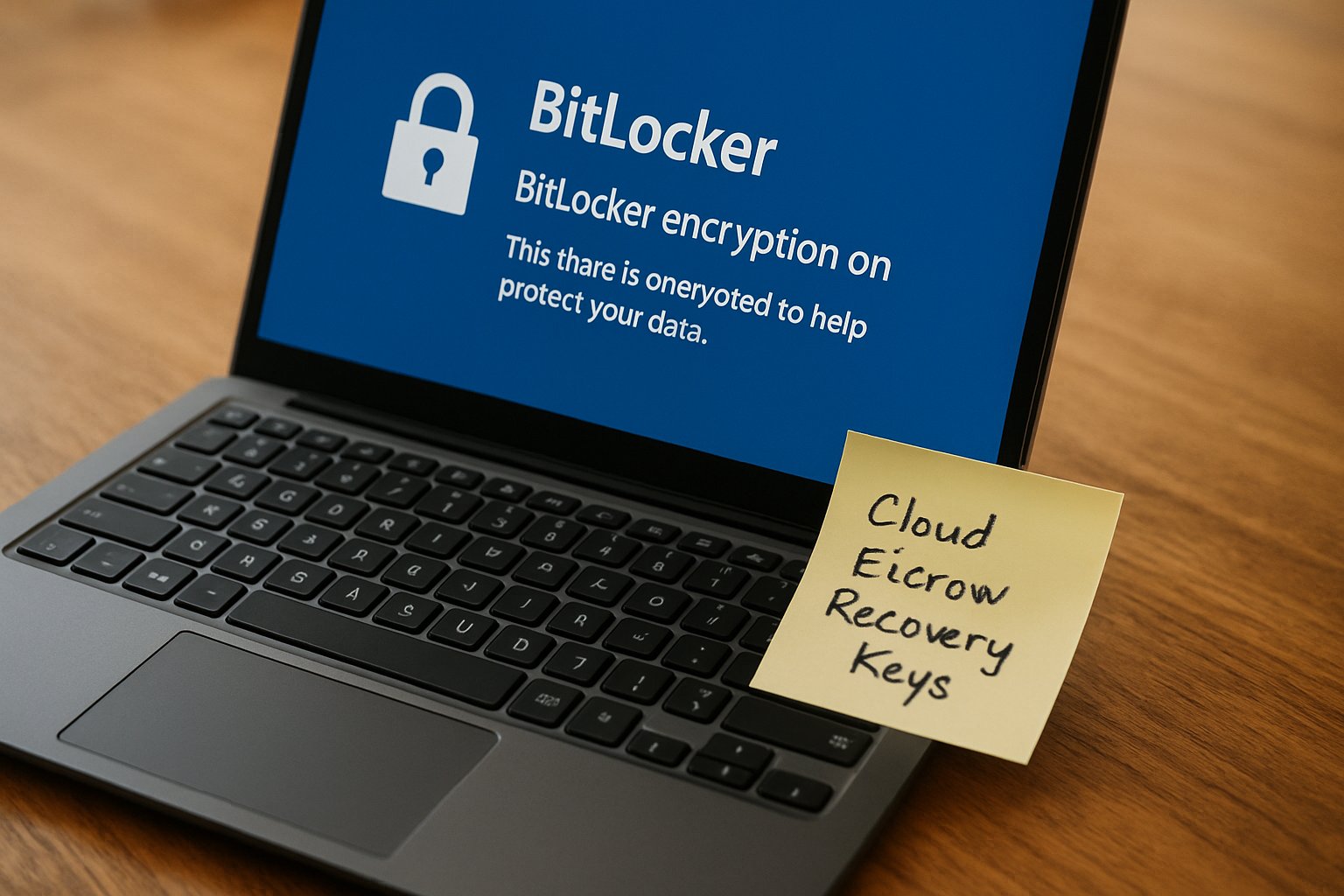
BitLocker Escrow Practice Exposed
BitLocker encrypts Windows drives using AES keys protected by the computer's Trusted Platform Module. However, many recent devices automatically back up a 48-digit recovery key to the owner's Microsoft account. Subsequently, those keys reside within Microsoft servers that can respond to legal process. In the Guam fraud probe, investigators seized three laptops whose drives remained locked for months. Consequently, prosecutors served a warrant compelling Microsoft to supply recovery material, which arrived and enabled decryption.
Microsoft told Forbes it handles about twenty such requests each year, confirming the practice is routine. The Microsoft Security Breach surfaced because the warranted disclosure became public through a local docket update. Therefore, security teams now possess concrete evidence that key escrow is not theoretical but actively employed. Nevertheless, Microsoft argues customers can choose different backup destinations if they prefer personal control.
Key Request Annual Statistics
- ≈20 BitLocker key requests handled by Microsoft per year
- 3 laptops decrypted in the Guam PUA case
- One warrant delivered months after device seizure
These figures demonstrate limited but recurring law-enforcement demand. In contrast, they also highlight the scale at which provider access persists. The numbers feed a broader narrative of convenience compromising confidentiality. However, statistics alone fail to capture individual Privacy expectations. Additionally, decision makers require qualitative insight into how decrypted evidence influences prosecution outcomes.
The section confirms cloud escrow enables efficient forensic work. However, it simultaneously illustrates an enduring Vulnerability for encrypted endpoints. Consequently, readers need a clear view of the legal pathway that delivers those keys.
Law Enforcement Access Path
Under U.S. law, a magistrate can authorize warrants demanding stored data, a process central to this Microsoft Security Breach. Consequently, the FBI leverages that authority when gathering evidence in fraud, terrorism, or cybercrime cases. Microsoft receives the instrument, validates scope, and then pulls the requested BitLocker material from its tenant databases. Subsequently, investigators load the 48-digit code during boot to bypass disk Encryption without brute-force attacks. Moreover, courts seldom notify device owners before keys change hands, limiting opportunities for challenge.
Charles Chamberlayne, a Microsoft spokesperson, stated, “Microsoft believes customers are in the best position to decide how to manage their keys.” Nevertheless, experts argue the default setting removes genuine choice because many consumers never notice the backup. Cryptographer Matt Green told Forbes that other vendors design systems where providers cannot unlock devices even if compelled. Therefore, he insists Microsoft should adopt comparable safeguards to prevent another Microsoft Security Breach.
Legal scholars note the balance between investigative necessity and civil liberties. Additionally, Senator Ron Wyden warned the same pathway could be exploited by foreign governments. Privacy advocates fear cross-border requests will multiply once the mechanism is widely publicized. Consequently, the Microsoft Security Breach story motivates renewed legislative interest in limiting broad key disclosure orders.
Lawful access clarifies government capability. However, it also confirms corporate custodianship over consumer secrets. These findings bridge the technical and policy arenas. Therefore, the next section explores industry reaction and competing architectural models.
Expert Voices Raise Alarms
Jennifer Granick from the ACLU emphasized that a single key yields full drive contents, not selective files. Moreover, she questioned internal safeguards against misuse once the FBI receives the data. Meanwhile, incident responders highlight a parallel Vulnerability: attackers breaching Microsoft infrastructure could exfiltrate escrowed keys at scale. Consequently, both legal and technical professionals call for transparent reporting beyond the current anecdotal figures.
Expert opinions elevate the conversation above sensational headlines. Furthermore, they push decision makers to compare encryption paradigms. These arguments set the stage for a closer industry analysis.
Industry Criticism And Context
Technology vendors pursue varied strategies for at-rest data protection. Apple stores only encrypted blobs that it cannot decrypt, even under subpoena. Google’s Titan security chips support client-side key generation that never leaves the handset. In contrast, Microsoft’s architecture keeps a retrievable copy in the cloud, creating a fresh Privacy debate when every Microsoft Security Breach narrative appears.
Analysts argue usability and enterprise manageability drove the original design. Additionally, centralized escrow helps administrators support password recovery, device rotation, and compliance audits. Nevertheless, critics maintain that accessible keys equate to a standing backdoor, undermining Encryption promises. Consequently, competitive differentiation may soon revolve around provable provider inaccessibility.
The Meridiem, a security blog, summarized the dilemma succinctly: “Cryptography remains strong, policy remains weak.” Consequently, competitive pressure may nudge Microsoft to introduce customer-controlled key stores or hardware-bound secrets. Meanwhile, regulators might impose disclosure obligations similar to breach notification rules.
Alternative Encryption Design Models
Companies exploring stronger models can adopt hardware-bound private keys with no server copies. Moreover, they may leverage open-source full-disk Encryption tools where only the owner holds the master passphrase. Enterprises running Windows can still configure BitLocker to save keys solely within Active Directory, keeping federal warrants within organizational control rather than vendor custody.
Industry debate underscores that design choices dictate surveillance exposure. However, discussion is incomplete without practical mitigation guidance. Therefore, the next section outlines concrete steps for security leaders.
These perspectives reveal a trade-off between usability and confidentiality. In contrast, they also prove alternative paths exist. Organizations must weigh risk appetite carefully. Consequently, proactive configuration changes can avert future headlines.
Risk Mitigation For Users
Security officers should first inventory every Windows endpoint to verify where recovery keys reside. Administrators can log into the Microsoft account portal and inspect stored codes. Subsequently, they should migrate keys to offline media or enterprise vaults if legal exposure outweighs convenience. Moreover, disabling automatic cloud backup on new deployments prevents fresh escrow events.
The following checklist summarizes immediate actions:
- Audit existing BitLocker recovery-key locations across fleets
- Re-encrypt devices after relocating keys to offline storage
- Configure Group Policy to block automatic cloud escrow
- Educate employees about key retention and Privacy impacts
- Review vendor transparency reports every quarter
Professionals can enhance their expertise with the AI Security Level-1 certification. The curriculum covers threat modeling, legal compliance, and Vulnerability management for encrypted systems. Consequently, graduates are better prepared to prevent another Microsoft Security Breach within their organizations.
Risk reduction demands disciplined policy enforcement. Nevertheless, ongoing monitoring verifies changes remain effective. Therefore, teams should integrate key-escrow checks into continuous compliance tooling.
These guidelines convert abstract concerns into concrete tasks. Moreover, they empower leadership to align security posture with business objectives. The roadmap also demonstrates that proactive steps cost less than reactive incident response. Consequently, organizations can turn the Microsoft Security Breach lesson into a catalyst for improving enterprise resilience.
Overall, diligent configuration and staff education reduce exposure. In contrast, ignoring cloud escrow defaults perpetuates systemic Vulnerability. Teams that act now will face fewer surprises later. Subsequently, the conclusion summarizes research insights and urges timely action.
The Guam disclosure illustrates how a single warrant can unlock drives worldwide when default cloud escrow persists. Furthermore, the incident confirms Encryption is only as strong as the surrounding key management policies. Nevertheless, enterprises can regain control by relocating keys, enforcing policies, and auditing vendor settings regularly. In contrast, inaction leaves every employee laptop vulnerable to future compelled disclosures or infrastructure compromises. Therefore, security leaders should assign owners, publish timelines, and track completion through governance dashboards.
Meanwhile, professionals can deepen expertise by earning the AI Security Level-1 credential covering legal and technical defences. Act now, and transform the Microsoft Security Breach lesson into a competitive advantage built on resilient Privacy safeguards.


