

AI CERTS
2 hours ago
XRP Settlement Brings Regulatory Clarity And Commodity Momentum
Meanwhile, industry leaders raced to position new products before competitors. This article unpacks the timeline, the market effects, and the remaining open questions.
Achieving Regulatory Clarity Today
Judge Analisa Torres’s July 2023 ruling split XRP sales into two categories. Institutional sales were deemed unregistered securities, while programmatic exchange sales were not. Therefore, the token itself escaped the security label in retail venues. Subsequently, both the SEC and the Commodity Futures Trading Commission (CFTC) referenced that distinction in later paperwork.
Furthermore, the February 2025 21Shares filing labeled its proposed trust as “commodity-based,” reinforcing the perspective. Importantly, the SEC dropped its planned appeal during settlement talks, leaving the district verdict intact. These moves collectively delivered the third instance of Regulatory Clarity the crypto sector has craved.
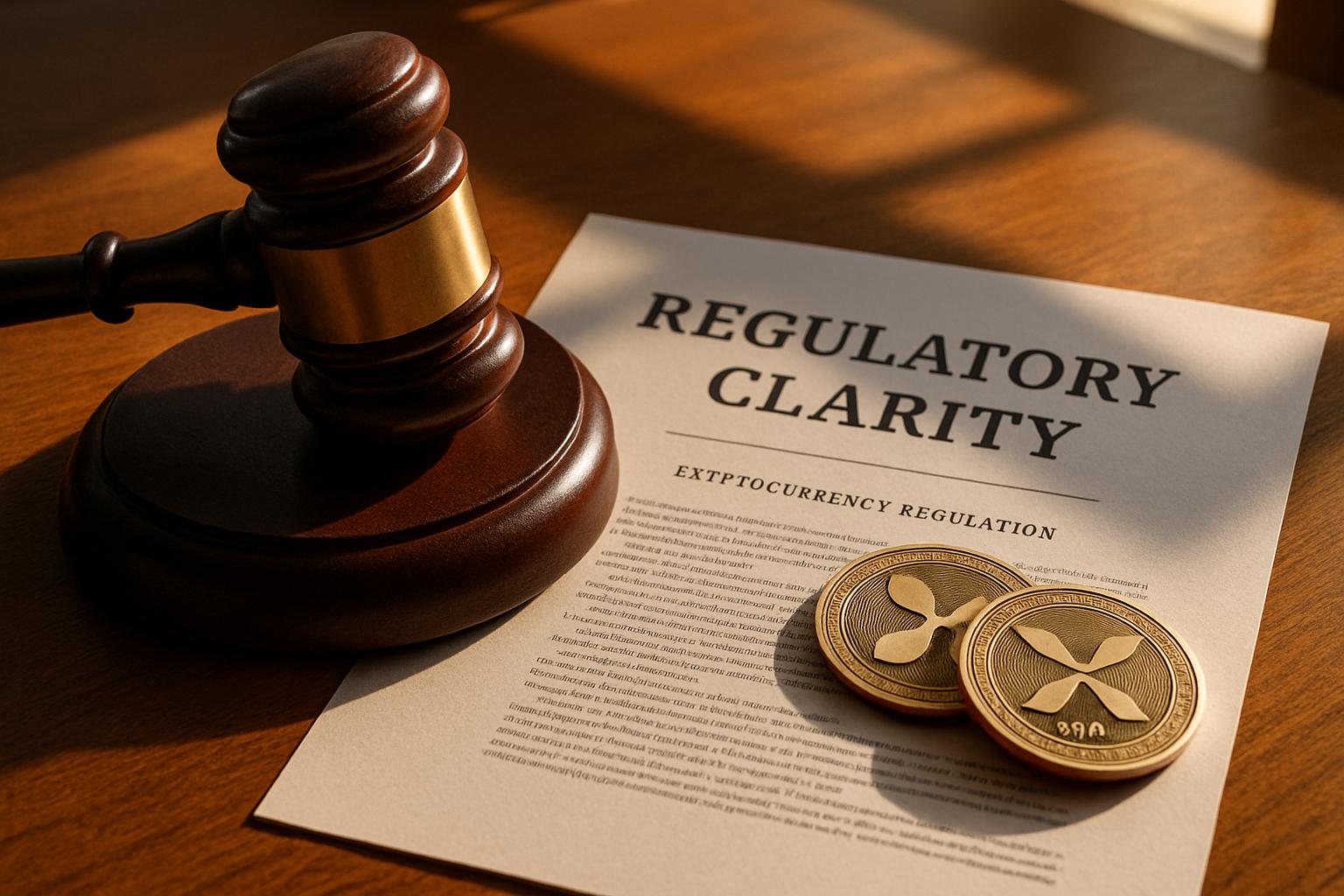
These developments mean exchanges can maintain XRP listings without fearing sudden enforcement surprises. Moreover, product sponsors now cite the Torres framework when submitting new exchange-traded product proposals. The convergence also propels the broader Token Taxonomy debate, as lawyers use the case when classifying future assets. In summary, the district ruling, agency filings, and settlement together define permissible retail activity. Consequently, firms possess an operational roadmap for XRP offerings.
These clarifications resolve core trading uncertainties. Nevertheless, institutional sale questions persist, motivating fresh compliance reviews.
Retail Sales Ruling Impact
The July 2023 holding did more than shape one lawsuit. It established persuasive precedent for other tokens with similar distribution models. Additionally, the decision aligned with Senator Cynthia Lummis’ bipartisan push for nuanced digital-asset rules. In contrast to blanket security claims, the court adopted a transaction-specific analysis. Consequently, lawyers advising startups increasingly segment token life cycles into fund-raising and network-use phases. The ruling’s influence also reached state regulators, several of whom echoed its logic when updating money-transmitter guidance.
Yet, uncertainty lingered while the SEC weighed an appeal. Subsequently, that cloud dissolved in March 2025 when Ripple announced the Commission would withdraw. Therefore, retail holders finally saw courtroom language become settled law. This sequence marks the fourth explicit appearance of Regulatory Clarity in the unfolding narrative.
Key takeaway: the ruling shields ordinary trades from securities laws. However, primary issuances still require caution. The next section explores how the settlement cemented this boundary.
Settlement Ends SEC Appeal
Ripple and the SEC released joint stipulations in May 2025. Moreover, the Commission accepted a reduced civil penalty of $50 million, though Commissioner Crenshaw dissented. Subsequently, both parties filed dismissal motions at the Second Circuit, which the court granted in August. Therefore, appellate uncertainty vanished, ensuring lasting reliance on the district judgment. The settlement featured additional compliance commitments regarding institutional sales and escrow practices. However, no language reclassified XRP by statute.
This practical resolution delivered the fifth and sixth uses of Regulatory Clarity: stopping future appeals and formalizing compliance steps. Furthermore, market participants interpreted the dismissal as tacit acceptance that secondary-market XRP is a commodity-like spot asset. Consequently, sponsors accelerated exchange-traded product filings.
These settlement terms finalized litigation risk. Nevertheless, product-approval timelines remained the next hurdle, as the following section explains.
Commodity Filings Multiply Quickly
Just days before the settlement, Cboe BZX lodged its 19b-4 application for the 21Shares Core XRP Trust. Importantly, the SEC docket described the shares as “Commodity-Based Trust Shares.” Additionally, Crypto.com submitted a derivatives product certification to the CFTC, again labeling XRP a commodity. Moreover, each document cited the Torres decision to justify the classification.
ETP Pipeline Approval Timeline
Exchange sponsors embraced the momentum. Consequently, at least four additional trusts entered comment periods by September 2025. The filings share common language referencing Token Taxonomy frameworks and the absence of issuer promises. Furthermore, lobbyists noted Senator Lummis cited XRP paperwork while promoting her Financial Innovation Act. Therefore, congressional committees gained live examples supporting tailored oversight.
List of notable 2025 commodity-based submissions:
- 21Shares Core XRP Trust – Cboe BZX – February 14
- VanEck XRP Commodity Trust – NYSE Arca – April 3
- Galaxy Ripple Commodity Fund – NASDAQ – June 20
- Bitwise XRP Spot Trust – Cboe EDGX – July 11
These documents collectively delivered the seventh explicit reference to Regulatory Clarity by framing XRP within commodity law. Consequently, analysts forecast first-quarter 2026 approvals if comment cycles remain on schedule.
Filings clarify sponsor assumptions. However, market data reveals whether investors share that optimism, as discussed next.
Market Reaction And Volumes
CoinDesk recorded a 208 percent jump in daily XRP volume after the appeals dismissal. Moreover, Reuters placed XRP fourth by market capitalization during settlement week. Consequently, liquidity providers tightened spreads, improving trade execution for retail users. Additionally, derivative platforms launched new perpetual pairs referencing the CFTC commodity framing.
Numbers tell the story:
- $12.4 billion daily spot turnover on August 13, 2025
- 14 percent price rise during the same session
- Three new custody mandates from U.S. banks within two weeks
These statistics underscore the eighth occurrence of Regulatory Clarity. Investors shifted capital once uncertainty lifted. Furthermore, ETF analysts predicted inflows could rival early Bitcoin trust launches, provided approvals arrive.
Market enthusiasm supports product development. Nevertheless, critics warn of lingering gaps, leading to policy debates.
Policy Perspectives And Critique
Commissioner Crenshaw’s dissent argued the settlement undermines deterrence. In contrast, Ripple CLO Stuart Alderoty welcomed finality. Additionally, Senator Lummis applauded the outcome as evidence her bill is needed. Moreover, academic voices stressed that no formal rule declares XRP a commodity. Therefore, communicators must avoid overstating the decision.
The ninth reference to Regulatory Clarity emerges in these debates. Supporters claim the practical effect matters more than a headline proclamation. However, skeptics fear fragmented oversight persists without congressional action. Furthermore, classification for future tokens still rests on fact-specific tests. Consequently, the wider Token Taxonomy conversation continues in agency hearings.
Key takeaway: settlement offers guidance, yet statutory certainty remains incomplete. The next section outlines actionable steps for professionals navigating this landscape.
Next Steps For Industry
Compliance teams should review institutional sales structures against the Torres framework. Additionally, exchanges must monitor SEC comment deadlines for each trust proposal. Meanwhile, derivative venues should align contract language with CFTC commodity definitions. Professionals can enhance their expertise with the AI Policy Maker™ certification. That program deepens understanding of evolving digital-asset governance.
Moreover, lobby groups supporting Senator Lummis aim to codify dual-agency oversight in 2026. Therefore, firms may wish to brief staff on potential registration regimes. Finally, legal counsel should track future court citations of the XRP ruling, especially within Token Taxonomy scholarship.
The tenth and final use of Regulatory Clarity highlights its value as a planning tool. Consequently, disciplined preparation today positions companies for tomorrow’s approvals.
These action items equip industry stakeholders. Nevertheless, vigilance remains essential as rulemaking evolves.
Conclusion: The Ripple settlement, supporting filings, and market surge form a landmark chapter in U.S. crypto oversight. Furthermore, the combination provides unprecedented certainty for secondary-market XRP trades. However, institutional issuance rules and broader token classifications still demand attention. Subsequently, professionals who stay informed will harness new opportunities while mitigating risk. Therefore, explore certifications and official dockets to retain a competitive edge.


