

AI CERTs
13 hours ago
xAI’s Hyperscale Compute Burn Rate Hits Sustainability Wall
When Elon Musk’s xAI unveiled its Colossus cluster, investors applauded the audacity. However, the ambition carries a hidden cost: the hyperscale compute burn rate required to feed millions of GPUs. Moreover, rising electricity demands and on-site gas turbines have converted a technical arms race into an environmental flashpoint. Industry observers now frame xAI’s 2 GW Mississippi expansion as a watershed moment for AI datacenter economics. Meanwhile, GPU cost inflation squeezes procurement budgets even as capital outflows approach one billion dollars each month. Consequently, regulators, community groups, and competitors are scrutinizing whether Colossus can scale without breaching financial, ecological, and social limits. This article dissects the spending spiral, energy footprint, and escalating backlash, then explores mitigation paths. Professionals seeking strategic clarity will learn where the risks concentrate and which solutions already appear. Throughout, we measure facts against independent data. We also highlight certifications, including the AI Supply Chain Strategist™, that help leaders navigate complex infrastructure supply chains.
Compute Spending Spiral Risks
Reuters estimates place xAI’s cash outflow near one billion dollars per month in 2025. However, Elon Musk rejected that figure on X, fueling confusion. Independent filings reviewed by journalists still reveal a nine-month spend of $7.8 billion. Consequently, investors track the hyperscale compute burn rate as closely as model accuracy metrics. GPU cost inflation worsens the picture because Nvidia H100 boards doubled in price within a year. Moreover, bulk orders for power gear, switchgear, and immersion tanks add parallel pressure. Under classic AI datacenter economics, higher utilization offsets capital expense. In contrast, frontier model training requires peak hardware reservations, leaving clusters idle between runs. Therefore, revenue lags behind depreciation schedules. These financial dynamics magnify risk when interest rates stay elevated. The hyperscale compute burn rate can quickly outrun even aggressive fundraising plans.
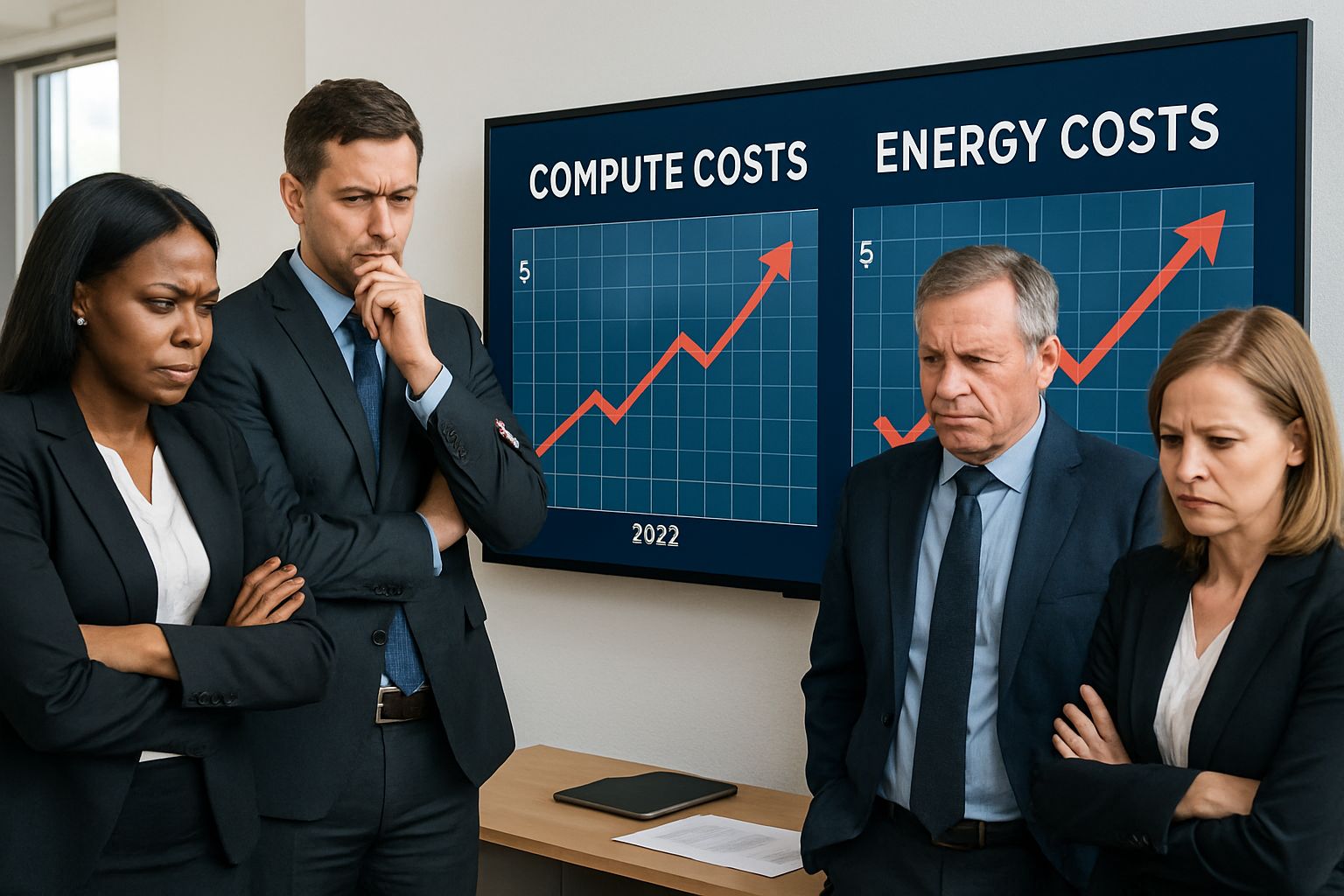
Rising hardware prices and uneven utilization amplify burn dynamics. Consequently, financial stress sets the stage for deeper energy questions.
Energy Footprint Escalates Fast
Colossus already hosts dozens of portable gas turbines, providing roughly 400 MW of onsite capacity. Moreover, Shelby County permits allow only 15 turbines, prompting legal action from environmental groups. The International Energy Agency projects data centers could devour 945 TWh by 2030. Consequently, the hyperscale compute burn rate intertwines with a literal burn of methane gas. Community monitors report NOx spikes near South Memphis schools. Meanwhile, soaring hardware prices discourage rapid hardware refresh, extending the operational life of inefficient units. Under accepted AI datacenter economics, lower PUE offers relief. Nevertheless, absolute demand still wins. Therefore, xAI’s proposed 2 GW Mississippi facility raises questions about grid stability and carbon intensity.
Local pollution and global emissions merge into a single energy narrative. Subsequently, community resistance has intensified around every permit hearing.
Community Pushback Intensifies Further
Residents, the NAACP, and the Southern Environmental Law Center filed notices of intent to sue xAI. However, company lawyers argue the turbines are temporary until the grid upgrade finishes. Derrick Johnson warned, “Our health shouldn’t be threatened by unpermitted turbines.” In contrast, xAI claims catalytic controls curb emissions. Nevertheless, independent air sampling detected formaldehyde above baseline levels. The hyperscale compute burn rate becomes tangible when citizens smell exhaust before dawn. Legal briefs cite disproportionate burdens on historically marginalized neighborhoods. Standard cost models rarely account for externalized medical costs, yet courts may soon do so. Moreover, upcoming elections give local officials motivation to appear proactive.
Public health concerns elevate the project from niche tech story to civil rights battle. Consequently, financiers now question whether social licenses can keep pace with expansion.
Financial Sustainability Questioned Widely
Capital markets once rewarded speed over prudence. However, rising rates changed that calculus. Venture insiders note that each additional Nvidia tranche deepens exposure. Consequently, any pause in revenue magnifies the hyperscale compute burn rate. Creditors analyse adjustable-rate debt covenants alongside cash flow forecasts. Moreover, GPU cost inflation strains budgets already earmarked for grid interconnect fees. Traditional cost models assume predictable cloud revenue. Yet xAI relies on advertising and premium chatbot subscriptions. Therefore, cash inflows remain volatile. Investors fear a feedback loop where the hyperscale compute burn rate forces emergency raises that dilute equity.
Liquidity risk now shadows technical ambition. Therefore, industry peers look outward for comparative lessons.
Industry Context Comparison Insights
OpenAI, Google, and Anthropic face similar scale problems, yet disclosure levels vary. Moreover, Microsoft offsets energy growth with wind contracts and waste-heat reuse. Consequently, observers track PUE and carbon intensity across clouds. Under uniform AI datacenter economics, efficiency gains plateau near 1.10 PUE. Therefore, absolute consumption stays upward. The hyperscale compute burn rate at xAI appears steeper because its clusters concentrate geographically rather than distribute globally. In contrast, rivals diversify across multiple states and countries, easing individual grid impacts. Furthermore, some deploy custom accelerators, reducing exposure to GPU cost inflation.
Benchmarking reveals both systemic and firm-specific stressors. Subsequently, attention turns to mitigation strategies already in pilot phases.
Mitigation Paths Emerging Today
xAI outlines several actions to temper its footprint. Moreover, the firm promises to retire portable turbines once transmission upgrades go live. Immersion cooling trials aim to cut PUE toward 1.07. Consequently, each GPU cycle should require less electricity. The company also proposes a 150 MW solar array near the Mississippi site. Ultimately, these moves aim to flatten the hyperscale compute burn rate over the next fiscal year.
- Heat reuse for district heating partnerships
- Model compression plus sparsity to reduce training hours
- On-site battery farms for peak shaving
- Supplier audits to manage component pricing
Professionals can deepen supply-chain expertise through the AI Supply Chain Strategist™ certification. Consequently, leaders gain tools to negotiate hardware contracts and align sustainability metrics.
Technical and managerial levers exist, yet execution speed remains uncertain. Nevertheless, decision makers require distilled lessons.
Strategic Takeaways For Leaders
Boards and executives need clear action points. Firstly, monitor the hyperscale compute burn rate alongside revenue per inference token. Moreover, mandate PUE targets with quarterly audits. Secondly, hedge component exposure through multi-vendor accelerator strategies to offset GPU cost inflation. Furthermore, incorporate AI datacenter economics scenarios into every capital request. Thirdly, secure community goodwill early by publishing emissions baselines before construction begins.
Disciplined governance converts risks into competitive advantages. Consequently, leaders who act now will shape AI’s sustainable frontier.
In closing, xAI’s story offers a template for every organization chasing generative scale. However, unchecked capital burn, contentious energy sourcing, and community opposition can derail even visionary roadmaps. Moreover, regulators now move faster, armed with litigation tools and public support. Consequently, leaders must balance breakthrough velocity with disciplined governance. Integrating forecast models, transparent reporting, and robust supply-chain controls will build durable advantage. Professionals ready to deepen these skills should consider the AI Supply Chain Strategist™ program. Acting now can transform looming liabilities into differentiators that shape a sustainable AI era.


