

AI CERTS
3 hours ago
World AI Conference Spotlights Governance, Robots, Growth
Consequently, governance diplomacy shared the stage with humanoid robots, large language models, and venture pitches. International luminaries such as Geoffrey Hinton and Eric Schmidt added weight through pointed safety warnings. Meanwhile, municipal leaders touted rapid industry growth and a vibrant talent pipeline. The World AI Conference showcases more than 3,000 products and over 800 exhibitors, making it the city's signature tech expo. This article unpacks the key moments, numbers, and controversies shaping this year’s showcase.
Opening Ceremony Key Highlights
Attendance exceeded 1,200 invited guests representing more than 30 countries. Additionally, municipal officials confirmed a record exhibition footprint surpassing 70,000 square meters. In contrast, last year’s floor covered roughly 50,000 square meters, showing clear expansion. The World AI Conference thus cements its status among the world’s premier tech Events.
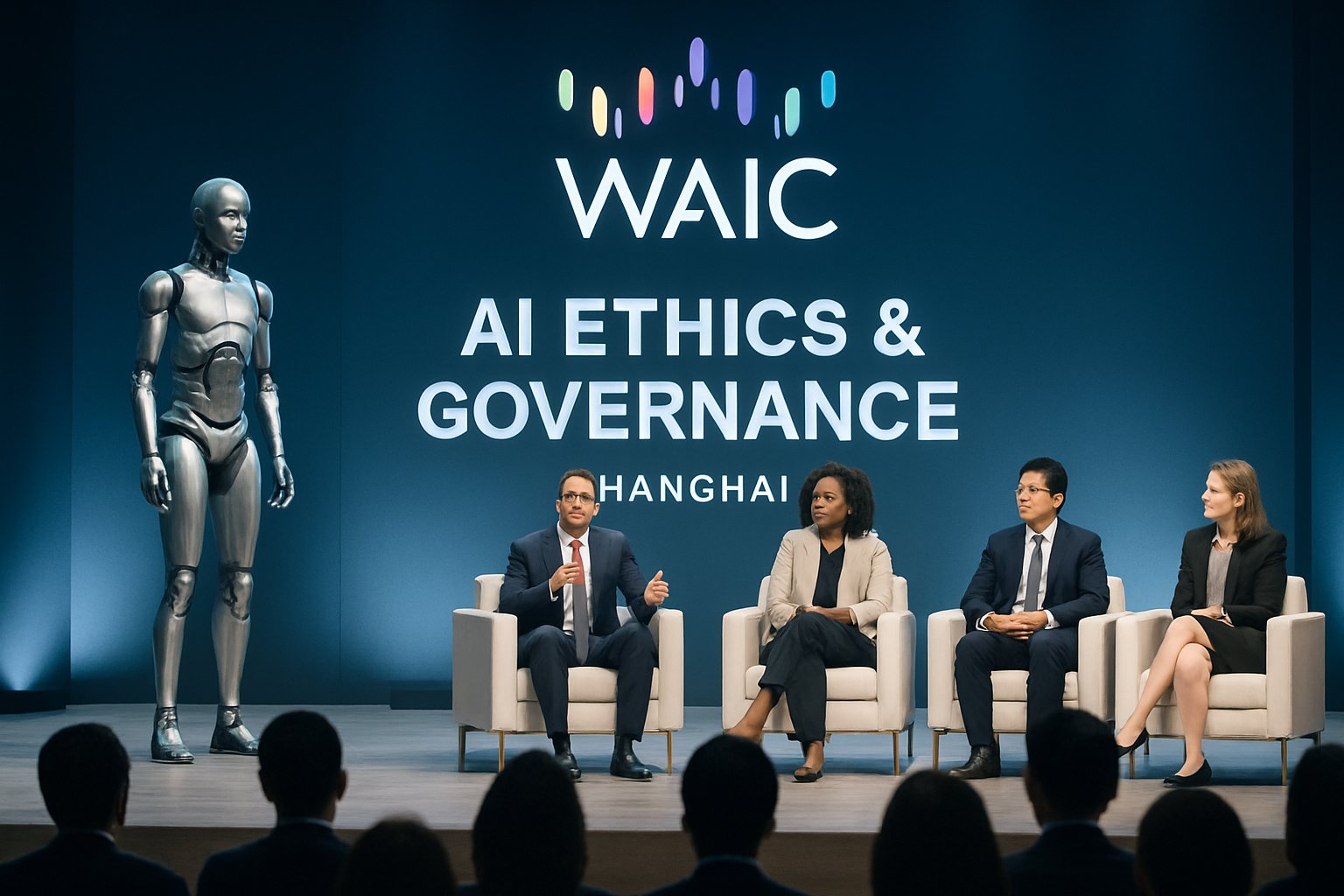
Li Qiang declared, “Global AI governance is still fragmented,” while urging stronger coordination. His remarks framed China as a convener rather than a follower. Consequently, participants noted the speech as the headline policy signal of day one.
These highlights reveal the conference’s scale and political intent. However, governance diplomacy deserves deeper examination, which the next section provides.
Global Governance Diplomacy Push
During the World AI Conference, Li Qiang’s proposal envisions an international body headquartered in Shanghai to harmonize AI rules. Furthermore, he warned that advanced systems risk becoming an “exclusive game” for a few nations. Reuters reported no charter text yet, leaving many procedural questions unanswered. Nevertheless, the announcement positions China against U.S. export-control-driven approaches.
Eric Schmidt responded during a fireside chat, emphasizing enforceable boundaries over access debates. Geoffrey Hinton echoed the need for multilateral safety institutions. Consequently, governance emerged as a unifying but contentious thread for many panels.
Diplomacy dominated headlines but technology on display supplied tangible proof of progress. The next section examines that showcase.
Tech Showcase Record Scale
The exhibition floor dazzled investors with humanoid robots greeting visitors and delivering coffee. Moreover, about 40 foundation models demonstrated multimodal reasoning in Chinese and English. Organizers claimed over 100 world or China debuts, spanning healthcare, finance, and manufacturing.
- 800+ companies across cloud, chips, robotics, and software
- 3,000 products, including 60 intelligent robots
- 70,000 square meters of booth space, the largest yet
- Foundation models from Huawei, Alibaba, and startup labs
Analysts welcomed the breadth yet cautioned about a commercialization gap. In contrast, municipal spokespersons argued that venture matchmaking sessions would close that gap. The World AI Conference thus served as both showroom and deal floor for tech-minded Events.
Record numbers impress attendees. However, safety debates tempered unbridled enthusiasm, as the next section explores.
Safety And Innovation Tension
Geoffrey Hinton compared current AI to a “cute tiger cub” that could grow dangerous. Furthermore, he urged global research into benevolent training methods. Richard Sutton agreed, noting reinforcement learning’s unpredictable outcomes when scaled. Nevertheless, many booths marketed autonomous weapons detection tools, showing commercial interest in risk mitigation.
Panelists debated timelines for existential threats, yet a consensus formed around near-term misuse dangers. Consequently, calls for an international safety institute gained momentum. The World AI Conference supplied a rare platform where policy, academia, and industry discussed shared guardrails.
Safety concerns influence investment decisions. Meanwhile, economic data from Shanghai provides another lens, covered next.
Shanghai Economic Growth Context
Official figures place the city’s Q1 AI industry scale at 118 billion yuan, up 29 percent year-on-year. Moreover, profit growth reached 65 percent, signaling strong downstream demand. Authorities aim for 100 EFlops of computing capacity by year-end.
Consequently, investors see infrastructure readiness supporting the showcased models. Approximately one-third of China’s AI professionals already reside in the municipality. The World AI Conference acts as a talent magnet through career fairs and mentorship Events.
Economic momentum appears robust. Nevertheless, converting demos into revenue presents challenges, explored in the following section.
Key Commercialization Challenges Ahead
Analysts warn of over-investment in embodied intelligence without proven business models. Additionally, hardware margins remain thin compared to software and cloud services. Venture capitalists at pitching sessions demanded shorter paths to profitability.
In contrast, municipal grants and sovereign funds may prolong experimental phases. Professionals can enhance their expertise with the AI+ Human Resources™ certification, aligning workforce strategies with automation. Consequently, companies that integrate human capital planning and AI stand a better chance of scaling.
The World AI Conference underscored that commercialization requires governance, talent, and capital working together. These factors converge into actionable lessons summarized next.
Strategic Takeaways And Outlook
Stakeholders left Shanghai with five key insights.
- Governance now drives investment narratives.
- Record exhibition scale confirms industrial ambition.
- Safety debates influence global standards.
- Local infrastructure underpins rapid prototyping.
- Human talent remains decisive for returns.
Consequently, firms should monitor policy developments while piloting commercial applications. Meanwhile, adopting certified HR frameworks accelerates responsible deployment.
The World AI Conference demonstrated China’s blend of policy ambition and technical prowess. Moreover, governance proposals, record showcases, and sober safety warnings created a balanced narrative. Investors noted Shanghai’s supportive infrastructure yet acknowledged lingering commercialization hurdles. Nevertheless, momentum appears sustainable if global cooperation materializes. Therefore, industry leaders should track forthcoming charter details and pursue skills that integrate humans with intelligent systems. Explore more insights and certifications to stay ahead in fast-moving AI Events. Plan early to attend the World AI Conference 2026 and gain direct market exposure.


