

AI CERTs
3 months ago
Workforce skill signal intelligence platforms drive 2026 hiring
A silent revolution is reshaping corporate talent operations across the United States.
At its center sit workforce skill signal intelligence platforms, AI engines that read and interpret dynamic skills data.
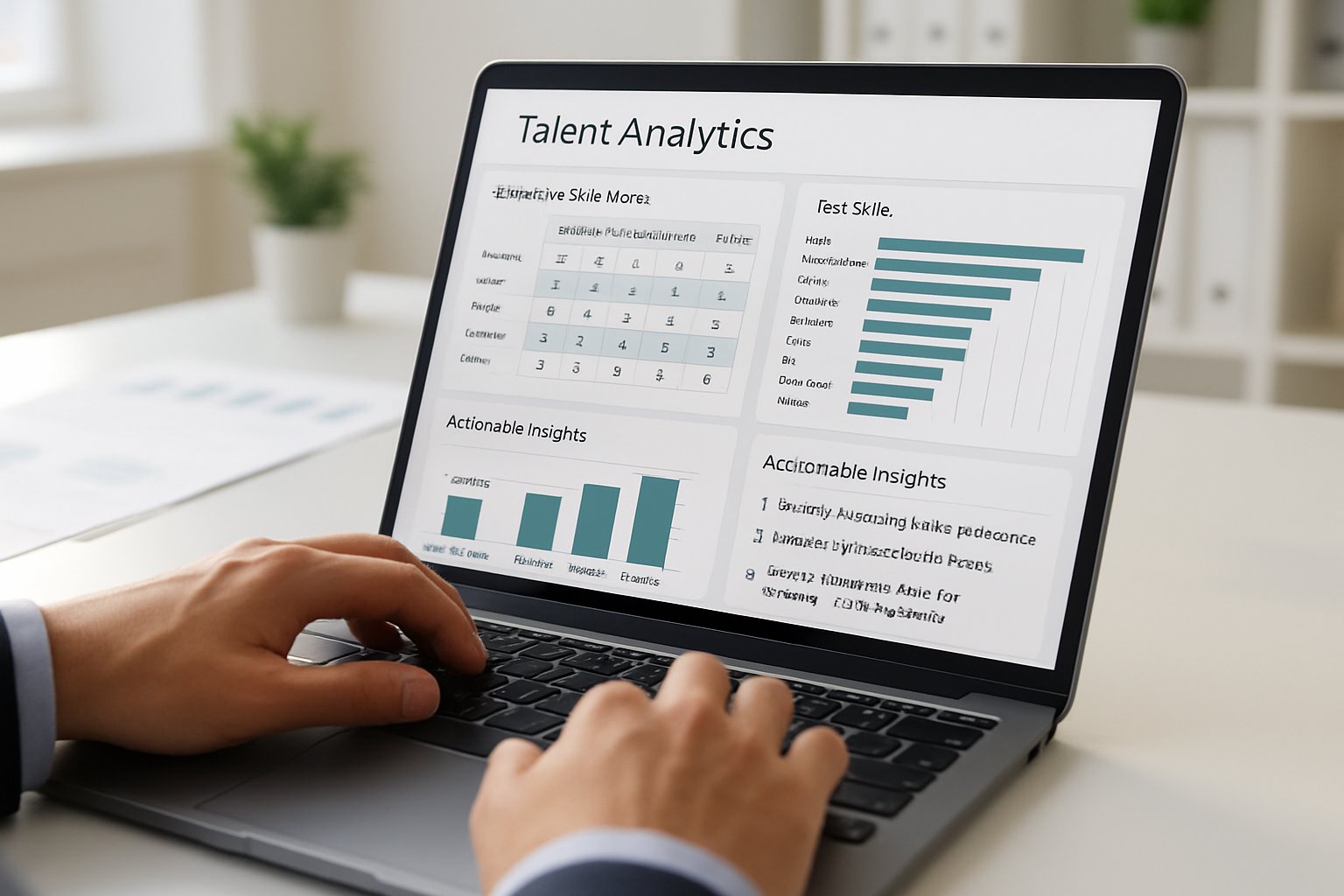
These systems pull millions of signals from HR systems, project tools, and public labor sources.
Consequently, employers gain real-time maps of hidden capabilities and looming gaps.
Moreover, escalating skill change velocity is amplifying the urgency for precise reskilling strategy.
Lightcast calculates that one-third of job skills changed between 2021 and 2024.
Therefore, executive teams are embracing talent analytics AI to forecast tomorrow’s workforce needs.
However, adoption brings governance, privacy, and change-management challenges that demand careful navigation.
This guide unpacks the market, technology, risks, and best practices shaping the next phase.
Readers will leave with actionable steps and trusted resources for scaling responsible platforms.
Market Forces Accelerate Adoption
Uptake surged during 2025 as Workday unveiled its Agent System of Record and Data Cloud extensions.
Meanwhile, Visier’s Open Skills Initiative signaled a push toward multi-vendor interoperability.
Analysts estimate the skills intelligence market will exceed eight billion dollars by the early 2030s.
Moreover, government toolkits from the World Economic Forum encourage national deployment to address widening skill gaps.
Consequently, workforce skill signal intelligence platforms shifted from pilot curiosities to core infrastructure across Fortune 500 HR stacks.
Early adopters cite speed and scale as decisive advantages in tight labor markets.
In contrast, laggards risk talent shortages and inflated recruiting budgets.
The next section details how the technology actually works.
Core Platform Capabilities Explained
First, each platform ingests resumes, project records, course completions, and labor-market postings.
Algorithms extract skills, normalize them to ontologies, and infer missing competencies using contextual embeddings.
Subsequently, a skills graph links employees, tasks, learning options, and external benchmarks.
Dashboards surface internal supply visibility, while APIs feed downstream systems like learning experience platforms.
Therefore, workforce skill signal intelligence platforms become the connective tissue for skills-first architectures.
Talent analytics AI then layers predictive modeling to forecast attrition, mobility, and capacity scenarios.
Moreover, leading vendors hold ISO or FedRAMP certifications, ensuring security and governance alignment.
Professionals can enhance their expertise with the AI+ Data Robotics™ certification.
These foundational capabilities create granular, trusted skills data.
Next, we examine the measurable business impact.
Benefits And Impact Metrics
Companies report faster internal mobility and reduced time-to-fill once skills marketplaces go live.
In many cases, workforce skill signal intelligence platforms cut external hiring costs by double-digit percentages.
Accenture’s pilot with Walmart and Unilever discovered hidden talent and increased inferred skills per employee threefold.
Moreover, Lightcast links skills velocity with productivity gains as employees adapt before roles evolve.
Talent analytics AI adds quantitative rigor by tracing learning completions to emerging capability clusters.
- Skill requirements shifted 32% from 2021-2024, according to Lightcast.
- WEF predicts 40% core skill change by 2030, making reskilling strategy unavoidable.
- Market size may hit twelve billion dollars by 2032, analysts estimate.
Therefore, many boards now request quarterly reports from workforce skill signal intelligence platforms to track capability shifts.
These statistics underline a compelling financial and competitive case for investment.
However, benefits arrive only when risks are mitigated.
Regulatory Risk Landscape Emerging
Legal bodies now scrutinize algorithmic decision making in employment.
Recently, an EEOC filing cited workforce skill signal intelligence platforms in a discrimination complaint against an HCM vendor.
Consequently, counsel urge adverse-impact testing, bias monitoring, and human oversight for all automated decisions.
Privacy regulators also question shadow profiling practices that infer skills without consent.
Moreover, state laws increasingly require transparent explanations for AI models that influence employment outcomes.
Vendors respond with certifications, audit trails, and explainable algorithms to reassure buyers.
The regulatory wave makes governance a board-level priority.
Next, we outline practical implementation steps.
Implementation Best Practice Steps
Effective rollouts begin with data audits across HRIS, ATS, and learning systems.
Subsequently, leaders define a reskilling strategy that links skill gaps to measurable business goals.
Governance councils ensure workforce skill signal intelligence platforms respect privacy rules and monitor algorithmic fairness.
Moreover, open ontologies like Visier’s coalition prevent vendor lock-in and simplify data stewardship.
Pilot programs run three months, instrument metrics, and gather employee feedback for trust calibration.
Talent analytics AI dashboards visualize early wins to secure executive funding for scale.
Disciplined methodology accelerates value realization and minimizes rework.
We now look forward to upcoming market trends.
Future Outlook Trends Ahead
Analysts predict workforce skill signal intelligence platforms will merge with agent management layers controlling digital coworkers.
Meanwhile, generative AI will draft personalized learning pathways from natural language role descriptions.
Moreover, real-time labor data feeds will shift workforce planning from quarterly to continuous cadence.
Nevertheless, employee trust will stay pivotal, driving transparent dashboards and opt-out controls.
Consequently, skills velocity may become a standard board metric alongside revenue growth and margin.
Change is accelerating yet remains governable with foresight.
The final section synthesizes key insights and next actions.
Conclusion Strategy Forward Path
U.S. enterprises are formalizing investments in workforce skill signal intelligence platforms to withstand relentless skill disruption.
These systems translate messy signals into actionable maps for hiring, mobility, and learning.
When paired with a transparent reskilling strategy, they raise retention and shrink recruiting outlays.
Talent analytics AI supplies evidence, thereby converting skeptical executives into champions.
However, privacy, bias, and data quality risks require proactive governance and multidisciplinary collaboration.
Moreover, continuous employee communication nurtures trust and fuels adoption.
Ultimately, mastering workforce skill signal intelligence platforms will separate agile innovators from stranded incumbents.
Start auditing your data today and pursue the AI+ certification to lead the skills revolution.


