

AI CERTs
3 hours ago
Workforce Skill Intelligence Platforms Forecast Job Evolution
Skill requirements are mutating faster than HR teams can update job descriptions. Consequently, executives now chase predictive visibility instead of historical dashboards. Workforce Skill Intelligence Platforms promise that visibility by forecasting how every role will evolve. Moreover, recent labor market AI reports reveal unprecedented skill churn across industries. Lightcast data shows 32% of American job skills changed in just three years. Meanwhile, LinkedIn projects global change could hit 68% by 2030 because of generative AI. These jolts are spurring urgent investment in forecasting, reskilling analytics, and internal mobility tools. However, turning raw data into actionable foresight demands sophisticated models, governance, and cultural change. This article unpacks the technology, players, opportunities, and risks shaping the next talent era. Each section concludes with a quick takeaway and forward link, ensuring smooth navigation.
Workforce Skill Intelligence Platforms
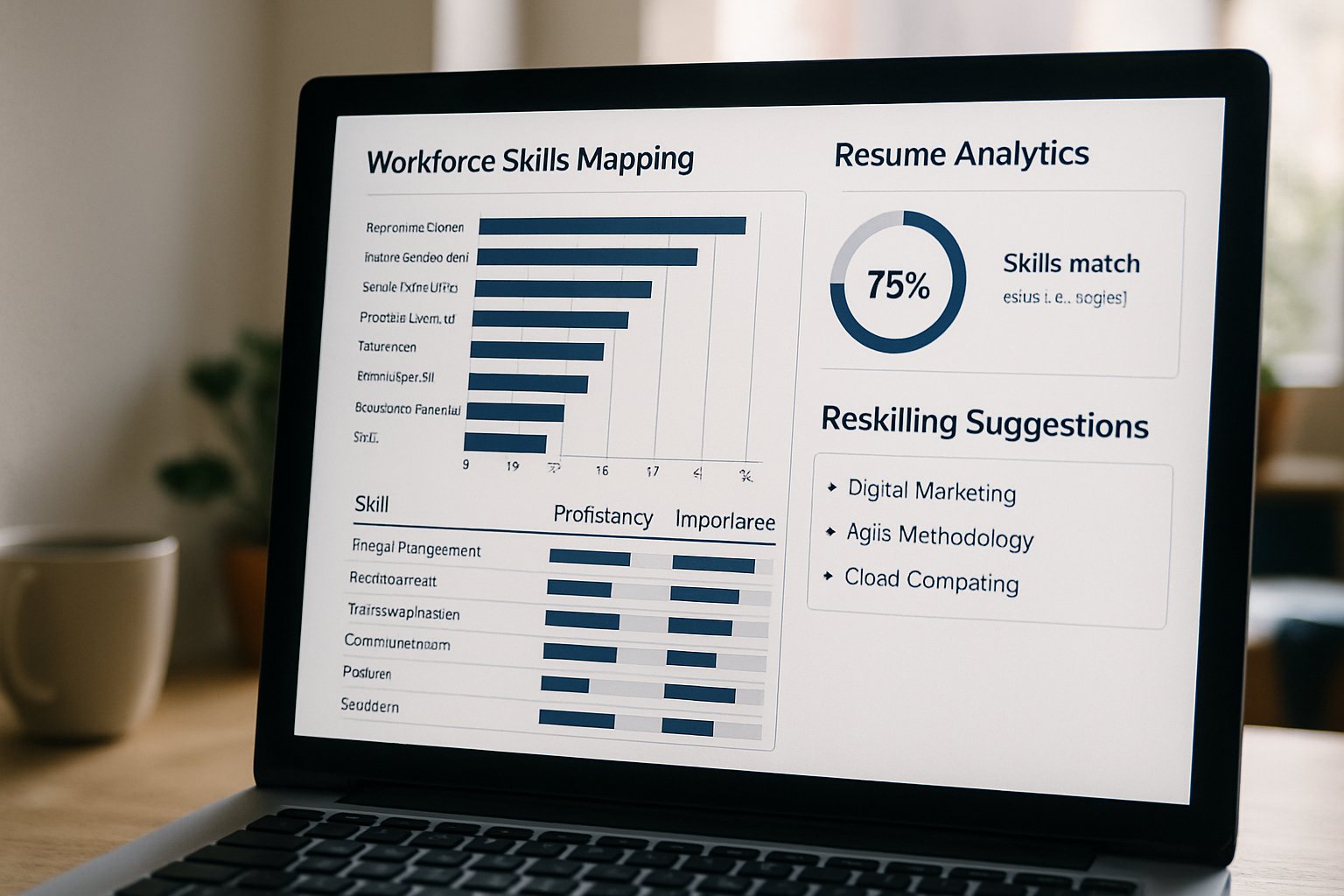
At their core, these systems fuse internal HR data with external job-posting streams. Furthermore, graph databases link employees, skills, roles, and learning content into a living knowledge map. Advanced models then simulate skill drift and estimate when current tasks will require new capabilities. Consequently, HR leaders see probable role trajectories before market shocks become staffing crises. In short, prediction replaces guesswork. Now let’s examine the forces accelerating adoption.
Market Forces Accelerating Rapidly
Three macro trends push organizations toward Workforce Skill Intelligence Platforms. First, generative AI has spiked demand for niche abilities like prompt engineering and multimodal model tuning. Moreover, the green transition forces companies to integrate sustainability competencies across supply chains. Meanwhile, cyberattacks keep boards awake, raising the premium on security skills.
- 32% of U.S. job skills changed between 2021 and 2024.
- 75% change hit the most disrupted quarter of roles.
- 15,625% growth in generative-AI postings over three years.
- Skills change projected to reach 68% globally by 2030.
Lightcast now tracks a 15,625% rise in generative-AI job ads, illustrating how quickly markets pivot. Consequently, legacy workforce planning cycles feel obsolete. These forces intensify skill churn. Platform mechanics reveal how enterprises can respond.
Platform Skill Intelligence Mechanics
Vendors ingest millions of postings, resumes, and course records each week. Subsequently, NLP pipelines extract and normalize skills into a shared taxonomy. Graph embeddings score distances between skills, revealing transferable paths for upskilling. Predictive models then compare internal supply against external demand under multiple scenarios. Therefore, Workforce Skill Intelligence Platforms surface which employees could pivot with minimal training. Human reviewers still validate suggested role archetypes before actions reach staff. Mechanics blend math and human judgment. Next, we map the vendor field.
Key Vendor Landscape Snapshot
Lightcast, LinkedIn, and the Burning Glass Institute provide foundational labor market AI datasets. Workday, Eightfold, Cornerstone, and Gloat embed those feeds into enterprise suites. Moreover, Deloitte and Accenture monetize integration services that customize graph outputs for clients. In contrast, startups like Workera focus on deep assessments rather than full-suite deployment. Workforce Skill Intelligence Platforms now appear in one-third of Fortune 500 Workday tenants, according to vendor disclosures. Nevertheless, taxonomy mismatches still impede seamless data sharing across tools. The field remains crowded yet immature. Benefits explain why adoption accelerates despite complexity.
Benefits Driving Adoption Today
Faster redeployment heads every executive wish list. Consequently, internal marketplaces powered by Workforce Skill Intelligence Platforms cut time-to-fill by double digits. Additionally, reskilling analytics help learning leaders target high-impact courses instead of blanket programs. LinkedIn Learning reports surging enrollments in prompt engineering and cybersecurity microcredentials. Moreover, skills-first matching widens talent pools, improving diversity outcomes. Professionals can validate emerging security expertise through the AI Ethical Hacker™ certification. These gains translate into measurable ROI. Yet governance questions still linger.
Risks And Governance Challenges
Predictive systems carry bias, privacy, and legal exposure. Brookings warns that algorithmic decisions can violate Title VII if untested. Furthermore, data scraped from social profiles underrepresents many groups, skewing forecasts. Therefore, employers using Workforce Skill Intelligence Platforms must audit outputs, document lineage, and maintain human oversight. EEOC guidance recommends accessible interfaces and transparent explanations. Nevertheless, independent benchmarking remains scarce, leaving accuracy claims unverified. Governance failures can derail adoption. The next section explores forward actions.
Future Outlook And Actions
Analysts expect double-digit growth for talent intelligence spending through 2030. Consequently, product roadmaps emphasize copilots, explainability dashboards, and open taxonomy connectors. In contrast, regulators will intensify audits, raising stakes for compliance-ready vendors. Long term, Workforce Skill Intelligence Platforms could shift from predicting roles to generating adaptive, personalized job architectures. Organizations should pilot forecasts against historical data, scale governance, and incentivize continuous profile updates. Furthermore, L&D teams must align reskilling analytics with strategic scenario planning. Those steps build trust while extracting value. The conclusion consolidates key insights.
Skill turbulence will persist as technology, policy, and climate priorities evolve. Consequently, data-driven foresight is becoming a board-level necessity. Labor market AI feeds, combined with internal performance data, now enable granular forecasting previously impossible. However, models must remain transparent, fair, and continuously audited. Organizations that embed governance from day one will capture faster mobility, stronger retention, and leaner recruiting spend. Furthermore, security specialists can signal accountability through the earlier mentioned AI Ethical Hacker™ certification link. Now is the moment to test small pilots, refine reskilling analytics, and scale successful patterns enterprise-wide. Act today to future-proof both people and profit.


