

AI CERTS
2 hours ago
Workforce AI Turbulence: Qantas, Unions, and the Future of Jobs
Media coverage has amplified the debate, spotlighting job security and corporate transparency. Moreover, the timing collides with Qantas’ push to open a 400-person technology hub in Adelaide. That investment deepens the paradox: roles vanish, yet digital hiring accelerates. In contrast, analysts cite global Aviation trends showing AI often augments rather than eliminates labour. Still, uncertainties remain for clerical teams suddenly facing Automation they did not design. The following report explores the facts, rival narratives, and potential paths forward. Readers will gain actionable insight into balancing innovation and human capital.
Restructure Sparks Staff Anxiety
Internal emails dated 3 December 2025 outlined Qantas leadership changes and a new technology portfolio. Subsequently, staff learned their reporting lines would consolidate under Chief Technology, AI & Transformation Officer Rachel Yangoyan. Nevertheless, few expected immediate redundancies inside the Mascot headquarters. When thirty roles were cut in February, shock rippled through corridors.
Affected professionals handled scheduling, procurement, and financial reconciliation tasks historically prone to Automation. Therefore, many concluded novel software had quietly assumed routine workloads. Meanwhile, screenshots circulating on internal forums referenced pilot AI dashboards monitoring supplier invoices. This evidence fueled further speculation about an algorithmic replacement.
Emotions rather than documents currently shape perceptions across the site. However, clarity demands verified Workforce AI data, which the next section addresses.
Management Defends AI Strategy
Qantas executives maintain that organisational simplification, not Workforce AI, drove the February redundancies. CEO Vanessa Hudson told Australian Aviation that AI will augment staff through predictive maintenance and faster turnarounds. Furthermore, she argued airlines still require human judgment for safety-critical decisions. Qantas also highlights its planned Adelaide innovation centre expected to create 400 tech Jobs within months.
In contrast, the company notes that emerging high-skilled roles offset some clerical losses. Examples include data scientists, prompt engineers, and systems reliability specialists overseeing complex Workforce AI pipelines. Consequently, management depicts AI as a talent magnet rather than a cost-cutting axe.
Senior leaders therefore present an optimistic narrative grounded in growth. The following segment examines why the Union rejects that framing.
Union Demands Job Security
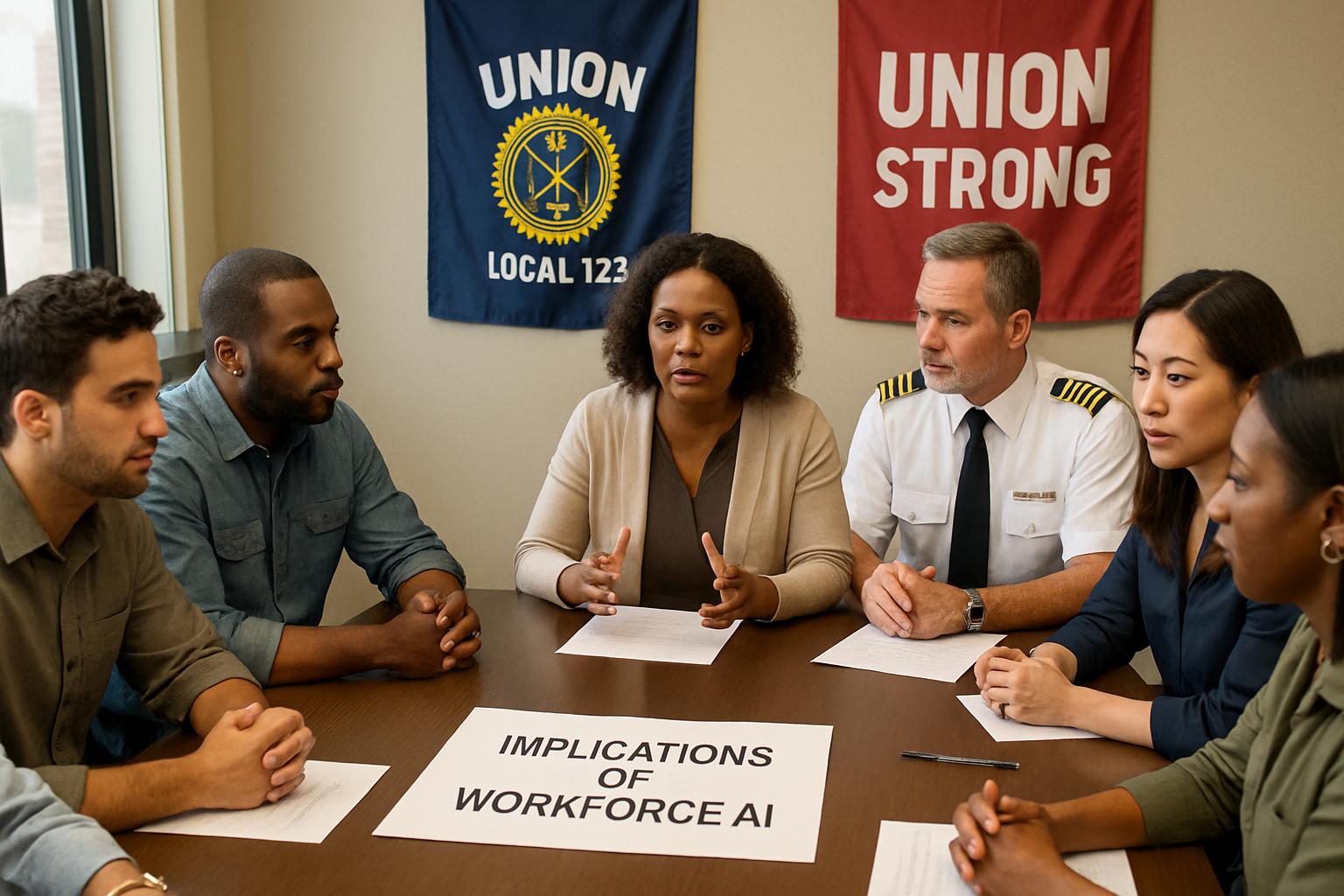
The Australian Services Union disputes the company’s optimism. Representatives claim workers were explicitly told machines would “replace” their Jobs during consultation meetings. Moreover, the Union warns it may escalate the dispute to the Fair Work Commission. Angus McFarland insists redeployment offers lack detail and timelines.
Union negotiators seek contractual limits on Automation deployment without prior review. Additionally, they demand reskilling funds tied to transferable digital competencies. Historical grievances strengthen their bargaining stance; Qantas paid $120 million in 2024 over illegal outsourcing.
Tensions therefore centre on trust, transparency, and enforceable guarantees. To assess actual exposure, objective labour statistics are required next.
Automation Impact Key Statistics
Independent studies help separate emotion from evidence. PwC’s 2025 Global AI Jobs Barometer offers relevant benchmarks for the Aviation sector. Consequently, numbers below illustrate likely labour shifts.
- 28% of clerical airline tasks show high Automation potential within five years, PwC reports.
- Roles requiring AI oversight grew wages 12% faster than average Australian positions.
- Workforce AI governance roles increased 22% across carriers during 2025.
- Customer service chatbots now handle 60% of first queries across global Aviation carriers.
Nevertheless, research stresses that task change outpaces outright role elimination in most cases. Therefore, strategic training becomes the decisive variable.
These statistics contextualise the Mascot cuts within broader Automation dynamics. Next, we explore specific reskilling pathways available to displaced staff.
Skills And Reskilling Paths
Displaced workers possess domain knowledge valuable to digital initiatives. Moreover, Qantas plans to fill hundreds of tech Jobs, presenting internal mobility options. Professionals can enhance their Workforce AI expertise with the AI Marketing Strategist™ certification endorsed by global employers. Additionally, micro-credential programs covering data literacy and prompt engineering now run monthly at the Adelaide hub.
Consequently, Workforce AI literacy becomes a competitive advantage, not merely a defensive tactic. In contrast, neglecting upskilling risks permanent displacement as machine adoption accelerates.
Targeted training therefore offers a practical buffer against uncertainty. Comparative industry evidence further clarifies possible outcomes.
Strategic Takeaways For Leaders
Global Aviation Industry comparisons reveal varied approaches to AI adoption. Lufthansa and Delta still increased clerical headcount after rolling out chatbots, due to new analytical roles. Conversely, some low-cost carriers outsourced support functions post-automation to lower costs. Therefore, outcomes depend on consultation quality, investment scale, and leadership vision.
Experts advise integrating Workforce AI governance boards involving IT, HR, and Union representatives. Moreover, transparent metrics tracking created and lost Jobs improve accountability. Qantas could adopt similar dashboards to rebuild trust rapidly.
These insights illustrate actionable principles for balancing innovation and employment. The conclusion consolidates major findings and recommends next steps.
Workforce AI is reshaping corporate structures, yet outcomes remain negotiable. Qantas shows both the promise of efficiency and the peril of rushed communication. Union concerns highlight the human stakes behind code and sensors. Furthermore, independent data suggests training mitigates most displacement risk. Consequently, leaders should fund robust reskilling, publish clear impact metrics, and invite continuous dialogue. Employees, meanwhile, can future-proof careers through targeted credentials like the AI Marketing Strategist™. Investors will reward firms that harness Workforce AI responsibly and transparently. Explore the certification path today and position yourself at the forefront of ethical Automation.


