

AI CERTs
6 hours ago
Workflow Automation Bots Accelerate Enterprise Productivity
Enterprises face relentless pressure to deliver more with fewer resources. Meanwhile, market volatility and digital expectations tighten delivery windows across every sector. Consequently, leaders are revisiting process automation to release trapped capacity. Workflow Automation Bots now sit at the center of that discussion. Unlike early screen-scraping scripts, modern bots coordinate tasks, data, and decisions across entire workflows. Moreover, agentic capabilities allow them to plan multi-step journeys and adapt to exceptions. Gartner projects hyperautomation software spend will exceed one trillion dollars by 2028. McKinsey likewise estimates trillions in annual value once organizations redesign work around intelligent agents. However, analysts also warn that hype and poor governance threaten hard-won gains. This article dissects market momentum, practical benefits, integration realities, and governance imperatives. Additionally, readers will gain clear guidance on mitigating risks and scaling sustainable automation programs. The journey begins with the market forces accelerating adoption across global enterprises.
Enterprise Automation Market Momentum
Global automation spending is rising faster than general IT budgets. Furthermore, Gartner forecasts hyperautomation-enablement software to reach $1.07 trillion by 2028. Mordor Intelligence pegs the narrower workflow automation segment at $23.8 billion for 2025. Modern Workflow Automation Bots are central to these budget lines. In contrast, Redwood’s 2025 survey shows 73% of companies increased automation budgets last year. Enterprise Productivity remains the primary justification, with 48.6% reporting efficiency jumps of at least 25%. Consequently, executives view automation as a board-level priority rather than a tactical experiment. This momentum encourages vendors to embed generative AI inside platforms, expanding bot reach. Yet, rising budgets attract scrutiny from finance officers demanding clear returns. These numbers highlight sustained investment. Therefore, understanding the shift toward agentic automation becomes critical.
Agentic Automation Shift Explained
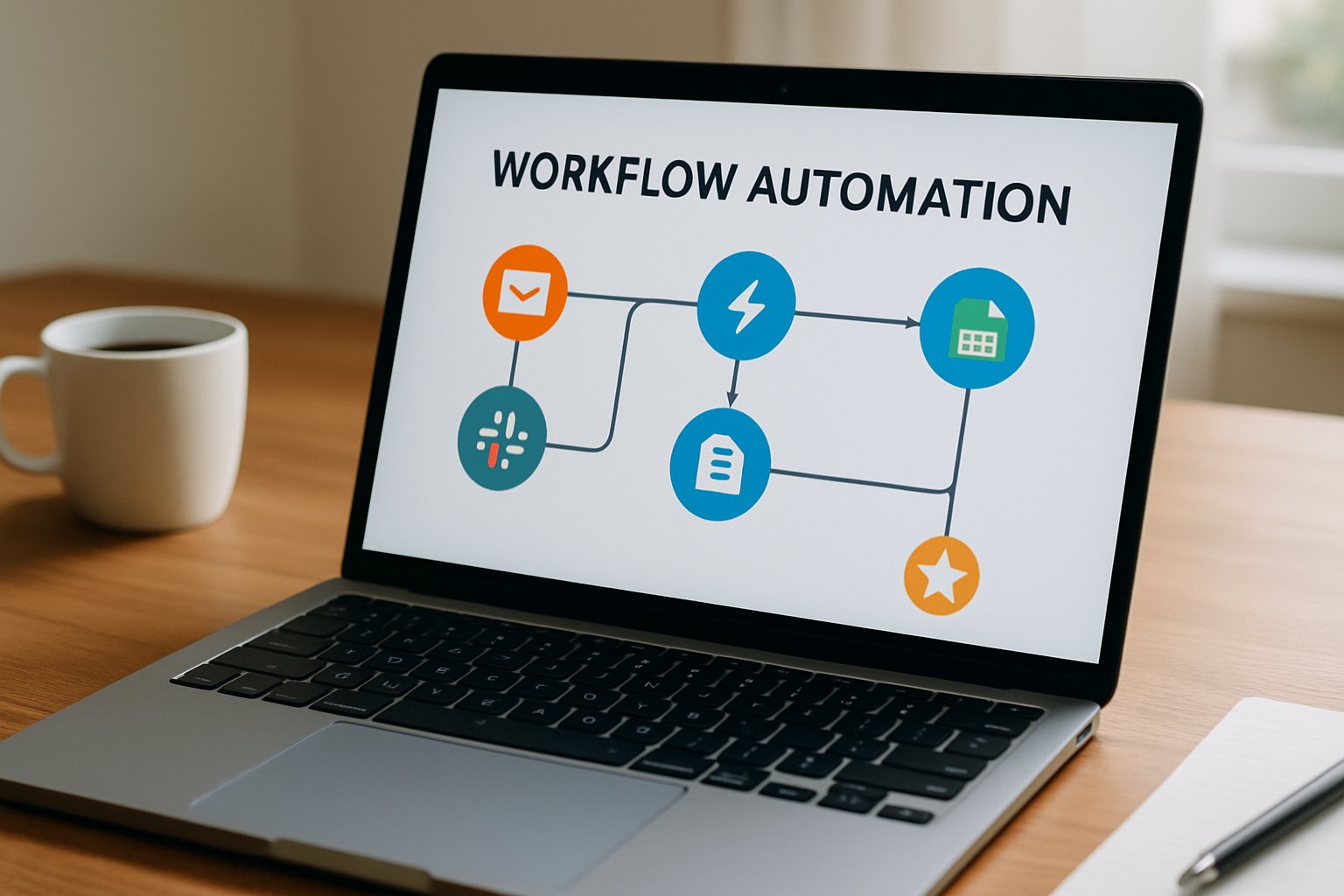
Traditional RPA handled deterministic tasks through UI scripts. However, agentic automation blends planning, reasoning, and orchestration across varied systems. Gartner warns more than 40% of agentic projects could be canceled by 2027 without governance. Nevertheless, vendors such as UiPath and Microsoft continue showcasing intelligent agents in flagship releases. Moreover, these agents navigate exceptions and trigger downstream actions without human clicks. Such flexibility boosts Enterprise Productivity beyond earlier limits. Meanwhile, Tool Integration layers connect APIs, IDP engines, and low-code apps under one control plane. Consequently, organizations gain visibility and resilience when processes change. Workflow Automation Bots now operate as collaborative agents rather than isolated macros. These advances expand applicable use cases while raising implementation complexity. The next section quantifies benefits emerging from mature deployments.
Productivity Returns Quantified Clearly
McKinsey estimates automation and AI unlock trillions in annual economic value globally. Additionally, Redwood’s index shows 36.6% of respondents cut costs by at least 25% through automation. Vendor case studies echo those gains, citing 30–90% cycle-time reductions on finance workflows. Furthermore, Forrester’s TEI report on Kryon modeled 352% ROI over three years. Workflow Automation Bots deliver such returns by executing 24/7 with near-zero errors. They also support rapid Tool Integration, shortening development timelines. In contrast, manual rekeying often produced inconsistent data and compliance headaches. Enterprise Productivity improves further when staff redeploy hours toward analytics or customer care. Consequently, organizations reach breakeven within months on well-scoped projects. These quantified benefits strengthen executive sponsorship. However, realizing them consistently demands disciplined integration and governance.
Integration And Governance Keys
Process mining should precede any automation build to identify high-value targets. Moreover, API-first design reduces maintenance compared with fragile screen scraping. Central orchestration consoles track bot inventories, credentials, and performance metrics. Meanwhile, privilege segmentation and audit trails protect sensitive data across Tool Integration layers. Workflow Automation Bots rely on robust observability to flag exceptions instantly. Consequently, teams avoid silent failures that erode trust. Gartner therefore positions governance platforms as essential to scale agentic initiatives. Additionally, documented change-control procedures curb bot sprawl and technical debt.
- Establish a cross-functional automation council.
- Enforce coding standards and version control.
- Monitor ROI through dashboards and alerts.
- Upskill employees on bot handoffs and oversight.
These practices anchor sustainable programs. Therefore, risk management becomes proactive rather than reactive, paving the way for broader adoption.
Risks And Mitigation Strategies
Hype remains the greatest threat to value realization. In contrast, poorly scoped pilots often chase flashy demos instead of measurable outcomes. Nevertheless, organizations can counter hype by linking each bot to a financial KPI. Security breaches also loom when bots hold powerful credentials. Consequently, least-privilege access, vaulting, and continuous monitoring are vital. Workforce anxiety emerges as roles evolve. Moreover, transparent communication and reskilling lessen resistance. Professionals can enhance their expertise with the AI+ Sales™ certification. Workflow Automation Bots flourish when human stewards understand orchestration principles. These mitigation steps protect both brand and balance sheet. Subsequently, teams can focus on structured scaling rather than firefighting.
Implementation Best Practice Steps
Discovery begins with event-log analysis to reveal process variants. Furthermore, prioritize automations showing high volume, low exception rates, and clear financial upside. Tool Integration should leverage native APIs where available. Meanwhile, low-code interfaces speed bot design for citizen developers under IT oversight. Workflow Automation Bots must pass staged testing before production. Additionally, measure cycle time, error rates, and redeployed hours immediately after launch. Share wins internally to build momentum. Consequently, new departments volunteer candidates, accelerating network effects. These stepwise actions convert strategy into repeatable execution. Therefore, the organization builds an automation flywheel.
Future Outlook And Actions
Analysts expect hyperautomation adoption curves to steepen through 2028. Moreover, generative AI will expand bot cognition, enabling judgment-heavy tasks like contract abstraction. Enterprise Productivity gains will compound as orchestration platforms unify disparate bots. However, governance maturity will decide winners and losers in this race. Investors will reward firms that convert Tool Integration sophistication into tangible margins. Workflow Automation Bots will account for a rising share of digital labor across industries. Therefore, leaders should refine roadmaps now, allocate reskilling budgets, and pilot agentic capabilities in controlled domains. Executives seeking personal leverage can pursue advanced credentials to guide these programs effectively.
In summary, modern automation marries intelligent agents with disciplined engineering. Organizations that apply the principles outlined here can accelerate value while avoiding common pitfalls. Consequently, the path to sustainable automation advantage lies within reach. Act now by auditing current workflows, defining ROI targets, and exploring specialized training to lead the next automation wave.


