

AI CERTS
3 hours ago
WNS research framework Ushers Interactive Decision Intelligence
Moreover, the concept claims measurable speed and adoption benefits. Grand View Research predicts a USD 36.34 billion decision-intelligence market by 2030. Meanwhile, Gartner expects half of corporate choices to be AI-augmented by 2027. These forecasts align with the experiential shift WNS describes. Nevertheless, security and verification risks persist. This article dissects the model, market context, benefits, and pitfalls for professional audiences. Readers will leave with clear next steps for adoption.
Why Interactivity Matters Now
Interactivity reshapes how analysts convey meaning. Text no longer suffices when executives expect immersive walkthroughs. Moreover, avatars, voice synthesis, and VR scenes turn static numbers into lived experiences. Therefore, insights travel faster across regional and functional silos. WNS argues this leap constitutes the fourth phase of corporate intelligence delivery.
Earlier phases focused on manual data pulls, then automated dashboards, and recently GenAI text summaries. In contrast, the new phase foregrounds interaction and emotion. Stakeholders can ask follow-up questions inside the visual canvas. Consequently, engagement metrics rise because end users control their learning path. The approach also supports richer Research narratives without adding length. A short AR scene can express a complex valuation story in seconds. Such audience agency underpins the commercial promise of ILI.
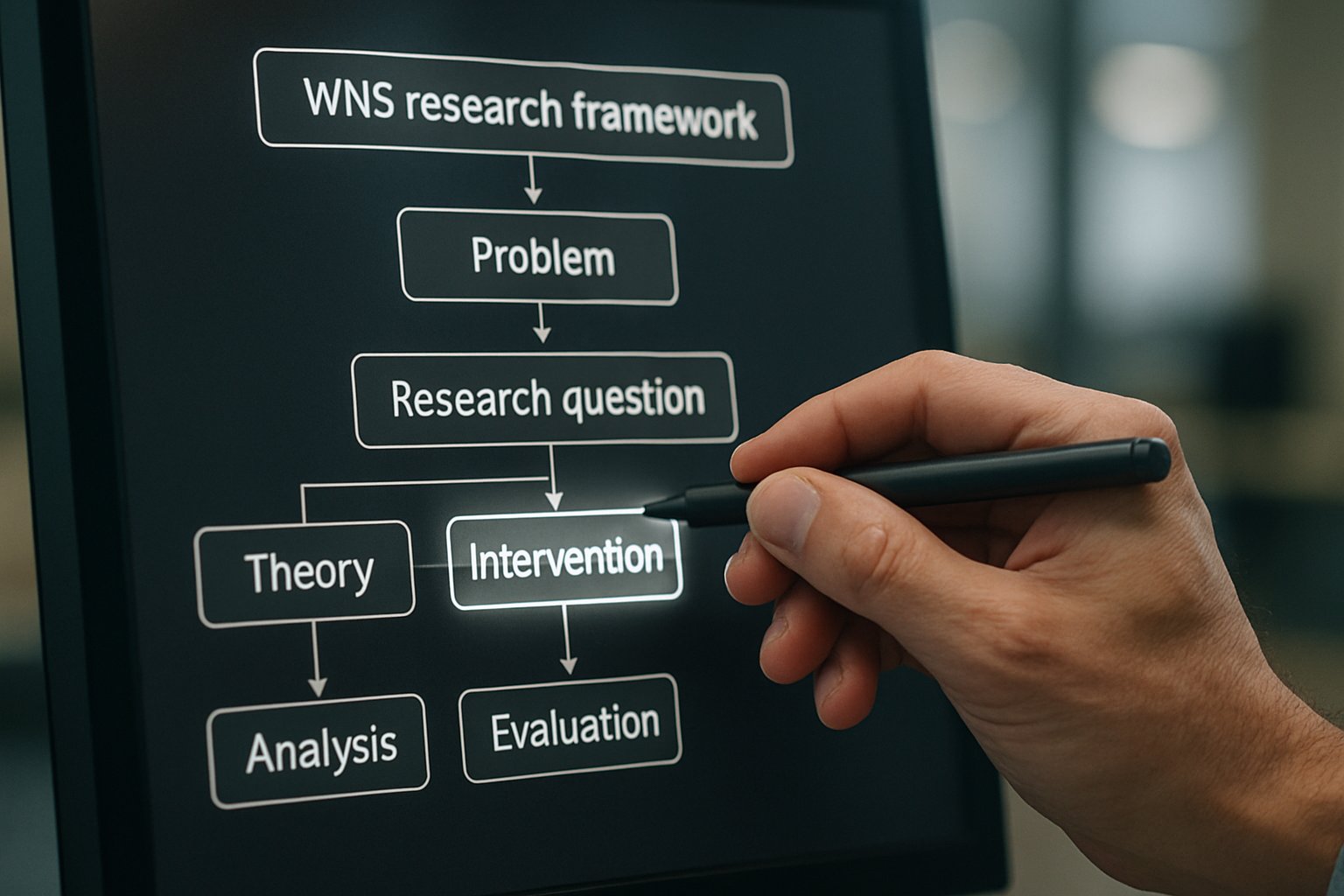
Interactive delivery boosts comprehension and speed. However, claims require evidence, which the next section unpacks.
Inside WNS Pilot Data
Pilot numbers offer concrete perspective. WNS ran internal experiments with finance analysts during 2023. Moreover, the pilots applied the WNS research framework within investment research workflows. According to WNS, meaningful data gathering time fell by roughly 25-30%. However, verifying AI outputs clawed back about 15% of that gain. Teams then invested an extra 10% of effort into presentation design and other creative assets. Consequently, the net cycle still shortened while output quality improved.
Key findings include:
- 25–30% reduction in data gathering time
- 15% of time redirected to source verification
- 10% additional focus on engaging storytelling
- Opportunities to codify AI training routines
These metrics reinforce the commercial rationale. Nevertheless, their scope remains limited because client projects were not disclosed. Therefore, independent verification will strengthen the argument. The WNS research framework will gain credibility once third-party audits confirm impact.
Early numbers suggest efficiency plus creativity gains. Next, we examine external market signals that shape adoption.
Market Trends And Forecasts
Broader analytics trends echo WNS’s position. Grand View Research values the decision-intelligence market at over USD 36 billion by 2030. Moreover, Gartner advises enterprises to embed AI agents within half of decisions by 2027. Multimodal GenAI, voice, and vision capabilities will reach 80% of enterprise software by 2030, Gartner states. Consequently, technological enablers for full interactivity already sit on most roadmaps. Immersive vendors, including EON Reality, keep lowering AR production barriers.
In contrast, security vendors observe rising blocked AI transactions. Zscaler’s 2025 ThreatLabz report highlights leakage risks linked to GenAI adoption. Nevertheless, investment momentum remains strong as boards prioritize actionable insight delivery. These forecasts create tailwinds for the WNS research framework and similar offerings. Yet market vocabulary varies; many buyers search for Decision Intelligence platforms rather than ILI. Therefore, marketing teams must bridge terminology gaps to capitalize on momentum.
Demand and technology trajectories appear favorable. However, governance issues demand equal attention, as the next section explores.
Risks And Governance Realities
Every innovation carries downside. Generative models still hallucinate sources. Therefore, analysts must preserve rigorous Research verification processes. WNS itself admits verification eroded part of the time saved. Additionally, immersive outputs expose sensitive data to new channels. Zscaler notes rising incidents of unauthorized data sharing through AI endpoints. Consequently, legal and compliance teams require clear audit trails. In contrast, many avatar tools are cloud-hosted, complicating data residency. Further, the immersive nature can hide context if designers over-optimize for spectacle. A gripping story without footnotes invites regulatory scrutiny. Organizations should adopt layered controls before launching the WNS research framework for client facing work. Best practice includes red-teaming prompts, logging model outputs, and mandating human approval.
Primary risk areas include:
- Source accuracy and hallucinations
- Data leakage across cloud tools
- Bias amplification in generated narratives
- Accessibility and disability compliance
Addressing these points protects brand trust. Subsequently, leaders can unlock genuine performance gains.
Governance is not optional in immersive analytics. Next, we look at technical building blocks needed for secure rollout.
Building An Immersive Stack
Technology architecture determines success. Teams need modular components that integrate data, models, and front-end experiences. Moreover, APIs must support real-time interactivity across voice, text, and 3D assets. Common layers include data lakes, vector databases, LLM orchestration, and XR engines. WNS demonstrates its approach through Triangle, Azure OpenAI, and Unity integration examples. The WNS research framework can slot into similar stacks when governed properly. Additionally, open telemetry simplifies monitoring of avatar sessions. Creative specialists then craft scenes that reinforce the analytic story. Consequently, business users receive coherent, branded experiences. Nevertheless, building everything internally increases cost. Partner ecosystems shorten ramp-up time while sharing risk. Professionals can enhance their expertise with the Chief AI Officer™ certification. Such programs cultivate architecture, policy, and change-management skills.
Skillsets And Culture Shift
Skills gaps often slow adoption more than technology. Data scientists know models, yet may lack theatrical flair. Creative directors script narratives, but rarely understand data lineage. Meanwhile, compliance leaders focus on risk instead of engagement. Therefore, cross-functional squads must co-create assets. The WNS research framework emphasizes analyst ownership while embedding design coaches. In practice, rotations and joint KPI structures encourage collaboration. Consequently, cultural alignment accelerates time to value.
Integrated teams balance rigor and imagination. Finally, we outline pragmatic next steps for executives.
Next Steps For Leaders
Executives should begin with a small proof of concept. However, they must secure data governance approvals first. Subsequently, select a high-impact report that suffers from low engagement. Apply the WNS research framework to transform that deliverable. Measure cycle time, viewer analytics, and decision outcomes. Compare metrics against historical baselines to test claims. Additionally, capture qualitative feedback using quick surveys. Scale only after checkpoints confirm security, accuracy, and cost goals. Leaders should allocate budget for ongoing creative support. Meanwhile, invest in training to deepen interactivity design skills. Professionals pursuing leadership roles can leverage the earlier mentioned certification for credibility. Consequently, the WNS research framework becomes a repeatable accelerator rather than a one-off stunt. Establish quarterly reviews to update models and storytelling assets.
Conclusion And Call-To-Action
Immersive, agentic delivery is moving from experiment to expectation. Moreover, pilots hint at real productivity and adoption gains. Governance, verification, and security must mature in parallel. Therefore, leaders should test the WNS research framework within controlled environments. Track speed, cost, and insight uptake before scaling. Meanwhile, invest in cross-functional skills and certified AI leadership. Creative storytellers, data scientists, and compliance experts can jointly craft the next breakthrough story. Consequently, organizations will transform static Research into interactive experiences that drive decisive action. Explore immersive prototypes today, then upskill with the recommended certification, to stay ahead of the curve.


