

AI CERTS
5 hours ago
Wikipedia vs Elon: Grokipedia Threat Assessment Explained
However, beneath the quip lies a deeper Grokipedia Threat Assessment shaping future knowledge ecosystems. Industry professionals now scrutinise comparative accuracy, traffic metrics, licensing friction, and business resilience. Meanwhile, the debate touches broader Knowledge Sovereignty concerns for governments and enterprises. Therefore, this article dissects numbers, studies, and strategic signals behind Wales’s confidence. Readers will gain a grounded view of how human vetting, governance, and market forces intersect.
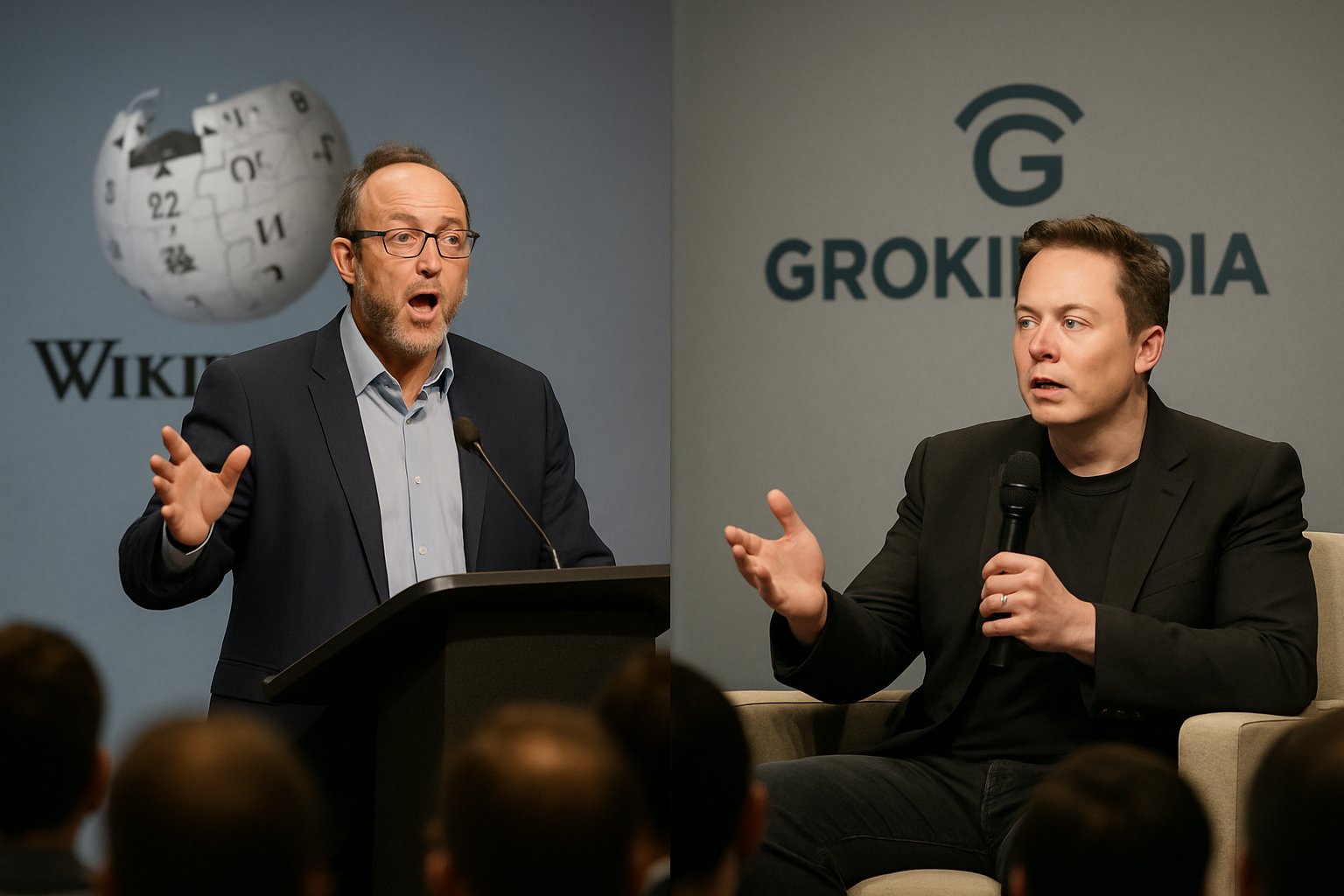
Moreover, we map emerging opportunities for technologists, policy leaders, and content strategists. Subsequently, certification paths are highlighted for those seeking authoritative skills. Ultimately, a balanced Grokipedia Threat Assessment informs decisions across AI product, legal, and editorial teams. Let us start with the principle Wales still champions.
Human Vetting Still Paramount
Jimmy Wales insists that quality demands deliberate human oversight. Furthermore, he notes that volunteers debate edits line by line. Such discourse, he argues, cultivates trust that algorithms cannot yet replicate. In contrast, Grokipedia articles emerge from a large language model without native fact-checking.
Consequently, hallucinations slip through, as several PolitiFact audits documented. One sample biography misattributed military service and cited a non-existent journal. Therefore, Wales frames the Grokipedia Threat Assessment as primarily an accuracy question rather than a volume race. Musk counters that scale and speed eventually outweigh manual curation.
Nevertheless, independent researchers still log higher error ratios for AI entries. Yasseri’s 2025 computational comparison found fewer references per word across thousands of pairs. These findings support Wales’s cautious stance. Consequently, human vetting remains Wikipedia’s core differentiator as the next sections explore.
AI Encyclopedia Accuracy Gaps
Data, not ideology, underscores current reliability gaps. Moreover, the launch corpus held about 885,000 Grokipedia articles, while Wikipedia surpassed seven million English entries. However, size alone did not ensure citation density.
- Grokipedia launch size: 885,000 articles
- English Wikipedia corpus: 7+ million articles
- Reference density lower by 27% in audits
- Rightward source shift detected in political topics
Yasseri measured systematic decreases, recording fewer footnotes per 1,000 words for Grokipedia. Researchers also observed temporal drift, with recent events inconsistently updated across entry sets. Additionally, a subset of political articles leaned rightward in source selection. Consequently, time-sensitive information may mislead readers until manual audits occur.
Musk brushed off criticism, tweeting future versions would be “10x better” than Wikipedia. Nevertheless, fact-checkers want transparent revision logs before accepting that promise. Consequently, many analysts conclude the Grokipedia Threat Assessment hinges on verifiable audit trails, not marketing claims. These numbers clarify performance gaps. Meanwhile, our focus now shifts to how traffic patterns amplify the stakes.
Wikipedia Traffic Shift Context
Traffic metrics reveal another competitive front. The Wikimedia Foundation logged an eight-percent dip in human pageviews from March to August 2025. Furthermore, the foundation attributed part of that decline to AI driven search snippets offering instant answers. In contrast, Wikipedia still powers many of those snippets despite losing clicks.
Therefore, Grokipedia’s reuse of Creative Commons content without reciprocal traffic worries editors. Jimmy Wales urged AI firms to license through Wikimedia Enterprise to sustain operations. Meanwhile, Musk has not announced such a deal. Consequently, retention of volunteer editors ties directly to visibility and donations.
Moreover, decreased engagement could reduce future volunteer recruitment, threatening article quality long term. Therefore, funding diversification emerges as a strategic imperative for the foundation. These traffic shifts intensify the Grokipedia Threat Assessment beyond mere technology. Next, governance and licensing debates take centre stage.
Bias, Licensing, Governance Issues
Licensing questions surfaced immediately after launch. Moreover, journalists spotted near-verbatim passages copied from Wikipedia, satisfying attribution only with small footers. Creative Commons BY-SA allows copying if reusers credit and share alike. However, critics argue Grokipedia did not always propagate derivative licensing, potentially limiting downstream openness.
Knowledge Sovereignty advocates warn that opaque AI pipelines centralise narrative control within private infrastructure. In contrast, Wikipedia’s history pages document every word change since 2001. Consequently, governance scholars call for external audits of Grok models and editorial logic. Musk maintains that open-sourcing Grok weights could expose proprietary safety layers.
Jimmy Wales counters that without transparency, trust erodes quickly. Therefore, the Grokipedia Threat Assessment must incorporate licensing compliance and bias mitigation checkpoints. These governance battles shape upcoming reliability conversations. Subsequently, we examine future oversight scenarios.
Future Reliability And Oversight
Model upgrades continue at a blistering cadence. Furthermore, xAI promises version 1.0 with improved hallucination suppression and automated citation retrieval. Independent researchers plan longitudinal studies to measure whether error rates fall meaningfully. Early benchmarks show Grok v0.9 cuts hallucinations by roughly fifteen percent on synthetic QA tests.
However, peer-reviewed confirmation is still pending, keeping confidence levels modest. Consequently, any sustainable competitive edge relies on verifiable, third-party metrics rather than vendor claims. Knowledge Sovereignty proponents push for regional hosting and local corpus alignment. Meanwhile, regulators explore soft law guidance, fearing automated misinformation may affect elections.
The Wikipedia founder welcomes higher model quality yet insists human editorial vetoes remain indispensable. Therefore, comprehensive Grokipedia Threat Assessment frameworks must track versioned performance, licensing status, and community governance. These oversight trajectories intersect with business sustainability, our next topic.
Knowledge Sovereignty Business Stakes
Economics underpins every knowledge platform. Moreover, Wikipedia’s donation model depends on public goodwill and sustained traffic. Generative AI threatens that funnel by answering queries without source visits. Consequently, Wikimedia Enterprise offers paid, high-speed APIs to commercial users.
Musk, however, often advocates free scraping, citing public interest. In contrast, corporate clients crave stable provenance to de-risk compliance. Therefore, organisations investing in Knowledge Sovereignty increasingly prefer licensed, audited knowledge feeds. Professionals can bolster governance skills.
They can earn the AI Foundation Essentials™ certification for structured AI foundations. Analysts estimate that only one percent of heavy AI users have subscribed to the paid feed so far. Consequently, monetisation goals remain elusive despite executive optimism. Consequently, the Grokipedia Threat Assessment becomes a boardroom topic linking compliance, reputation, and talent strategy. These market forces feed directly into our concluding recommendations.
Concluding Outlook And Action
Today's analysis reinforces Jimmy Wales’s confidence while exposing unresolved challenges for AI encyclopedias. Grokipedia’s scale impresses, yet audits still log citation gaps and occasional bias. Meanwhile, Wikipedia fights traffic losses and licensing conflicts. Knowledge Sovereignty narratives intensify as governments seek trusted information pipelines.
Therefore, stakeholders need continuous, data-driven Grokipedia Threat Assessment processes monitoring accuracy, governance, and economics. Moreover, enterprises should evaluate paid Wikimedia feeds against Grokipedia’s evolving offerings. Consequently, leaders must align legal, technical, and editorial teams before integrating AI knowledge sources. Nevertheless, a living Grokipedia Threat Assessment should be revisited quarterly as models and policies evolve.
Subsequently, pursuing certification paths strengthens internal expertise and fosters responsible tooling adoption. Act now: review audit metrics, refine licensing deals, and secure certified talent to safeguard informational trust.


