

AI CERTs
3 months ago
Why Risk Exposure Mapping Tools Now Drive Smarter Underwriting
Wildfire and flood losses keep climbing for property carriers. Consequently, underwriting teams demand sharper visibility into location-level hazards. Traditional zone averages often mask extreme roof or vegetation risks. Therefore, many carriers now deploy risk exposure mapping tools powered by artificial intelligence. These platforms combine imagery, climate data, and actuarial modeling for granular scores. Moreover, insurtech analytics APIs feed those scores straight into policy systems within seconds. Regulators have noticed the shift and are drafting governance rules for algorithmic underwriting. Meanwhile, investors poured 1.27 billion dollars into AI insurtech during one recent quarter. This article explains how the technology works, who leads the market, and where caution remains. Underwriters will gain a practical roadmap for evaluating and integrating these advanced solutions. Additionally, readers will learn about available certifications to boost personal competency. Consequently, decisions can balance innovation benefits against regulatory and operational hazards. Explore the details below.
Market Adoption Momentum Surge
Funding volumes highlight momentum. Gallagher Re recorded a 40% jump in Q2 2024 insurtech financing to 1.27 billion dollars. Moreover, one-third of that capital targeted AI underwriting solutions. Major launches from Zesty.ai, Jupiter Intelligence, and Moody’s RMS followed the money.
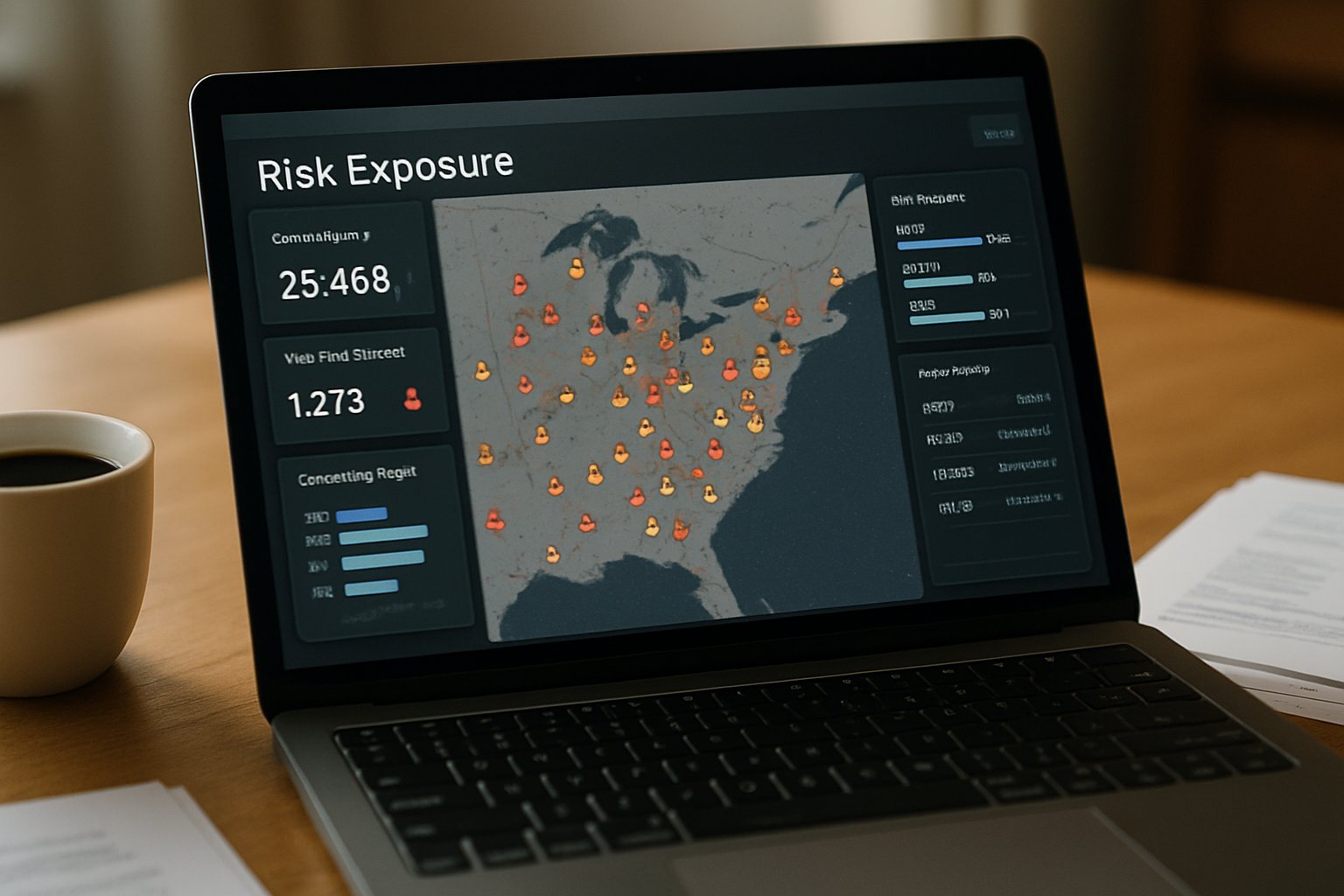
Consequently, carrier adoption accelerated beyond pilots. Zesty.ai solo delivered over 31 million property assessments during 2024. Jupiter's ClimateScore supported Fannie Mae in evaluating 17 million mortgage assets. In contrast, traditional zonal models never approached such object-level detail.
Reinsurers also influence uptake. They increasingly demand property-level exposure data before offering capacity. Consequently, cedants without advanced analytics face restrictive terms or higher rates.
These signals confirm commercial readiness. However, escalating adoption pressures underwriters to refine governance quickly.
Therefore, the next section explores how technology reshapes daily workflows.
Technology Enhances Underwriting Workflow
AI platforms gather aerial imagery, LIDAR, and public records into massive data lakes. Computer vision classifies roof age, construction type, and vegetation proximity. Subsequently, per-property peril scores reach underwriting desks through real-time APIs.
Underwriters apply risk exposure mapping tools at three pivotal moments:
- New business triage for quick quote or referral decisions.
- Renewal reviews using change detection alerts on roof or vegetation shifts.
- Portfolio accumulation checks supporting reinsurance and capital planning.
Moreover, insurtech analytics enrich every stage with probability distributions rather than single scores. The shift helps actuaries calibrate reserve loads precisely. Additionally, integration with actuarial modeling software reduces manual file transfers.
Consequently, cycle times shrink from days to minutes. One carrier reported 35% faster quote issuance after embedding the risk exposure mapping tools API within its portal.
Jupiter Intelligence supplements hazard scores with adaptation ROI metrics. Underwriters now test retrofit scenarios before offering premium discounts. Similarly, RMS’s UnderwriteIQ exposes accumulation results alongside exposure heatmaps, enabling immediate appetite checks.
Data ingestion pipelines rely on cloud scalability. Therefore, versioning each input datasource becomes essential for traceability. Many vendors embed checksum verification to detect corrupted imagery or records swiftly. Additionally, audit dashboards visualize ingestion latency trends for operations teams.
Workflow efficiency raises competitive pressure across the market. Nevertheless, new governance requirements are emerging just as quickly.
Next, we examine the evolving regulatory landscape.
Regulatory Oversight Expands Scope
Supervisors recognise that algorithmic underwriting affects consumer fairness. NAIC released its Artificial Intelligence Model Bulletin in December 2023. Several states, including New Jersey, have already adopted comparable language.
The guidance demands written AI programs, model validation, and audit trails. Moreover, insurers must explain adverse decisions and track complaints. Consequently, carriers using risk exposure mapping tools must document input sources, test results, and human oversight.
Andrew Johnston from Gallagher Re warned, “Removing the human entirely is a mistake.” His view aligns with regulator expectations for meaningful human review. In contrast, early adopters that embraced a hybrid approach reported smoother examinations.
States expect to adopt standardized data calls by 2027. Consequently, carriers must prepare to submit model documentation in machine-readable format. Early testers report smoother filings when metadata follows emerging open schema proposals.
These developments raise compliance stakes for every implementation. Therefore, the following section weighs the technology’s benefits against its limitations.
Key Benefits And Limitations
Property-level analytics deliver measurable advantages. Vendors claim improved loss ratio lift between three and seven percentage points. Moreover, Zesty.ai projects reaching 50 million assessments during 2025, underscoring scale gains.
Underwriters highlight three standout benefits:
- Greater pricing accuracy through building-specific hazard scores.
- Operational savings via automatic data prefill and reduced inspections.
- Portfolio intelligence supporting targeted reinsurance purchases.
However, limitations persist. Data gaps, imagery vintage mismatches, and model drift can erode accuracy. Furthermore, biased proxies in insurtech analytics may create disparate impacts.
Actuarial modeling teams also note variance between vendor outputs and internal loss histories. Therefore, governance frameworks must include independent back-testing.
Case studies reveal tangible savings. One southeastern carrier saw inspection costs drop 18% after automation. Moreover, underwriters reclaimed several hours weekly, allowing deeper client engagement.
These pros and cons clarify decision priorities. Subsequently, practical integration steps become critical for success.
The next section provides a concise checklist for integration.
Integration Best Practice Steps
Successful deployments follow structured phases. Initially, insurers audit data lineage and update cadence. Moreover, they negotiate API service-level agreements and ownership rights for derived data.
Next, model governance committees request validation reports, drift detection metrics, and explainability artifacts. Consequently, teams using risk exposure mapping tools must schedule regular recalibration cycles.
Professionals can enhance their expertise with the AI+ UX Designer™ certification. This program deepens understanding of AI product design principles, supporting cross-functional collaboration.
Finally, security leaders implement countermeasures against image manipulation and adversarial attacks. Additionally, underwriting platforms integrate audit logs for regulator inspection.
Pilot programs should involve parallel underwriting. Teams score policies using legacy and new methods, then compare outcomes after renewals. Furthermore, storing both results aids later model drift analysis and regulator discussions.
These steps create a defensible implementation roadmap. Nevertheless, strategic vision remains essential for long-term differentiation.
Therefore, we close by looking ahead to market evolution.
Future Outlook And Strategy
Analyst forecasts predict 20–35% compound growth for AI underwriting segments through the early 2030s. Moreover, rising climate volatility will intensify demand for granular analytics.
Competitive carriers plan enterprise-wide data strategies that fuse insurtech analytics, actuarial modeling, and customer engagement data. Consequently, siloed pilots will fade in favor of platform approaches.
Vendor ecosystems will likely consolidate around open accumulation APIs. However, buyers will resist lock-in by insisting on interoperable standards.
Meanwhile, regulators will expand exam tooling to ingest model metadata automatically. Therefore, transparent reporting frameworks may become a prerequisite for market access.
Ongoing success will hinge on disciplined human oversight. Underwriters who blend experience with risk exposure mapping tools insights will set new performance benchmarks.
Meanwhile, brokers leverage the same datasets to advise clients on risk mitigation investments. This collaborative usage could reshape value chains.
These trends signal both opportunity and responsibility. Consequently, decision makers must craft adaptive strategies rooted in governance and innovation.
Final Thoughts And Action
AI imagery, granular scoring, and portfolio APIs have shifted underwriting from art to science. Consequently, carriers deploying risk exposure mapping tools now differentiate pricing and capital strategy. Nevertheless, success depends on disciplined validation, transparent reporting, and sustained human oversight. Regulators will intensify examinations, so proactive governance delivers competitive advantage. Moreover, integrating insurtech analytics with actuarial modeling ensures consistent loss forecasting across functions.
Underwriters should evaluate vendor fit, formalize controls, and harness risk exposure mapping tools insights quickly. Explore certification pathways such as the linked AI+ program to strengthen cross-disciplinary abilities. By combining professional growth with advanced risk exposure mapping tools, teams can secure resilient portfolios.


