

AI CERTS
2 hours ago
Wearable Vision: Samsung Galaxy Ring Expansion and Market Impact
Analysts call the move a watershed moment for smart jewellery markets. Moreover, legal skirmishes with Oura underline competitive stakes. Professionals evaluating employee wellness programs now watch the category closely. Meanwhile, investors assess whether the ecosystem advantages will translate into durable revenue.
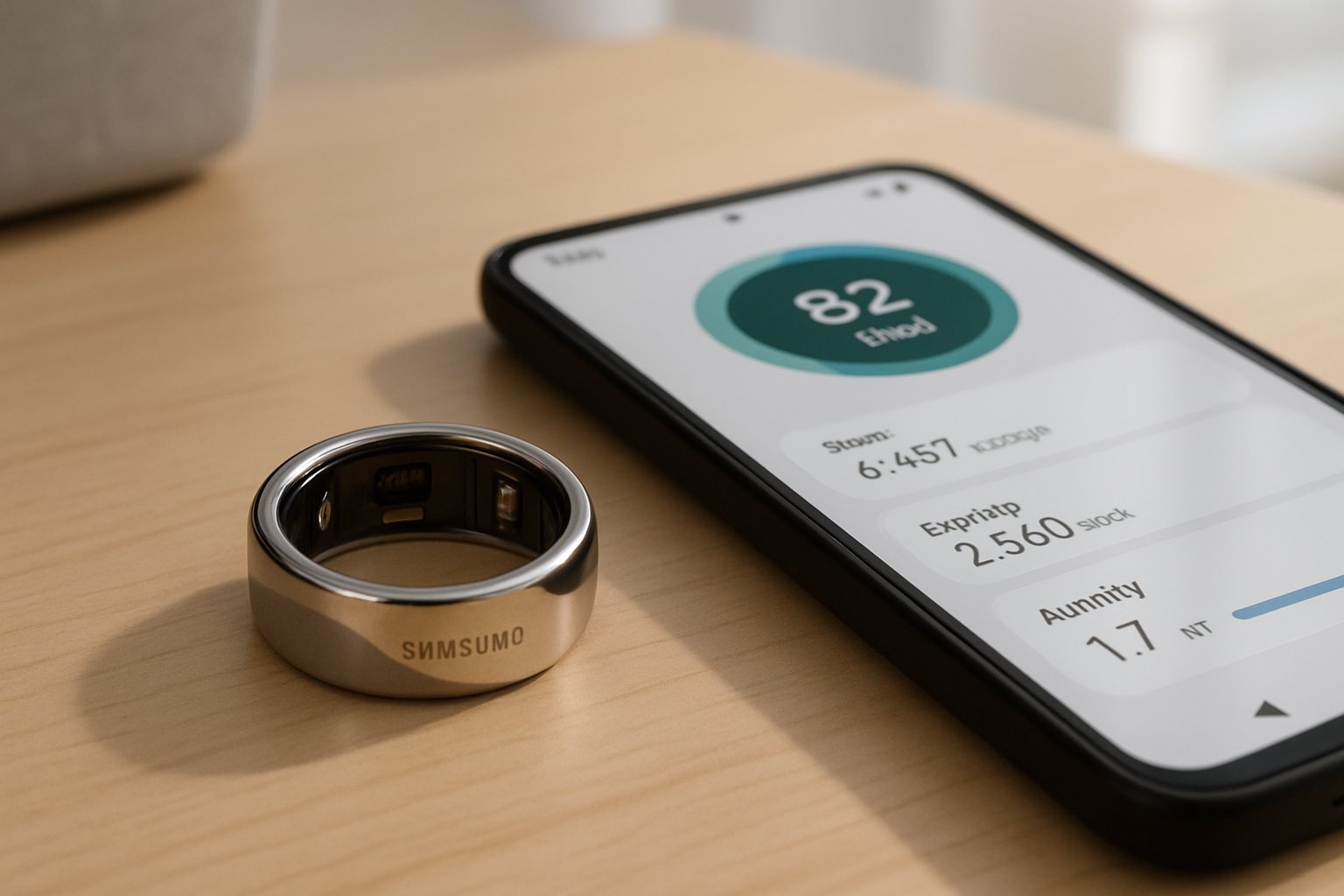
This article dissects the product, the market, and the broader Wearable Vision narrative. Each section offers concise insights for informed decision making. Credit Suisse projects fivefold revenue growth for smart jewellery within three years. Therefore, early adopters could capture brand loyalty ahead of mass uptake.
Market Momentum Snapshot Now
Global smart jewelry revenue remains small, yet growth rates impress stakeholders. Fortune Business Insights projects hundreds of millions in annual sales by 2028. Consequently, compound annual growth could exceed 20 percent, according to Mordor Intelligence. In contrast, mature smartwatch growth has slowed, opening space for fresh Wearable Vision form factors.
- Projected CAGR exceeds 20 percent through 2028.
- Global revenue could hit hundreds of millions by 2028.
- North America remains the leading regional adopter.
Samsung entered at an opportune moment, expanding availability to 53 markets within months. Subsequently, retailers offered discounts, signaling mainstream traction without subscription barriers. Channel checks reveal expanding shelf space in big box stores. Retail buyers cite strong gift appeal during holiday promotions.
Preorder allocation reportedly sold out within the first 48 hours. Consequently, analysts revised shipment models upward for fiscal 2026. Meanwhile, venture capital is flowing toward sensor suppliers supporting miniaturisation. Investors now treat smart jewelry as a serious wellness segment.
However, specifications still determine adoption rates. That technical detail appears next.
Hardware Specs Deep Overview
Hardware quality frames customer trust. Samsung engineers chose lightweight titanium with a concave profile that resists scratches. Weight ranges from 2.3 grams to 3.3 grams across sizes five through fifteen. Battery capacity peaks at 23.5 mAh, supporting seven days typical usage per charge.
- Sizes now span US sizes five through fifteen.
- Battery life reaches up to seven days per charge.
- Water resistance rated at 10 ATM and IP68.
- Bluetooth Low Energy 5.4 enables efficient connectivity.
Additionally, the included charging case holds 361 mAh, delivering several top-ups while traveling. Sensors include an accelerometer, optical PPG, and a skin temperature module. Consequently, the ring endures 10 ATM and IP68 water exposure. Bluetooth Low Energy 5.4 ensures stable phone connectivity with minimal drain.
Therefore, the hardware foundation aligns with the broader Wearable Vision promise of unobtrusive data streams. Engineers balanced durability with comfort by choosing medical-grade titanium alloy. The concave outer wall prevents surface contact when fingers rest on desks. Reviewers praise the beveled interior that reduces heat buildup during workouts.
Additionally, internal firmware optimises sampling rates to prolong battery reserve. Thermal modeling guided placement of the tiny microcontroller for optimal skin distance. Manufacturing partners utilise laser welding to maintain airtight tolerances. Quality control includes ultrasonic scanning for micro-fractures before packaging.
Design and battery life support continuous wear. Nevertheless, software ultimately unlocks real value. The next section explores coaching algorithms.
Software Coaching Key Features
Software differentiation starts inside Samsung Health. Sleep tracking runs continuously, generating an Energy Score each morning. Furthermore, a dedicated sleep coach offers behavioral nudges after seven nights of data. Running Coach adapts workouts based on heart-rate zones collected by the ring.
Moreover, the new Sleep Environment Report leverages SmartThings to analyze room temperature and noise. Mindfulness tracking collects mood inputs, subsequently merging them with biometric patterns. Galaxy AI underpins these insights, maintaining the overarching Wearable Vision strategy. Algorithm designers trained models on anonymised datasets exceeding one billion nights.
Edge processing occurs locally, reducing cloud dependency and latency. Consequently, data sovereignty requirements in Europe remained satisfied. User feedback surfaces through weekly digest cards inside the mobile dashboard. Moreover, third-party integrations allow export into research platforms via open APIs.
Importantly, all features operate without a paid subscription plan. Professionals seeking continuous wellness guidance therefore avoid recurring fees. Health analytics position software as the primary differentiator. Consequently, personalised coaching strengthens user engagement.
Competitive pressures clarify that importance next.
Competitive Landscape Current Dynamics
Oura continues to lead shipments, yet Samsung challenges the throne. Furthermore, the Korean giant filed pre-emptive litigation seeking protection from Oura patent claims. In contrast, Oura relies on a subscription business model and strong IP portfolio. Consequently, pricing differences may sway customers prioritizing upfront cost over analytic depth.
Analysts also monitor smaller rivals such as Ultrahuman and Conn Wear entering regional niches. Nevertheless, scale advantages favour ecosystem owners with multi-device synergies. Industry attorneys predict prolonged negotiations around cross-licensing. Some observers compare the conflict to early smartphone patent wars.
Nevertheless, public filings suggest room for eventual settlement. Meanwhile, consumer sentiment remains largely unaffected by courtroom headlines. Analysts warn that injunctions could delay regional launches if talks stall. Legal maneuvering shapes market boundaries.
However, consumer choice still pivots on value perception. Business ramifications emerge in the next section.
Critical Business Implications Ahead
Enterprise wellness programs increasingly reimburse smart ring purchases. Therefore, corporate buyers evaluate device accuracy, data governance, and integration with existing dashboards. Data exporting through Health APIs simplifies reporting into HR platforms. Additionally, privacy compliance remains mandatory as biometric regulations tighten worldwide.
Professionals can boost compliance skills through targeted training. Consider the AI Ethical Hacker™ certification for advanced security literacy. Moreover, hardware procurement teams value suppliers with transparent repair processes and predictable inventory. Consequently, device lifecycle planning enters financial forecasts.
Robust alignment with Wearable Vision standards enhances stakeholder confidence. Finance teams evaluate depreciation schedules similar to laptops or tablets. Procurement officers demand multiple vendor quotes to benchmark pricing fairness. Additionally, onboarding materials must explain wellness limits to avoid medical liability.
Internal communication departments craft messaging focused on voluntary participation. Consequently, cross-functional collaboration becomes essential for smooth deployment. Operational policies hinge on trustworthy data pipelines. Nevertheless, strategic forecasting still depends on future innovation pace.
Predictions for that pace follow now.
Strategic Future Outlook Pathways
Analysts expect algorithmic expansions, including potential sleep apnea detection, pending regulatory clearance. Meanwhile, multi-device handoff could extend battery efficiency by sharing sensors across phone and watch. Market watchers also foresee a premium band tier with precious metal finishes. Furthermore, additional coach modules may target stress reduction and fertility tracking.
Augmented reality roadmaps hint at Wearable Vision harmonizing eyewear and smart jewellery data streams. Consequently, professionals designing digital therapeutics should monitor firmware update cycles. In contrast, budget innovators may chase unit scale through emerging markets. Component miniaturisation will unlock alternative form factors, including clip-on badges.
Researchers also study biodegradable polymers for single-use clinical trials. Moreover, quantum safe encryption may protect future biometric archives. Battery chemistry improvements could extend wear time to two weeks. Eventually, sensor fusion might detect hydration status or blood pressure passively.
Meanwhile, regulatory bodies explore new classification tiers for wellness wearables. Technology trajectories appear promising yet unpredictable. Therefore, early ecosystem commitments require agile roadmaps. A concise wrap-up concludes the analysis.
Key Takeaways
Wearable Vision continues to link data, design, and coaching into single minimalist accessories. Galaxy Ring showcases market readiness and rapid feature iteration. Moreover, competitive lawsuits and subscription contrasts will influence adoption curves. Meanwhile, hardware reliability, privacy compliance, and ecosystem support remain procurement priorities.
Subsequently, corporate wellness leaders should trial devices with limited pilot cohorts. Professionals seeking security mastery can revisit the earlier AI Ethical Hacker™ resource. Consequently, informed action today prepares organisations for tomorrow's adaptive wellbeing platforms. Meanwhile, executives recognise Wearable Vision as a driver for personalised benefits.


