

AI CERTS
3 months ago
Waymo’s Aggressive Autonomous Vehicle Ops Expansion Across U.S.
Consequently, commuters from San Francisco to Phoenix can now summon driverless cars for daily travel. Meanwhile, rival developers struggle with similar scaling goals. Industry insiders, therefore examine every new service zone for hints about commercial viability. Moreover, partnerships with Uber and Avis indicate rising operational pragmatism. Nevertheless, May's recall reminded investors that safety incidents can slow momentum. Subsequently, regulators launched additional probes into software behavior during edge cases. In contrast, Waymo maintains its record of 100 million autonomous miles as proof of readiness.
Driverless Momentum Indicators Rise
Waymo reports more than 100 million fully autonomous miles on public roads. Moreover, the company delivers about 250,000 paid trips each week. These figures underscore unmatched scale within the still nascent robotaxi market. Consequently, investors see momentum that validates years of heavy research spending. Additionally, these accomplishments spotlight the firm’s mastery of Autonomous Vehicle Ops across multiple terrains. The operator now fields an estimated fleet approaching 2,000 electric Jaguar and Zeekr vehicles. However, exact counts fluctuate as software updates sideline small subsets for recalibration. Incorporating continuous feedback loops allows faster adaptation across diverse city environments.
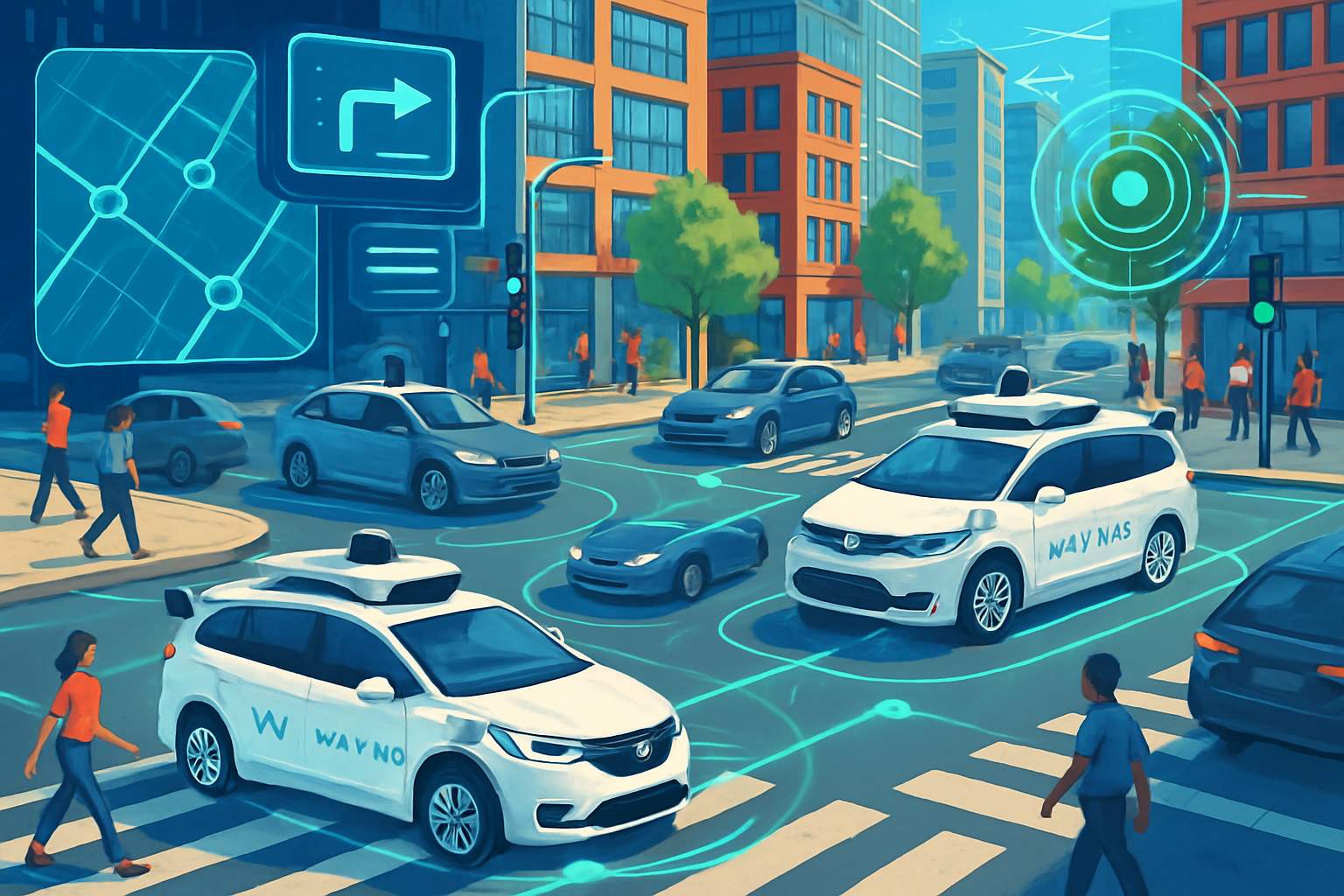
Waymo's metrics reveal growing utilization and geographic reach. Therefore, attention shifts to service milestones that unlock even broader corridors. The most visible proof arrived with November's freeway launch.
Waymo Robotaxi Growth Timeline
Waymo’s public timeline illustrates methodical scaling from Phoenix to coastal technology hubs. Initially, the service geofenced low-speed suburbs to validate routing logic. Subsequently, March 2025 expansions added 27 square miles in Silicon Valley communities. In contrast, June moves boosted the California footprint to roughly 250 square miles. Meanwhile, Austin coverage reached 90 square miles through the Uber app integration. Each new city advances Autonomous Vehicle Ops maturity, proving software portability across jurisdictions. San Francisco early adopters particularly welcomed freeway connectivity toward Mineta San Jose International Airport. Los Angeles commuters likewise praised smoother downtown pickups after the latest expansion.
This timeline shows deliberate yet accelerating rollouts. Consequently, freeway capability emerged as the next inflection point. That milestone reshaped rider expectations.
Freeway Service Milestone Achieved
November 12, 2025 marked the first freeway rides for early access passengers. Furthermore, routes linked San Francisco, Los Angeles, and Phoenix suburbs using 65-mph corridors. Engineers upgraded perception modules to handle higher speeds and complex merge lanes. Autonomous Vehicle Ops reliability at freeway velocity satisfied internal safety benchmarks before go-time. Nevertheless, NHTSA observers requested post-launch telemetry to audit rare hard-braking events.
Waymo claims the Driver anticipates cut-ins three seconds earlier than an average human driver. Consequently, riders reported smoother cruise control compared with previous surface-street trips. Freeways also reduce ride hail times, thereby improving vehicle utilization rates. Analysts expect further expansion along Interstate 280 and Interstate 10 corridors.
Freeway acceptance validates technology in fast, mixed traffic. Therefore, attention now turns to multi-partner logistics. Fleet partnerships underpin that next chapter.
City Footprint Rapid Expansion
Waymo maps target neighborhoods long before public launches. Additionally, supervised driving collects edge-case data for later autonomy validation. After testing, early access programs gather rider feedback and refine routing heuristics. Such staged expansion recently unlocked services across downtown San Francisco and Hollywood districts. Meanwhile, Los Angeles coverage now spans more than 120 square miles, including LAX approaches. The operation thrives in gridlocked corridors because software mitigates aggressive lane jockeying. Key operational metrics from 2025 illustrate the growth pace:
- 27 square miles added in Silicon Valley, March 2025.
- 250 square miles statewide in California after June 2025.
- 90 square miles in Austin accessed through Uber integration.
- 10 million cumulative paid rides delivered.
- 1,212 vehicles recalled in May 2025 for software patch.
Geographic breadth directly boosts demand and data diversity. Consequently, partnerships become essential for maintenance depth. The next section details those alliances.
Partnerships Fuel Operational Scale
Uber extends distribution by embedding Waymo cars inside its mainstream app. Consequently, Austin riders can choose driverless vehicles without installing new software. That integration strengthens Uber’s ride hail portfolio while granting Waymo broader brand awareness. Similarly, Avis Budget Group now handles fleet logistics for the Dallas launch. Moreover, shared depots and charging hubs cut downtime, reinforcing Autonomous Vehicle Ops economics. Brian Choi of Avis called the collaboration a pivotal mobility milestone.
Tekedra Mawakana emphasized trust and scale when announcing the Uber deal. Furthermore, Jagaur and Zeekr manufacturing partners adjust production to meet geography-specific demand. Such alliances accelerate expansion while lowering per-mile ride hail costs. Partnerships distribute capital requirements across complementary firms. Therefore, stakeholder alignment drives sustainable growth. Yet growth invites new oversight questions.
Safety Oversight And Challenges
Regulators monitor every disengagement and crash report. May 2025 brought a recall of 1,212 vehicles after barrier collisions. Nevertheless, Waymo asserted no passenger injuries occurred during those incidents. Autonomous Vehicle Ops remained operational in unaffected regions during software remediation. NHTSA investigations now review lane boundary behavior under adverse lighting. Meanwhile, vandalism in San Francisco highlighted community concerns about job displacement.
Academic researchers urge more transparent reporting of near-miss scenarios and sensor error bands. In contrast, Waymo publishes aggregated safety case data but withholds proprietary logs. Oversight will intensify as miles accumulate and highway speeds grow. Consequently, stakeholders demand verifiable benchmarks. Competitive pressures compound that demand.
Competitive Landscape And Outlook
Tesla, Zoox, and Pony.ai pursue similar Level 4 ambitions. However, Cruise curtailed operations after multiple collisions in late 2024. Consequently, investors rotate capital toward programs demonstrating measurable safety progress. Waymo’s record positions its Autonomous Vehicle Ops as the current reference implementation. Moreover, winter-capable hardware now prepares the company for Detroit and Denver pilots. Analysts forecast nationwide expansion by 2028 if regulatory pathways remain stable.
Meanwhile, policy frameworks such as the AV START Act may unify testing standards. Broader ride hail convergence could ensue, linking multiple fleets inside common marketplaces. Professionals can upskill through the AI+ UX Designer™ certification. Competitive pressure will sustain rapid technical iteration. Therefore, 2026 launches should reveal next performance leaps. These dynamics inform the final takeaways.
Waymo’s 2025 trajectory illustrates disciplined engineering married with aggressive market moves. Furthermore, freeway launches and recent expansion show confidence in hardened autonomy stacks. Nevertheless, safety probes and public skepticism remain persistent hurdles. Autonomous Vehicle Ops must therefore keep proving reliability under varied weather and freeway dynamics. Stakeholders should watch Dallas and Miami pilots for early insights into profitability. Meanwhile, technologists can pursue the linked AI certification for deeper domain fluency. Proactive upskilling will prepare teams for the inevitable driverless mainstream adoption. Act now, and ride the next mobility wave with informed confidence.


