

AI CERTS
2 months ago
Walmart, Google Gemini Advance Retail AI Integration
Moreover, the project leans on Google’s new Universal Commerce Protocol, designed for seamless assistant and merchant interoperability. Early claims tout delivery in as little as thirty minutes for thousands of locally curated items. Meanwhile, industry analysts view the collaboration as a strategic response to OpenAI’s ChatGPT checkout partnership. In contrast, sceptics point to lingering consumer trust gaps around AI Shopping recommendations. The following analysis unpacks technical foundations, operational benefits and the broader competitive landscape. Consequently, executives and solution architects will grasp where to invest next in Retail AI Integration momentum.
Gemini Integration Drives Sales
Google Gemini now pulls catalogue entries from the retailer through structured APIs. Moreover, shoppers receive personalized bundles that mix open marketplace items with Walmart membership discounts. The Retail AI Integration also links existing carts, allowing cross-channel orders to close inside the chat. Consequently, delivery windows as short as thirty minutes appear during the same session.
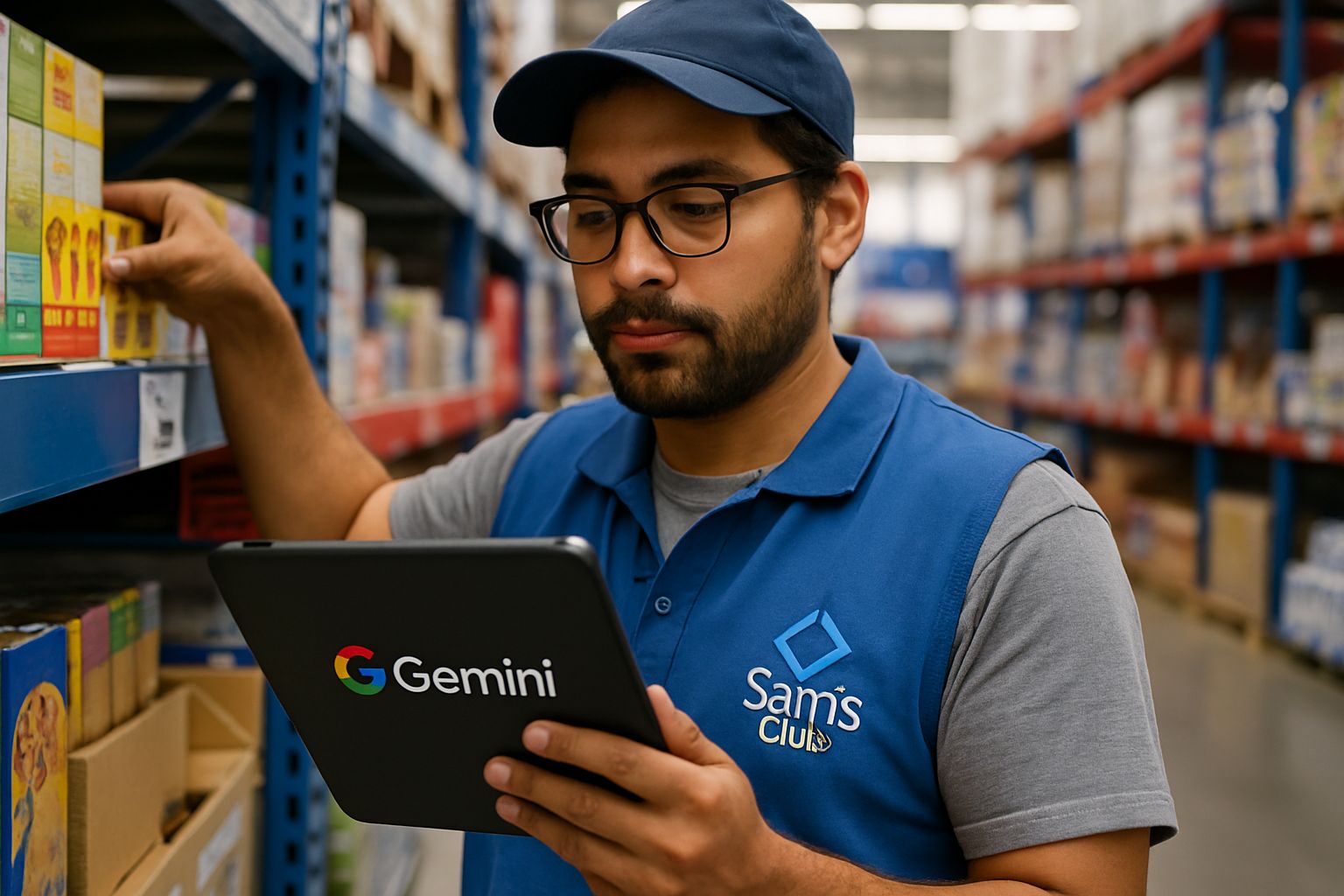
- Global revenue reached $681 billion in fiscal 2025, underscoring deployment scale.
- Sam’s Club contributed roughly $90 billion, illustrating membership power.
- Hundreds of thousands of items promise sub-three-hour delivery in major U.S. metros.
These numbers highlight immediate reach and revenue potential. Nevertheless, protocol design remains the critical engine driving this Retail AI Integration toward profitability. Therefore, understanding the Universal Commerce Protocol becomes mandatory.
Universal Commerce Protocol Explained
UCP standardizes product metadata, inventory signals, pricing and delegated payment tokens across assistant platforms. Furthermore, the schema aligns with Agent2Agent and AP2 specifications for cross-assistant negotiation. Consequently, retailers integrate once yet appear inside Google Gemini, ChatGPT and future agents. Developers avoid bespoke connectors, reducing ongoing maintenance overhead.
Moreover, UCP’s tokenized checkout flow leverages Google Pay now and PayPal subsequently. In contrast, legacy web checkouts require form filling, security redirects and repeated authentication. The Retail AI Integration benefits because Gemini can finalize payment with stored credentials.
Meanwhile, UCP supports granular permission controls, letting merchants expose only necessary fields toward each agent. That design eases compliance with data minimization principles alive in global privacy statutes. Consequently, legal teams can align new conversational flows with existing governance frameworks.
These technical efficiencies accelerate time-to-market for large and small merchants alike. Subsequently, attention shifts to revenue and loyalty impacts within the retailer’s ecosystem.
Benefits For Walmart Ecosystem
The retailer positions the partnership as an omnichannel amplifier rather than a channel cannibalizer. Moreover, linked memberships preserve Walmart+ perks, while Sam's Club advantages port seamlessly into the chat. Additionally, AI Shopping personalization combines order histories from club and store, raising average basket size. Consequently, analysts expect higher conversion versus traditional search, citing agentic convenience.
Meanwhile, basket composition analysis reveals higher freshness purchases when dialog agents nudge add-on produce. The Retail AI Integration also extends the retailer’s hyperlocal fulfillment network into Gemini’s reach. Therefore, sub-three-hour delivery becomes feasible in markets already served by micro-fulfillment centers.
These operating advantages strengthen margin potential. Nevertheless, consumer adoption hinges on trust, explored next.
Consumer Trust And Adoption
Industry surveys reveal only forty-six percent of shoppers fully trust AI agents. Furthermore, eighty-nine percent double-check outputs before ordering through AI Shopping experiences. In contrast, conventional ecommerce channels enjoy mature familiarity despite extra clicks. The Retail AI Integration must therefore bridge this confidence gap with transparent citations and robust return workflows.
Google Gemini surfaces provenance links, inventory guarantees and membership benefits within each recommendation. Moreover, the agent displays comparable alternatives to prevent perceived bias. Subsequently, refund requests route through existing retailer policies, easing post-purchase anxiety.
Additionally, early testers appreciated order summaries that break cost, tax and delivery contributions line by line. Such transparency mitigates sticker shock often blamed for cart abandonment. In regulators' view, explicit consent prompts must accompany each account link inside Gemini. Meanwhile, consumer advocacy groups urge external audits to verify recommendation neutrality.
These safeguards partially improve sentiment yet cannot eliminate mistrust overnight. Consequently, operational risks remain significant. We examine those challenges below.
Merchant Challenges And Risks
Smaller merchants must cleanse catalogues to meet UCP data accuracy thresholds. Additionally, out-of-stock errors risk customer dissatisfaction and chargebacks. Liability frameworks around delegated payments still evolve, exposing participants to legal uncertainty. Nevertheless, early adopters may gain market share before standards solidify.
Furthermore, misaligned SKUs can erode assistant credibility faster than conventional errors because conversation context heightens expectations. These hurdles cap near-term upside for some suppliers. Meanwhile, competition among assistant platforms intensifies.
Competitive AI Landscape Intensifies
OpenAI, Microsoft and Amazon all race to embed checkout within their assistants. Moreover, Google Gemini secured a headline win by landing Walmart and Sam’s Club simultaneously. Consequently, platform economics may shift as agents control discovery surfaces. In contrast, merchants want open standards to avoid lock-in.
The Retail AI Integration demonstrates how a single protocol can neutralize fragmentation. Additionally, Shopify, Etsy and Target co-developed UCP, broadening merchant representation. Analysts therefore predict rapid standard adoption across conversational channels.
Meanwhile, Microsoft Copilot pilots instant payment flows with select grocery chains, signalling diverse protocol experimentation. Consequently, merchants may juggle multiple assistant partnerships until consolidation matures. In contrast, gatekeeper scrutiny from antitrust regulators could shape monetization rules.
These dynamics foreshadow consolidation around a few dominant assistant gateways. Subsequently, strategic focus shifts toward long-term governance and compliance.
Strategic Outlook And Takeaways
Retail decision makers now face a pivotal architecture choice. Moreover, the Retail AI Integration showcases how open standards can future-proof assistant commerce strategies. Consequently, early movers secure data insights, loyalty lift and operational leverage. Sam’s Club members already benefit from unified perks, signaling membership synergies at scale. Furthermore, continued AI Shopping trust work will influence repeat purchase rates and long-term channel share. Nevertheless, unresolved privacy, liability and placement economics demand vigilant governance. Therefore, professionals should enhance service expertise through the AI Customer Service™ certification before competition tightens. This disciplined approach positions enterprises to capture the next wave of Retail AI Integration gains.


