

AI CERTS
1 day ago
Wall Street AI Surge: Tech Leaders Propel 2025 Market Rally
Investors continue debating whether the run can persist without broader participation. However, every sharp dip in leading silicon plays attracted buyers hunting discounted exposure. Meanwhile, central bank shifts and looming regulations create a dynamic backdrop that amplifies daily volatility. This article unpacks how Wall Street AI leadership lifted performance, what risks remain, and which strategies professionals favor. Additionally, we highlight certifications that bolster analyst and developer expertise amid the AI supercycle. Prepare for data, context, and actionable insights distilled for busy market watchers.
AI Rally Powers Gains
Nvidia Leads Index Charge
Throughout 2025 the S&P 500 advanced 16.4%, while the Nasdaq surged more than 20%. Furthermore, Nvidia gains regularly triggered momentum bursts that lifted peers and passive funds alike. Reuters tallied at least seven sessions where Nvidia alone accounted for half the index move. Consequently, traders coined the term Wall Street AI engine for the limited group of hardware champions.
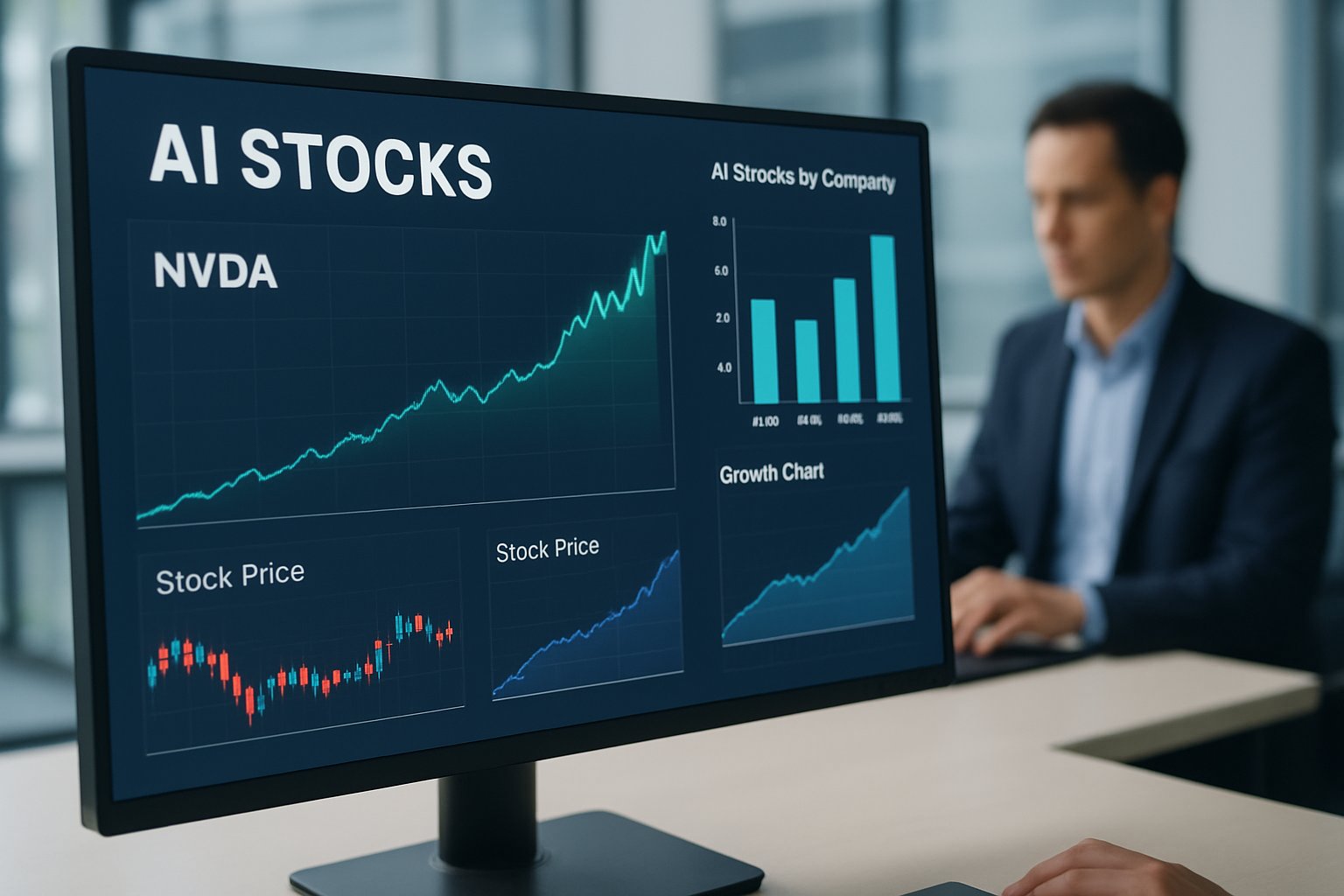
In contrast, defensive sectors posted muted single-digit returns, underscoring concentrated leadership among tech stocks. Moreover, market breadth indicators stayed weak, with advance-decline lines failing to confirm index highs. Still, Wall Street AI cheerleaders argued that earnings justified premium valuations, citing 30% revenue growth for hyperscalers.
Mega caps delivered most 2025 gains, powered by unrelenting AI demand. However, narrow breadth leaves the rally exposed to single-stock shocks. Consequently, our next section explores how concentration risks loom large.
Concentration Risks Loom Large
Market Breadth Indicators Weak
Cap-weighted indices amplify moves because weightings rise with valuation. Therefore, Nvidia now commands roughly eight percent of the S&P 500 by itself. BlackRock warned that such dominance resembles late-1990s extremes and could erode investor confidence during pullbacks. Nevertheless, many passive funds must keep buying leaders as inflows arrive.
Market technicians track breadth using advance-decline ratios, high-low spreads, and equal-weight benchmarks. Meanwhile, equal-weight versions of the S&P 500 lagged their cap-weighted counterpart by almost nine percentage points. That divergence illustrates structural fragility if Wall Street AI bellwethers stumble.
Concentration magnifies upside yet compounds downside when sentiment turns. Investor confidence can evaporate quickly if one titan disappoints. Regulatory crosswinds increase that vulnerability, as the next section discusses.
Regulation Shapes Market Outlook
EU Rules Under Debate
European lawmakers delayed parts of their AI Act, shifting high-risk deadlines to 2027. Additionally, antitrust probes into Google search and cloud contracts escalated during late 2025. U.S. agencies signaled parallel scrutiny, though enforcement timelines remain uncertain. Consequently, compliance costs and product timelines create new valuation variables for tech stocks.
Analysts note that tighter rules could restrain revenue yet also widen moats for compliant incumbents. In contrast, smaller challengers might struggle with documentation and audit requirements. Wall Street AI traders therefore watch Brussels press briefings as closely as earnings calls.
Regulation adds complexity to growth forecasts and margin models. Nevertheless, clear rules could eventually stabilize competitive dynamics. Next, we examine divergent strategist outlooks under these shifting assumptions.
Strategists Debate Future Path
Buy-side teams at BlackRock and others stay bullish, citing durable AI demand and scale advantages. Moreover, they recommend selective overweight exposure to leading tech stocks while hedging index concentration. Wei Li of BlackRock stated that U.S. assets remain core holdings despite valuation anxiety. Conversely, J.P. Morgan strategists compare current concentration to pre-dot-com peaks and caution clients.
Independent analysts emphasise cash flow reality checks, particularly around capex spending by hyperscalers. Subsequently, Robert Pavlik warned that indiscriminate chip purchasing could compress cloud margins in coming quarters. Wall Street AI optimists counter that data center cycles spread costs over multiple years.
Forecasts diverge based on valuation frameworks and macro assumptions. Therefore, professionals need disciplined scenario analysis before chasing momentum. The following section outlines practical portfolio moves.
Portfolio Moves For Professionals
Active managers deploy pair trades, going long Nvidia gains while shorting pricey laggards to reduce beta. Additionally, some rotate into semiconductors like Broadcom or memory plays to diversify exposure. Others use equal-weight ETFs to dampen Wall Street AI concentration.
- Rebalance quarterly to cap any single name at 5% weight.
- Allocate 10% to active semiconductor funds exploiting Nvidia gains volatility.
- Use protective puts on S&P 500 derivatives ahead of earnings clusters.
- Boost cash buffers when investor confidence gauges dip below historical averages.
Professionals can enhance technical depth with the AI Developer™ certification. Moreover, credentialed analysts often command premium fees when advising on complex Wall Street AI exposure.
Risk-managed frameworks help capture upside while guarding against concentration shocks. Consequently, disciplined tools beat reactive trading during volatile periods. A concise data snapshot now underscores the market backdrop.
Key Data Snapshot Review
Below are headline numbers that define the 2025 landscape.
- 2025 S&P 500 return: 16.4%.
- Nasdaq Composite return: 20.4%.
- Nvidia gains propelled chip sector revenue 30% year-over-year.
- Top ten firms held 35% of index weight, dampening investor confidence during drawdowns.
Meanwhile, equal-weight benchmarks recorded only 7% growth, illustrating breadth weakness. Wall Street AI dominance therefore remains statistically clear.
Data confirms a narrow yet powerful leadership structure. Nevertheless, historical parallels advise caution and vigilance. The final section distills key insights and outlines immediate actions.
Summary And Next Actions
The 2025 rally showcased unprecedented AI-driven concentration across major U.S. indices. Moreover, Nvidia gains and other tech stocks fueled robust benchmarks yet masked underlying fragility. Regulatory debates, valuation tensions, and shifting investor confidence continue to shape prospects in 2026. Therefore, professionals must balance opportunity with rigorous risk controls.
Consequently, update allocation policies, monitor breadth metrics, and pursue ongoing education. Consider formal upskilling, including the previously noted AI Developer™ certification, to deepen analytical authority. Act now to align portfolios with evolving Wall Street AI dynamics before the next catalyst hits.


