

AI CERTs
5 hours ago
Vybe Guide debuts to streamline AI-powered open-source discovery
On 30 January 2026, a new discovery platform entered the spotlight. Called Vybe Guide, it targets developers who rely on AI assistants for rapid prototyping. The launch immediately triggered discussion across open-source communities and corporate engineering teams. Furthermore, analysts see the directory as a response to the growing “vibe coding” trend. Karpathy popularised that workflow, where prompts replace hand-written loops. Consequently, teams demand faster ways to locate trustworthy open-source components. Existing indexes like Libraries.io or deps.dev offer breadth yet require manual filtering. Meanwhile, Vybe Guide promises curated results tuned for AI workflows. This article dissects the launch, compares alternatives, and reviews unresolved questions. Readers will gain actionable insights before testing the platform within their own Developer Tools stack.
Current Market Context Now
AI coding assistants have surged since GitHub reported one million Copilot activations in 2023. Moreover, accepted AI-generated lines now exceed three billion, underscoring changing development habits. Therefore, discovery pain points grow alongside code volume.
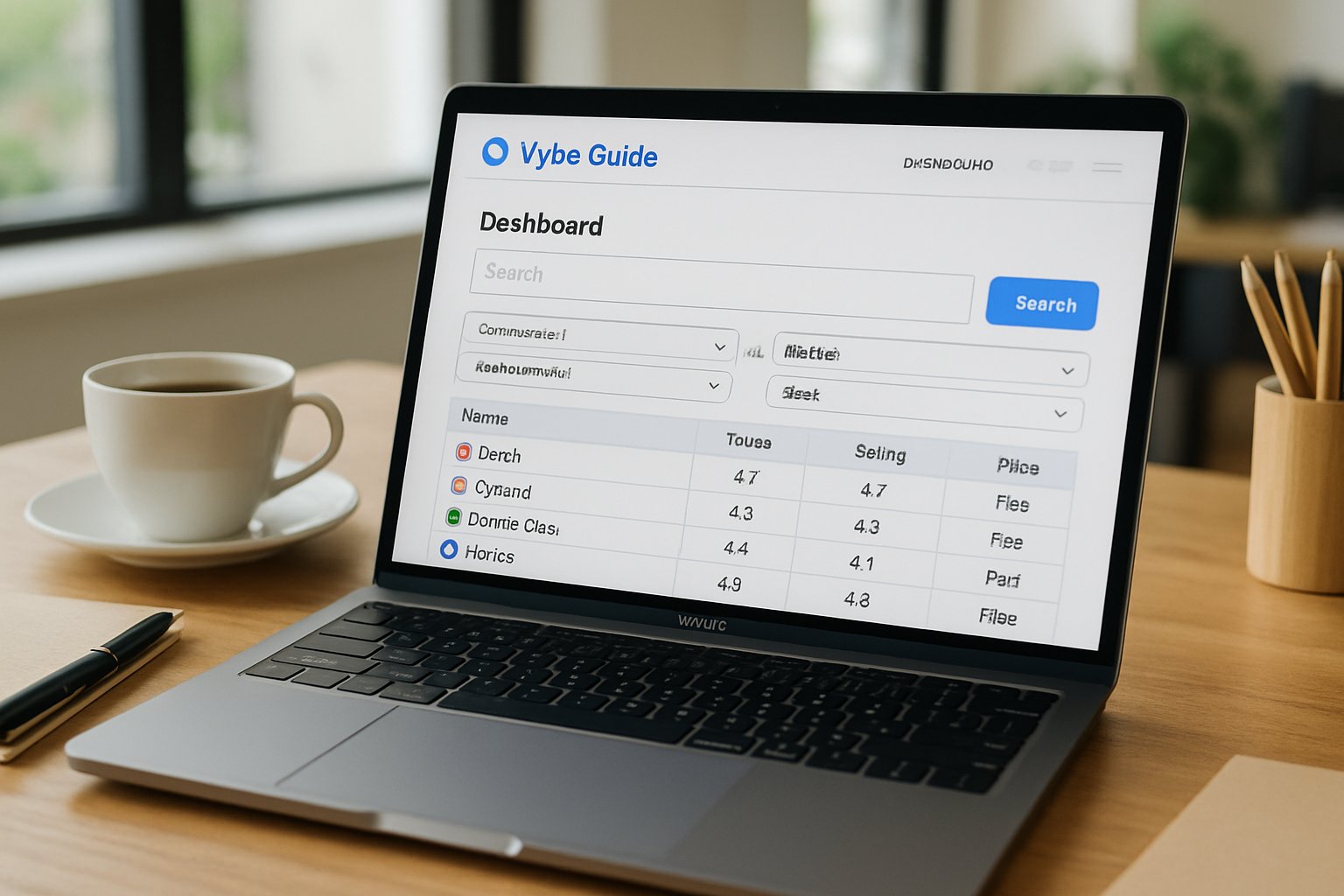
Libraries.io indexes about 2.7 million projects yet offers minimal AI workflow guidance. In contrast, deps.dev focuses on supply-chain signals rather than exploratory browsing. Consequently, many vibe coders still resort to social feeds, trending lists, or forum recommendations.
Vybe Guide positions its 50,760-project index as a middle ground between breadth and guidance. Additionally, the startup refreshes metadata daily, promising freshness similar to GitHub trending. These conditions create fertile demand for specialized directories.
The data show accelerating AI adoption alongside discovery friction. However, understanding Vybe Guide’s specific value requires deeper feature analysis.
What Vybe Guide Offers
The platform groups projects into 19 categories, covering AI, backend, security, and Web3. Moreover, each entry shows stars, license, documentation status, and last commit date. Consequently, users can filter quickly without opening multiple browser tabs.
Below are standout capabilities highlighted during the launch briefing.
Top Feature Highlights List
- AI-generated similarity suggestions
- Saved collections synced to GitHub
- Category specific ranking algorithms
- Daily update digest emails
Vybe Guide integrates social login, enabling quick bookmarking across different machines. Additionally, the interface emphasises minimal clicks, catering to impatient prototype builders.
Professionals can deepen discovery skills through the AI+ Healthcare Specialist™ certification, which covers responsible data evaluation. Furthermore, that program complements emerging Developer Tools focused on AI governance.
Collectively, these features promise faster component selection for vibe coders. Nevertheless, competitive options still jostle for developer attention.
Competitive Landscape Snapshot Now
Libraries.io remains the largest multi-ecosystem catalog by raw numbers. However, its interface prioritises package managers over AI workflow context. Sourcegraph targets enterprise search yet charges for advanced use.
In contrast, deps.dev bundles vulnerability data and license clarity. Moreover, Google publishes the dataset in BigQuery for custom analytics. Advanced Developer Tools teams particularly value direct vulnerability feeds. Vybe Guide differentiates by optimising rankings for AI suggestion engines.
Industry observers therefore frame the newcomer as complementary rather than replacement. Nevertheless, the absence of security scoring invites scrutiny from cautious teams. Meanwhile, enterprise architects demand exportable APIs to feed internal dashboards.
Competing directories each stress different metrics, from dependencies to popularity. Consequently, selecting a tool hinges on workflow priorities, not marketing claims.
Emerging Ecosystem Risk Factors
Academic research warns that vibe coding could erode maintainer incentives. The January 2026 arXiv paper models falling bug reports and star counts. Furthermore, AI agents may select libraries based only on surface metrics.
Vybe Guide currently emphasises stars, forks, and recency within its ranking formula. However, the site does not publicly display OSV advisories or OpenSSF scores. Consequently, security teams must cross-reference additional datasets before approving imports. Moreover, missing signals could delay compliance audits by several weeks.
Licensing compatibility remains another blind spot affecting commercial deployments. In contrast, deps.dev flags license conflicts upfront.
These gaps expose developers to legal or security surprises. Therefore, due diligence remains mandatory despite slick discovery experiences.
Practical Usage Tips Today
Teams can still extract value by following structured evaluation steps. First, run identical queries on multiple directories and compare overlap. Secondly, confirm each candidate library’s security posture through deps.dev or OSV.
Thirdly, contact maintainers when adopting niche packages, ensuring support longevity. Additionally, use saved collections inside Vybe Guide to track version updates. Then automate dependency scanning within your CI pipeline.
Many Developer Tools integrate webhook triggers, simplifying that process. Moreover, integrating notification feeds protects against silent vulnerability disclosures. Sophisticated Developer Tools plugins can surface such alerts inside editors.
Adopting structured checks mitigates most highlighted risks. Nevertheless, platform roadmaps will influence future diligence needs.
Key Future Roadmap Questions
Reporters have outlined several unanswered queries for the startup. For example, auditing precision and recall metrics remains essential. Furthermore, stakeholders ask whether maintainer revenue-share models are planned. Another question involves integrating OpenSSF scorecards directly into listings.
Vybe Guide has not yet published an API or data export specification. Consequently, enterprise adopters may hesitate until interoperability improves. In contrast, competitors already expose bulk endpoints for internal dashboards. Additionally, open metrics would enable academic validation of indexing claims.
Clarity on these points will shape adoption curves. Therefore, prospective users should monitor roadmap announcements closely.
The new directory arrives at a pivotal moment for AI-assisted engineering. Developers crave faster, safer ways to assemble production-grade stacks. However, unchecked popularity metrics can hide dormant or vulnerable libraries. Consequently, teams must pair discovery speed with rigorous verification workflows. Competitive tools and academic warnings reinforce this balanced approach. Moreover, upskilling through accredited programs strengthens organisational preparedness. Therefore, explore the linked certification and test discovery platforms today.


