

AI CERTs
2 hours ago
Virtual Try-On Intelligence Systems Boost Apparel Sales
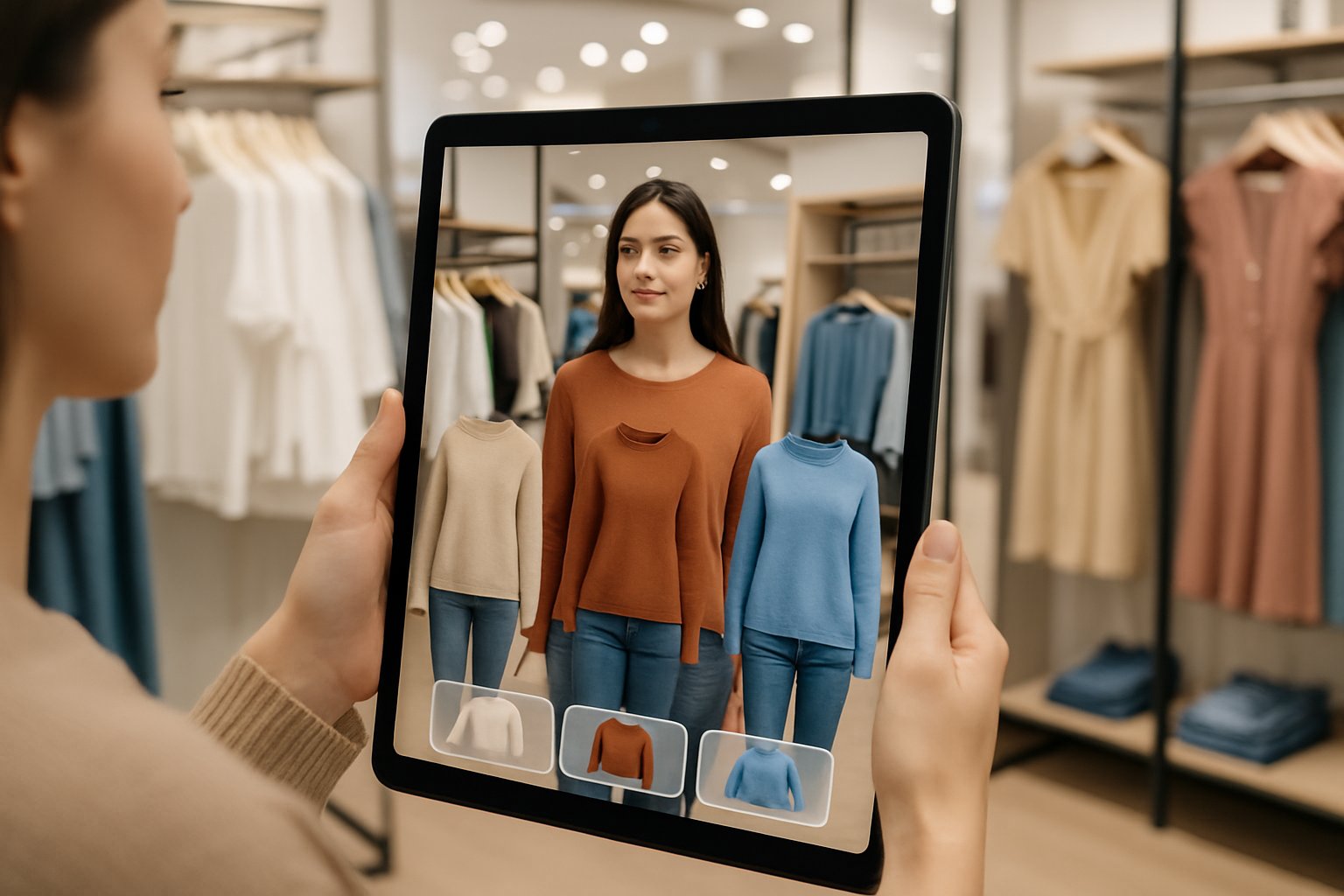
Retail executives face mounting pressure to curb costly apparel returns. Meanwhile, online shoppers still crave fitting-room certainty before clicking buy. Virtual Try-On Intelligence Systems now promise that confidence by blending AR visualization with fit analytics.
Consequently, early adopters are reporting tangible revenue gains. Grand View Research projects double-digit annual growth for the underlying market segment through 2033. Moreover, platforms such as Snap and Google highlight conversion uplifts reaching 40 percent when consumers engage with augmented products. This article unpacks the momentum, technology, and cautionary gaps surrounding the trend.
Global Market Momentum Trends
Industry analysts converge on one point: demand for immersive commerce is accelerating. However, figures vary regarding absolute market size. Market.us values Virtual Try-On Intelligence Systems at several billion dollars today, expanding 25 percent annually. Grand View Research echoes that trajectory, naming apparel the fastest expanding vertical inside AR fashion tech.
Furthermore, Snap cited 80 percent conversion lifts across some campaigns using catalog lenses for eyewear and apparel. Shopify’s Gunner Kennels logged 40 percent higher order conversion after adding 3D product previews. Consequently, retailers see immersive media as a hedge against both margin erosion and mounting logistics costs.
Collectively, these numbers confirm rising executive attention on immersive commerce. Nevertheless, metrics differ by vendor and warrant deeper analysis, which the next section provides.
Key Conversion Drivers Explained
Shoppers abandon carts mainly because fit and appearance remain uncertain. Therefore, reducing that doubt is the primary revenue lever. Virtual Try-On Intelligence Systems tackle uncertainty through three interlocking mechanisms.
Moreover, recent pilots highlight the following forces behind improved performance:
- Immediate visualisation increases shopper engagement and shortens decision cycles.
- Size-AI recommendations curb multiscale ordering, reducing return freight.
- Rich 3D assets unlock higher AR fashion tech ad click-through rates.
Subsequently, the synergy among these levers delivers persistent lift across funnels. In contrast, brands lacking immersive elements struggle to keep pace on experience metrics.
These drivers underscore why investment continues despite economic headwinds. Next, we examine the technology stack that powers reliable outcomes.
Essential Technology Building Blocks
Under the hood, four technical pillars enable convincing digital fitting rooms. First, real-time camera overlays apply garments onto live video. Second, photo-on-self tools warp apparel onto uploaded images for quick previews.
Third, 3D avatars combined with physics simulation model fabric drape and stretch. Fourth, machine-learning sizing engines convert body data into confident recommendations. Virtual Try-On Intelligence Systems integrate these pillars through cloud pipelines and on-device processing.
Additionally, platforms like Shopify simplify asset hosting, while Nvidia accelerates cloth physics on GPUs. Consequently, smaller brands can pilot advanced features without enterprise budgets.
Robust infrastructure, however, does not guarantee frictionless deployment. The following section outlines unresolved implementation hurdles.
Persistent Implementation Challenges Ahead
Nevertheless, evidence remains heterogeneous because many statistics come from vendor marketing sheets. Independent controlled trials across multiple retailers are scarce. Therefore, claims of 40 percent conversion uplift should be interpreted as directional until peer reviewed.
Cost also looms large. Moreover, creating high-fidelity 3D catalogs for thousands of SKUs demands specialized labor and software. Some apparel textures, such as sheer lace, still challenge current scanners.
Privacy regulations add further friction. In contrast, on-device measurement tools lessen risk by avoiding server storage of body imagery. Yet legal teams remain cautious, slowing procurement cycles.
These barriers increase project timelines and budget variance. However, sustainability and customer loyalty incentives often outweigh the obstacles, as discussed next.
Sustainability And Privacy Balance
Return logistics produced 16.9 percent of U.S. e-commerce sales in 2024, according to NRF figures. Consequently, reducing even 10 percent of that volume yields significant carbon savings. Virtual Try-On Intelligence Systems offer brands a pragmatic path toward measurable environmental targets.
Furthermore, fewer shipments improve profitability while enhancing shopper engagement scores in post-purchase surveys. Balmain and Macy’s both cite sustainability in corporate communication around AR fashion tech pilots.
Privacy remains the counterbalance. Nevertheless, vendors increasingly anonymize scans and purge data within minutes. Professionals can strengthen compliance knowledge through the AI+ Quantum Data™ certification.
Balanced execution thus hinges on ethical data stewardship and clear sustainability metrics. The final section explores what lies ahead for strategy and investment.
Future Outlook And Forecast
Analysts expect mainstream adoption during the next three years as smartphone LiDAR becomes standard. By 2028, Virtual Try-On Intelligence Systems could embed natively within most commerce platforms, reducing integration hurdles.
Meanwhile, AR fashion tech ads will likely absorb budget from banners due to superior shopper engagement metrics.
Additionally, body-scan accuracy will improve as computer vision models train on larger, more diverse datasets. Virtual Try-On Intelligence Systems may then shift focus from novelty to indispensable utility, similar to mobile checkout.
Consequently, early experimentation today positions retailers for compounding gains tomorrow. Strategic leaders should monitor evolving standards while scaling cautiously validated pilots.
The apparel race toward personalized digital experiences shows no sign of slowing. Ultimately, Virtual Try-On Intelligence Systems stand at the center of that shift, linking inspiration and transaction. Moreover, AR fashion tech innovation lowers barriers, making immersive content affordable for midsize merchants. Higher shopper engagement, reduced returns, and credible sustainability wins reinforce boardroom support. Nevertheless, executives must scrutinize vendor claims and secure privacy safeguards before scaling. Rigorous testing will separate hype from lasting value across Virtual Try-On Intelligence Systems deployments. Therefore, teams should cultivate skills through recognised programs and cross-functional experimentation. Begin that journey today by piloting certified tools and exploring Virtual Try-On Intelligence Systems in your own digital showroom.


