

AI CERTs
2 hours ago
Virtual Assistant Evolution: Apple Taps Google Gemini for Siri
A decade after Siri's debut, Apple's voice assistant faces intense competition from LLM powered rivals.
Now, Apple is turning to Google's Gemini models to turbocharge its conversational abilities.
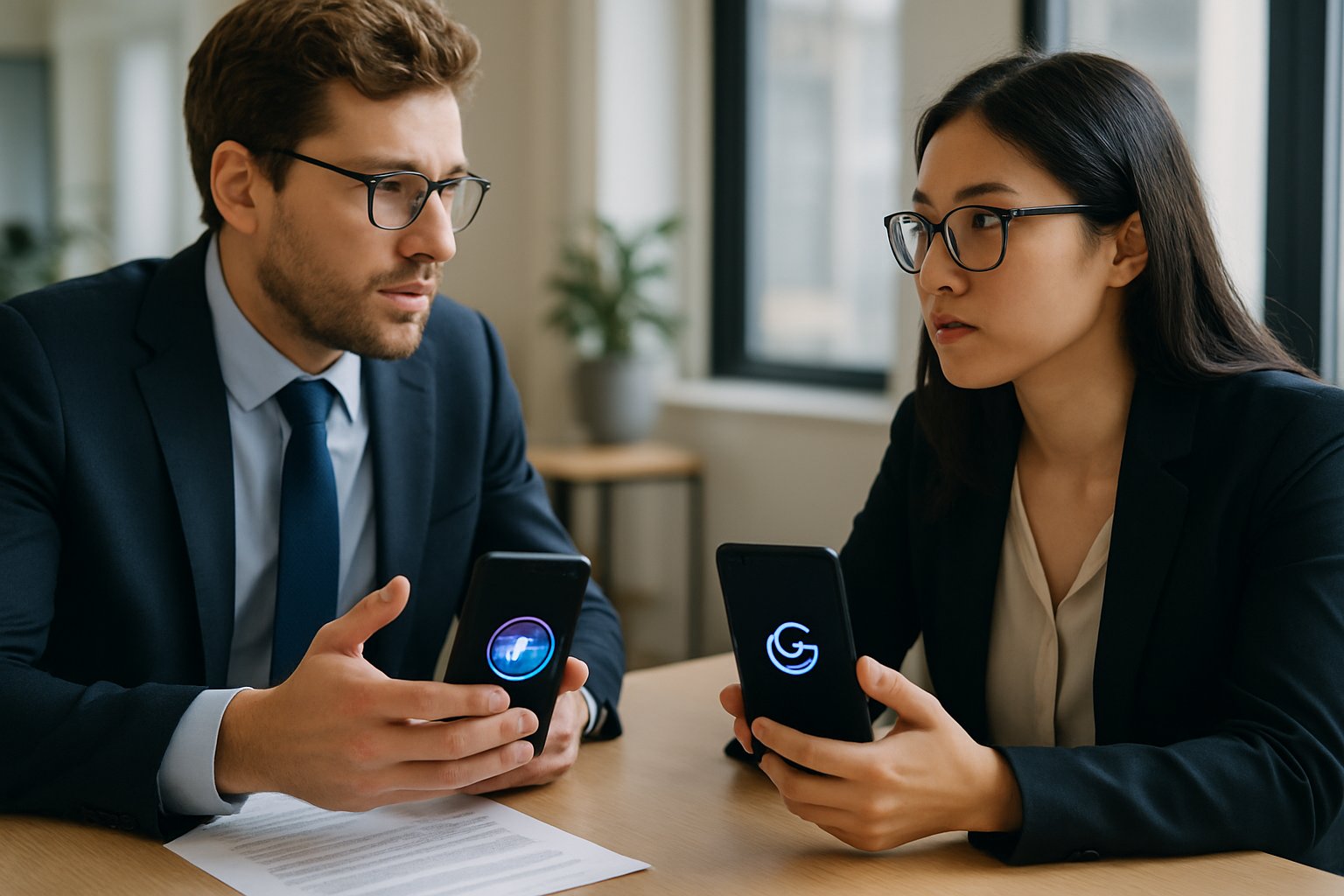
The January announcement revealed a multi-year arrangement that embeds Gemini inside upcoming Apple Foundation Models.
Consequently, professionals watching the Virtual Assistant Evolution see an unprecedented alliance between fierce platform competitors.
Furthermore, analysts predict that a smarter Siri will arrive in iOS 26.4 beta before spring 2026.
However, privacy questions, cost estimates, and antitrust concerns loom large over the ambitious integration.
Meanwhile, Google gains massive distribution across an installed base exceeding 1.5 billion active devices.
In contrast, Apple insists that Gemini computations will run on devices or its Private Cloud Compute for security.
This article unpacks the deal, technical mechanics, market stakes, and strategic roadmap for discerning enterprise leaders.
Deal Signals Major Shift
January 12, 2026 marked a surprising pivot in Silicon Valley alliances.
Apple and Google jointly disclosed that Gemini will underpin the next generation of Apple Foundation Models.
Moreover, the press release framed the arrangement as a collaborative effort rather than simple vendor procurement.
Reuters highlighted language stressing Apple’s continued privacy leadership, despite importing algorithms from its longtime search rival.
Additionally, Bloomberg sources estimated Apple will pay about one billion dollars annually for privileged Gemini access.
Analysts already rank the agreement among the decade's most influential Big Tech Partnership deals.
Those estimates remain unofficial because neither company filed financial details or commented on contract value.
Nevertheless, the news intensified discussion about the Virtual Assistant Evolution across boardrooms and developer threads alike.
The joint statement confirms unprecedented cooperation between historically wary giants.
Consequently, observers anticipate more cross-platform deals reshaping platform power balances.
Against that backdrop, technical integration details reveal how the companies will share responsibilities.
Technical Integration Key Details
Architecturally, Apple will split processing between on-device neural engines and its Private Cloud Compute clusters.
Therefore, lightweight tasks such as word completion remain local, while Gemini handles heavy reasoning in the cloud.
Google confirms the model will run inside isolated Apple-controlled environments, limiting telemetry exposure.
In contrast, ChatGPT integration on iOS still requires outbound calls to OpenAI servers.
Gemini Model Core Role
Gemini excels at summarization, multistep planning, and multimodal reasoning across text, voice, and vision.
Siri Gemini pairing should enable users to schedule trips, draft emails, and control smart homes with fewer prompts.
According to internal demos reported by Bloomberg, early capabilities include:
- Contextual follow-up questions without repeating commands
- Real-time document summarization on iPhone AI enabled devices
- Voice driven multi-step automation across apps
Meanwhile, internal dashboards now label testing builds simply as Siri Gemini 1.0.
Furthermore, Apple insists all spoken data will remain encrypted during transit between devices and cloud nodes.
Professionals can enhance their governance understanding with the AI Ethics Strategist™ certification.
Thus, the Virtual Assistant Evolution hinges on seamless Gemini orchestration.
These technical choices promise power and privacy balance.
However, implementation success depends on flawless orchestration across chips and data centers.
With mechanics mapped, market forces now demand scrutiny.
Market Impact Wide Analysis
Financial analysts quickly compared the Gemini agreement to Google’s lucrative default search deal on iOS.
Some estimates place cumulative revenue for Google Cloud near five billion dollars over several years.
Many commentators label the arrangement a Big Tech Partnership with few historical parallels.
Meanwhile, Apple gains time to advance proprietary models without lagging behind Samsung or Microsoft.
The Virtual Assistant Evolution therefore drives competitive repositioning across handset vendors and cloud suppliers.
Financial Stakes Keep Rising
Constellation Research suggests each one-point improvement in Siri engagement could boost Apple services revenue markedly.
Moreover, better voice accuracy may expand advertising inventory for Apple News and Apple TV.
For Google, increased Gemini scale lowers per-query costs and sharpens its enterprise marketing narrative.
Key projected outcomes include:
- Up to 10% higher hardware upgrade rates among iPhone AI power users
- Five million new Google Cloud seats from cross-selling activities
- Accelerated adoption of Big Tech Partnership models by smaller OEMs
Consequently, every stakeholder anticipates material upside, but margins hinge on subscription take-rates and chip supply.
The numbers look attractive on spreadsheets.
Nevertheless, external risks could blunt expected gains.
Those vulnerabilities surface in the next section covering regulatory and strategic hazards.
Risks And Scrutiny Intensify
Antitrust lawyers already question whether the alliance concentrates too much AI capability within two dominant ecosystems.
Elon Musk publicly called the move an unreasonable concentration of power on his X platform.
Additionally, watchdog groups worry that dependency on a rival compromises Apple’s fabled supply chain independence.
Privacy advocates seek clarity on data logging, retention periods, and Google’s potential training rights.
Apple counters that Private Cloud Compute eliminates external access, yet technical audits remain pending.
Cost exposure presents another hazard because bandwidth and inference volumes are difficult to forecast.
Therefore, the Virtual Assistant Evolution might stumble if cloud invoices outpace monetization or regulatory approvals.
Legal, privacy, and financial factors inject uncertainty.
Despite uncertainty, development roadmaps continue accelerating.
Understanding those plans clarifies possible outcomes.
Strategic Roadmap Moves Ahead
Mark Gurman reports a February demo of Siri Gemini during a dedicated online briefing.
Subsequently, iOS 26.4 beta should reach developers, followed by a public launch in early spring.
Only A19 Bionic or M5 class hardware may support the full iPhone AI stack according to leaks.
Furthermore, Apple intends to iterate quickly, shipping quarterly model refreshes through Private Cloud Compute.
Google engineers will supply Gemini checkpoints, while Apple optimizes on-device adapters for performance.
Consequently, the Virtual Assistant Evolution will unfold in incremental sprints rather than one monolithic rollout.
Enterprise developers should monitor new SiriKit APIs to embed advanced reasoning within productivity apps.
Timelines remain aggressive yet plausible given prior silicon cycles.
Therefore, early preparation can secure first-mover advantage.
The concluding section synthesizes lessons for professionals.
Conclusion And Actions
Apple’s gamble with Gemini signals the next inflection point in the Virtual Assistant Evolution.
Consequently, Siri Gemini could deliver enterprise productivity gains and richer consumer experiences.
However, the Virtual Assistant Evolution remains vulnerable to cost surprises and regulatory pushback.
Teams building iPhone AI solutions should prototype against forthcoming SiriKit endpoints now.
Meanwhile, policymakers will debate whether this Big Tech Partnership strengthens or stifles market competition.
Professionals seeking ethical guidance during the Virtual Assistant Evolution can pursue the linked AI Ethics credential.
Act today: audit roadmaps, train staff, and secure certifications to capitalize on the Virtual Assistant Evolution wave.


