

AI CERTS
2 hours ago
Vietnam–US Export Shift Reshapes Tech Geopolitics
Moreover, Vietnamese officials framed the pledge as a breakthrough that could accelerate access to Advanced Tech. The development also places Hanoi at the center of a wider contest over supply-chain resilience. Stakeholders now watch agency rulebooks for concrete steps.
White House Signals Shift
The pledge, though political, carries significant weight. In contrast, no U.S. agency has yet published implementing guidance. Meanwhile, Vietnamese media highlighted the removal of “D1–D3” Limits as imminent. Such Limits currently slow approvals for semiconductor tools, aerospace components, and certain software. Furthermore, Hanoi linked the announcement to US$37 billion in new Boeing orders. Industry voices noted that export relief could speed component certification and financing. Tech Geopolitics therefore intersects directly with balance-of-trade politics. Trump underscored that bilateral trade hit US$153 billion last year, a record figure.
These signals suggest diplomatic momentum. Nevertheless, regulatory machinery still controls timelines. The next section dissects the legal backdrop.
Export Control Context Explained
Washington runs two parallel regimes. Firstly, the State Department’s ITAR covers defense items. Secondly, the Commerce Department’s EAR governs dual-use products. Additionally, the Bureau of Industry and Security maintains the Entity List and other Limits that complicate licensing. Recent rule changes, including the affiliates rule, expanded reach. Consequently, removal from any list demands interagency consensus. Advanced Tech providers must still assure end-use checks. Hanoi’s shorthand “D1–D3” lacks a precise U.S. legal equivalent, therefore experts anticipate phased revisions instead of blanket deletions. Tech Geopolitics again shapes those sequencing choices.
Key statistics clarify scale:
- Vietnam–U.S. goods trade: US$153 billion in 2025
- Boeing aircraft orders: ≈ US$37 billion announced this week
- Potential semiconductor investment uptick: industry groups predict 15% growth post-relief
These numbers illustrate commercial stakes. However, corporate optimism now hinges on formal notices, discussed next.
Industry Stakeholders Reacting Fast
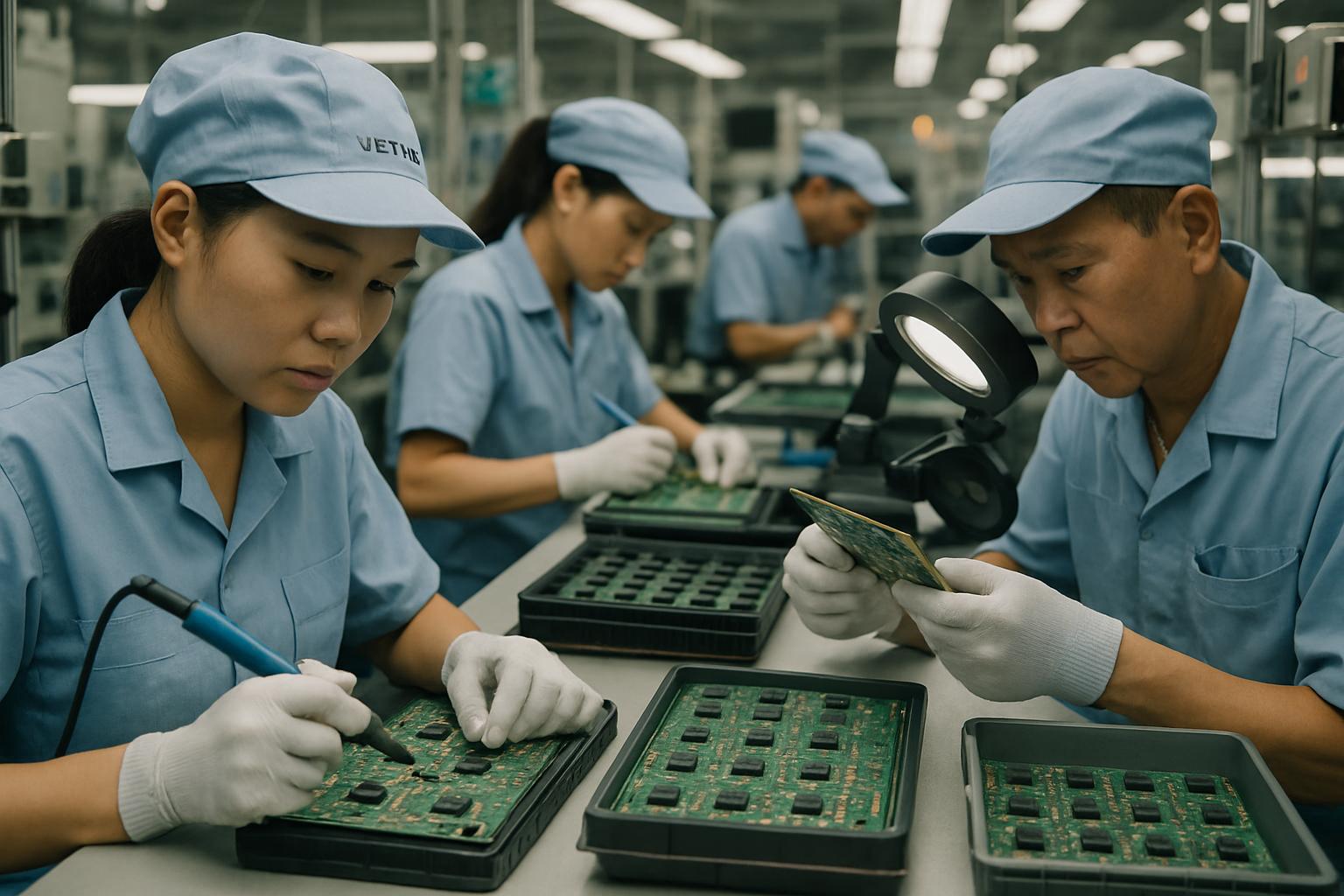
Global manufacturers welcomed the prospect of looser Limits. Apple, Samsung, and Intel already run major campuses near Hanoi. Moreover, chip equipment suppliers such as Lam Research eye simplified licensing for lithography gear. Aerospace suppliers also foresee streamlined export paperwork. Consequently, share prices for Vietnamese aviation firms rose during the visit. Industry associations nevertheless caution that Tech Geopolitics can reverse quickly. Therefore, companies demand written clarifications before rerouting Advanced Tech supply chains. Professionals can enhance their expertise with the AI in Healthcare™ certification to grasp compliance nuances.
Momentum builds across sectors. Yet, security skeptics voice counterarguments, reviewed below.
Security Concerns Persisting Today
Pentagon advisers warn that sensitive Advanced Tech may leak to adversaries. Furthermore, think-tank experts stress that Vietnam’s public-sector cyber controls remain uneven. In contrast, Hanoi argues that deeper U.S. ties incentivize stronger safeguards. Nevertheless, Commerce officials could impose case-by-case vetting even after list removal. Consequently, export lawyers predict continued licensing for encryption, satellite systems, and unmanned platforms. Tech Geopolitics therefore balances economic ambition against strategic caution.
These debates highlight policy tension. However, procedural realities determine actual relief, as outlined next.
Implementation Pathway Ahead
Firstly, the White House must issue a formal directive. Subsequently, Commerce and State will draft Federal Register notices amending relevant Limits. Each notice undergoes interagency review and public comment. Meanwhile, exporters must track new ECCN codes or license exceptions. Additionally, Treasury and USTR may tie tariff concessions to compliance metrics. Experts project a timeline of three to six months for initial actions. Tech Geopolitics will dominate hearings on Capitol Hill during that window. Trump allies cite economic gains, while critics question verification mechanisms.
Process discipline will shape certainty. Consequently, businesses await clarity before major capital commits, examined in the next section.
Strategic Outlook For Vietnam
Hanoi seeks to climb the value chain rapidly. Moreover, easier access to Advanced Tech could catalyze semiconductor packaging, AI research, and composite aerospace parts. Foreign direct investment likely rises if Limits ease. In contrast, substitution away from Chinese inputs remains challenging. Therefore, Vietnam may need joint audits to assure origin transparency. Tech Geopolitics also impacts regional partners; Tokyo and Seoul monitor shifts closely. Additionally, ASEAN supply-chain integration could intensify.
Opportunities appear substantial. However, long-term gains depend on credible enforcement, summarized next.
Key Takeaways Moving Forward
Vietnam’s potential delisting marks a pivotal Tech Geopolitics moment. The pledge by Trump, though headline-grabbing, still requires detailed agency work. Export Limits will not vanish overnight. Nevertheless, industry sees clear upside for Advanced Tech deployment in Hanoi. Security agencies will press for robust end-use monitoring. Consequently, stakeholders should prepare compliance roadmaps and monitor Federal Register updates.
Swift monitoring remains essential. Meanwhile, professionals should upgrade regulatory skills to stay competitive.
In conclusion, Tech Geopolitics now places Vietnam at a strategic crossroads. Moreover, looming policy shifts promise expanded Advanced Tech flows and deeper bilateral trade. Nevertheless, implementation hurdles could reintroduce Limits if safeguards lag. Therefore, executives must track agency signals, engage counsel, and cultivate flexible supply chains. Interested readers should explore specialized credentials and stay alert for our next compliance briefing.


