

AI CERTS
3 months ago
US Push To Harmonize Cloud Trust Policies
Meanwhile, Washington faces mounting pressure to lead a smarter approach. Analysts urge the White House to Harmonize standards instead of matching sovereignty rules with new barriers. Consequently, this article explores what is happening, why it matters, and how leaders can steer toward unified assurance.
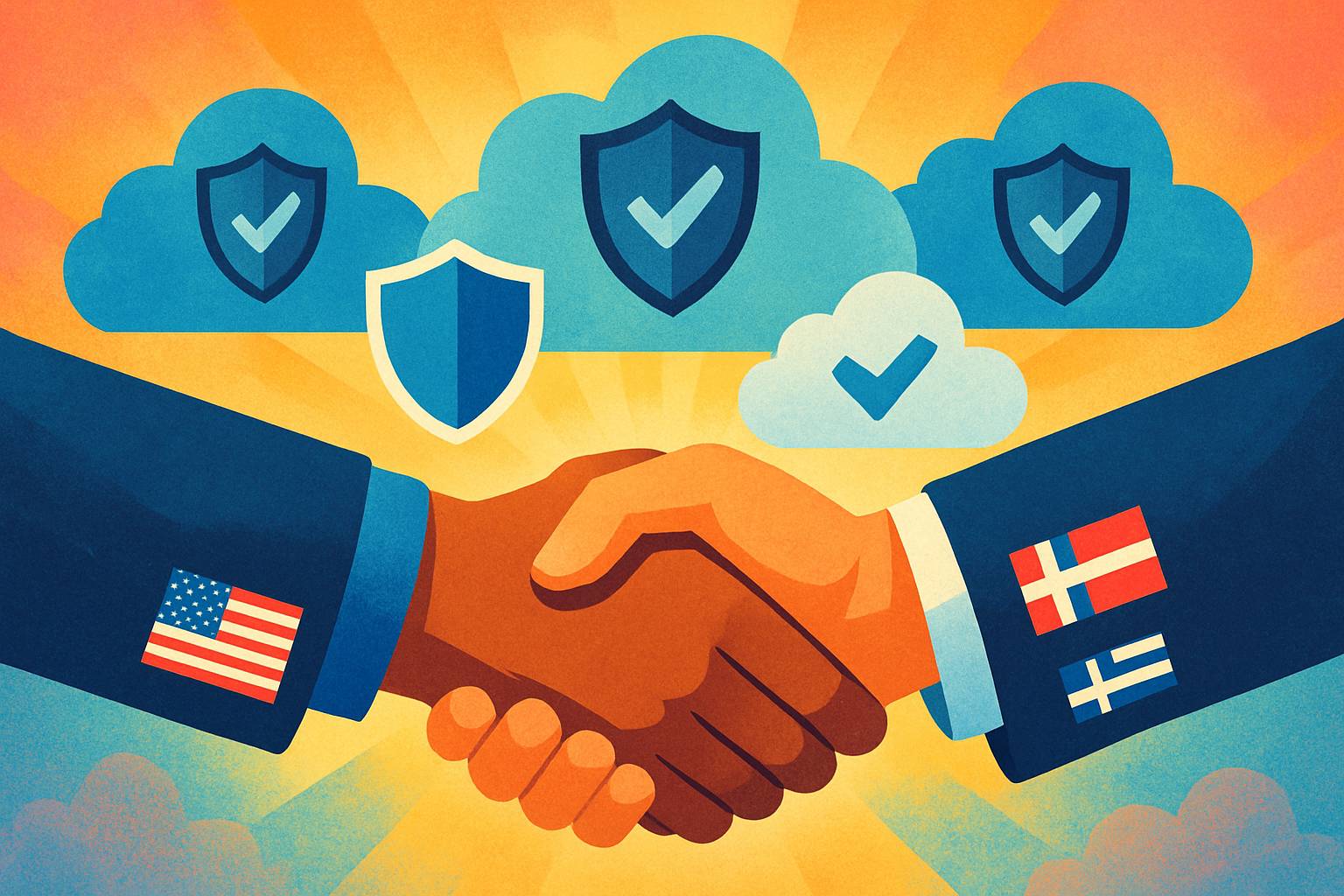
Fragmented Rules Threaten Market
FedRAMP, EUCS, IRAP, and dozens of similar frameworks now govern cloud procurement. Each regime defines controls, accreditation bodies, and reporting demands differently. Therefore, providers duplicate audits, pass costs to customers, and delay deployments. Market concentration deepens the challenge because three hyperscalers dominate about two-thirds of global infrastructure spend.
Moreover, sovereignty clauses in some EUCS drafts would bar non-EU vendors from high assurance levels. In contrast, U.S. officials warn that reciprocal localization would further fracture networks. Cloud Trust suffers each time legal borders override technical evidence.
These pressures inflate expenses and slow innovation. Nevertheless, they also open space for creative diplomacy. The next section explains why quick action is essential.
Why Harmonization Matters Now
AI workloads surge, demanding expansive compute grids across regions. Consequently, any fragmentation limits model training capacity and emergency scaling. Allies depend on shared clouds for joint research and defense missions, so misaligned rules undermine collective Security.
Atlantic Council experts summarize the risk succinctly: location-based criteria silo Information and fragment the backbone of the digital economy. Therefore, moving to verifiable technical assurances will restore Cloud Trust across borders.
Furthermore, Robert Silvers from DHS states that the department is committed to aligning incident reporting domestically and with Allies. His pledge illustrates growing political will to Harmonize certification requirements as well.
These motivations point toward an urgent timeline. The following section details the current certification landscape and market figures.
Current Global Certification Landscape
FedRAMP remains the world’s most mature public cloud authorization program. Marketplace listings grew from about 374 in March 2025 to roughly 585 by July 2025. Meanwhile, ENISA continues revising EUCS, with sovereignty language still contested.
Additionally, Japan’s ISMAP and Australia’s IRAP expand regionally focused schemes. Providers must navigate overlapping audits, each demanding similar evidence yet rejecting foreign assessors. Consequently, smaller vendors struggle to enter government markets.
Market Numbers At Glance
- Public cloud revenue approached $750 billion worldwide in 2025.
- Amazon, Microsoft, and Google captured nearly 70 percent of IaaS spending.
- Confidential computing adoption grew more than 40 percent year-over-year.
These figures reveal huge stakes for every Policy maker. However, technical tools can bridge divides, as explored next.
Technical Assurances Over Location
Confidential computing isolates workloads within trusted execution environments. Remote attestation then proves software integrity to external parties. Therefore, buyers gain cryptographic evidence instead of relying on a provider’s nationality.
Moreover, continuous monitoring and Zero Trust architectures tighten Security steadily. Industry groups argue that mapping these controls between FedRAMP and EUCS would instantly improve Cloud Trust. Harmonize efforts could also include mutual recognition of accredited auditors.
Professionals can enhance their expertise with the AI+ UX Designer™ certification. Specialized skills equip teams to embed secure design principles alongside technical assurances.
Adopting such measures reduces duplication and protects Information wherever it moves. Consequently, the U.S. can lead by modernizing domestic guidance, as outlined next.
Policy Options For Washington
First, officials should publish clear crosswalks comparing FedRAMP controls with EUCS drafts. Additionally, DHS and the European Commission can pilot joint audits to validate equivalency.
Second, the administration must clarify limits on U.S. law-enforcement data access. Greater transparency would reassure Allies and rebuild Cloud Trust.
Third, OMB could streamline FedRAMP low-impact baselines, letting startups authorize faster. Subsequently, mutual recognition agreements for assessment labs would cement global acceptance.
These steps would Harmonize assurance without sacrificing Security. The next section highlights complementary industry moves.
Industry Actions And Next
Hyperscalers already embed confidential computing and AI-assisted auditing within offerings. Meanwhile, the Cloud Security Alliance updates its STAR registry to reference both FedRAMP and EUCS mappings.
Furthermore, trade groups press Brussels to drop strict nationality clauses. In contrast, several European vendors propose joint ventures with U.S. partners, demonstrating pragmatic collaboration among Allies.
Startups should track evolving requirements and invest early in verifiable controls. Consequently, market readiness creates leverage when Policy debates conclude.
These initiatives show industry momentum. Nevertheless, sustained government engagement remains vital, as summarized below.
Fragmentation inflates costs and dulls innovation. However, aligned technical assurances strengthen Security and accelerate digital growth.
Conclusion And Call-To-Action
Global leaders stand at a crossroads. Harmonize frameworks now, or watch sovereign silos erode Cloud Trust. The evidence favors technical assurances, mutual recognition, and transparent Policy updates. Moreover, continuous collaboration with Allies ensures Security while protecting sensitive Information.
Therefore, professionals should prepare for converging standards by upskilling and adopting verifiable controls. Visit the certification link above, deepen your expertise, and advocate for pragmatic harmonization today.


