

AI CERTS
3 hours ago
Universities Struggle With AI Academic Fraud
Student Usage Surge
Survey evidence paints a striking picture. The 2025 HEPI study found 92% of UK undergraduates had used generative AI. Moreover, 88% admitted applying it directly to assessments. Chegg’s global poll echoed those numbers, showing 80% adoption among 11,700 students across fifteen countries.
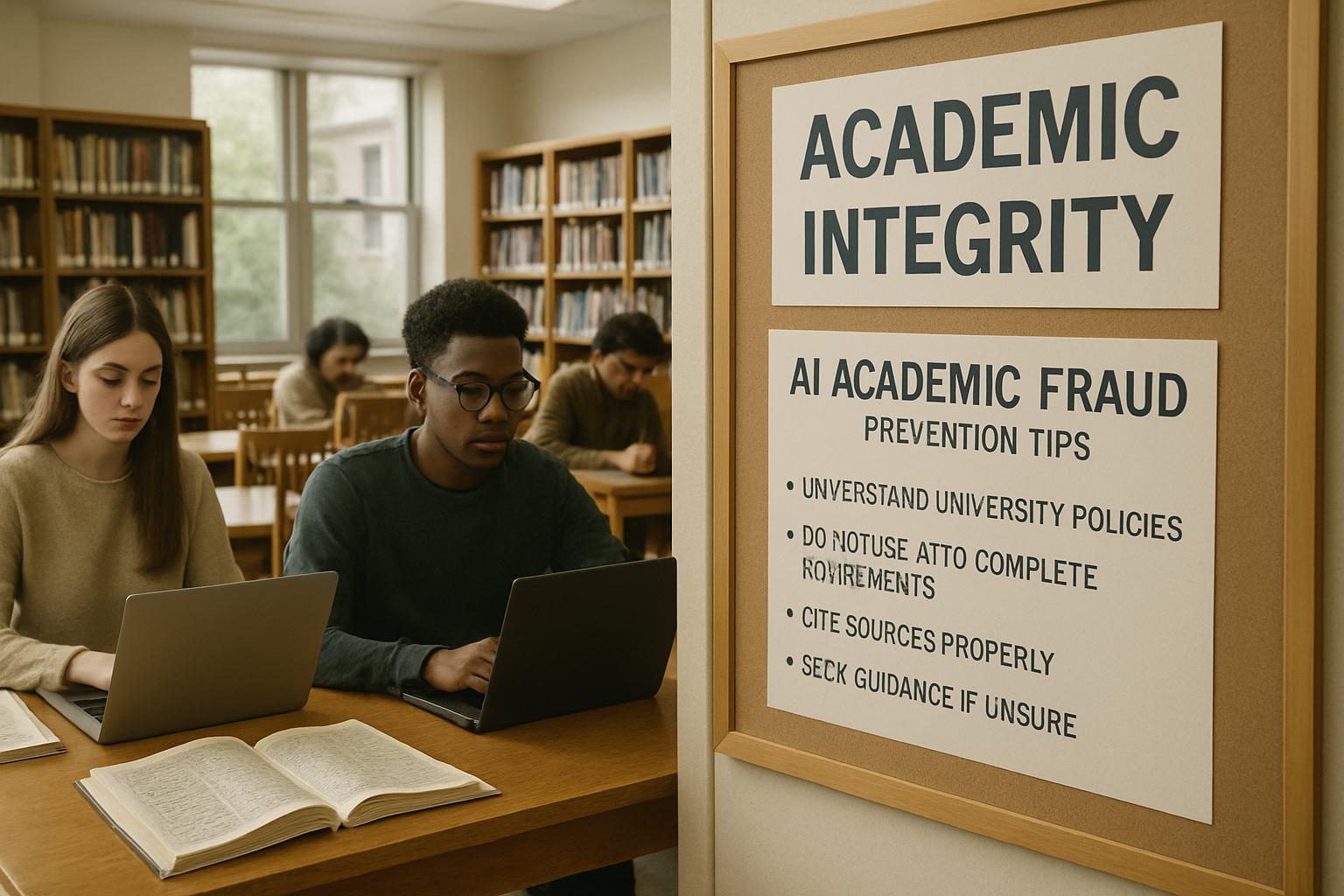
Advanced models now rival professional pass marks. One 2025 JMIR study showed GPT-4V hitting up to 93% accuracy on USMLE questions. Consequently, substitution of AI output for original work requires minimal effort.
- 92% UK students used AI (HEPI, 2025)
- 88% used AI in assessments (HEPI, 2025)
- GPT-4V reached 88-93% on USMLE items (JMIR, 2025)
These statistics underscore the ubiquity of LLM assistance. Nevertheless, prevalence alone does not equal misconduct. Institutions must differentiate legitimate study support from AI Academic Fraud.
Such differentiation sets the stage for exploring specific cheating tactics.
Core Cheating Methods Unpacked
Students exploit several straightforward workflows. Firstly, some paste exam prompts into ChatGPT and submit unedited answers. Secondly, hybrid approaches involve mixing model text with personal edits, obscuring origin. Additionally, code-generation features supply fully working programs for computer science tasks. Finally, entire manuscripts emerge from LLM prompts, leading to waves of Fabricated Papers with hallucinated citations.
Researchers label these behaviors “AI-plagiarism” or “AI-assisted cheating.” In contrast, many students view them as productivity hacks. That attitudinal gap complicates enforcement because intent influences disciplinary decisions.
Evidence shows variety by discipline. Medical students lean on diagnostic reasoning prompts, while business majors request marketing plans. Regardless, the underlying threat remains identical: undisclosed outsourcing breaches Research Ethics norms.
These patterns illustrate how easily tasks get delegated. However, preventive technology struggles to keep pace, as the next section explains.
Detection Tool Limitations Exposed
Automated classifiers promise rapid screening, yet peer-reviewed evaluations reveal sobering limits. One 2026 Integrity Journal study placed commercial detectors’ accuracy between 61% and 69%. Moreover, performance fell sharply on hybrid human-edited text and for non-native writers, raising equity alarms.
Watermarking proposals face parallel obstacles. Editing or paraphrasing quickly erodes embedded statistical signatures. Meanwhile, behavioral solutions such as keystroke dynamics achieved only 52%–86% accuracy in 2024 lab tests. Consequently, universities like Vanderbilt and Curtin disabled Turnitin’s AI flagger, advising human review instead.
These findings confirm no silver bullet exists. Nevertheless, alternative governance measures are gathering momentum.
Tool weaknesses necessitate policy innovation. Therefore, the following section explores emerging governance shifts.
Policy Shifts Emerging Globally
Institutional responses cluster around three pillars. Firstly, many academics redesign assessments toward in-class essays, oral defenses, and scaffolded drafts. Secondly, policy documents clarify permissible support while outlawing undisclosed AI Academic Fraud. HEPI urges ongoing review rather than strict bans, noting AI’s legitimate learning benefits.
Thirdly, transparency moves gain traction. Some faculties now require students to submit prompt-response logs. Additionally, honor codes add explicit AI clauses, aligning sanctions with conventional plagiarism.
Regulators also weigh in. The European Network for Academic Integrity recommends due-process safeguards before sanctioning alleged AI misuse. Consequently, institutions are balancing deterrence with fairness.
These governance shifts highlight dynamic compliance landscapes. However, they must also address ethical and equity considerations.
Such considerations lead directly into the debate on fairness and Research Ethics.
Equity And Research Ethics
Bias emerges at multiple stages. Detectors misclassify English-as-Second-Language submissions, risking wrongful accusations. Moreover, punitive stances may disproportionately impact marginalized students lacking legal counsel or institutional capital.
Simultaneously, scholars worry about data privacy in behavioral monitoring. Keystroke logging, while promising, captures sensitive personal patterns. Therefore, ethical review boards scrutinize these experiments closely.
Faculty also debate educational equity. Banning AI entirely could disadvantage students for whom LLMs act as affordable tutors. Conversely, unchecked usage fuels Fabricated Papers, undermining scholarly trust.
These ethical tensions demand balanced guidance. Consequently, professional development becomes vital for educators adapting to the new normal.
Balancing ethics with practicality paves the path toward forward-looking mitigation strategies.
Future Mitigation Strategies
Experts advocate multi-layered defense. Assessment redesign sits at the core. Tasks emphasizing reflection, oral articulation, and process evidence reduce substitution risk. Additionally, incremental drafts and peer feedback embed traceable authorship.
Faculty upskilling supports these changes. Professionals can enhance their expertise with the AI Educator certification. Moreover, workshops on prompt literacy help staff evaluate AI-assisted submissions effectively.
Technologists continue refining detection, integrating stylometry, semantic provenance, and cross-document networks. Nevertheless, consensus favors combined human and automated review.
Finally, transparency culture matters. Students should disclose AI assistance, cite generated content, and verify sources to avoid AI Academic Fraud. Faculty modeling responsible use strengthens that norm.
These forward steps represent a holistic approach. However, ongoing monitoring will determine which measures truly curtail misconduct.
Key Takeaways Ahead
Stakeholders require actionable data, robust pedagogy, and clear ethical guidelines. Consequently, collaboration across technology, policy, and teaching domains remains essential.
The journey continues as institutions learn from early adopters while tracking evolving model capabilities.
Conclusion
LLMs offer undeniable educational value, yet they also enable sophisticated AI Academic Fraud. Surveys show near-universal student adoption, escalating pressure on integrity systems. Detection tools help but remain unreliable, especially with hybrid text and equity issues. Therefore, universities pivot toward redesigned assessments, transparent policies, and educator training.
Meanwhile, certifications like the linked AI Educator credential empower staff to guide responsible usage. Ultimately, balanced strategies that honor Research Ethics, deter Fabricated Papers, and harness AI’s benefits will define academic credibility in the generative era. Act now by reviewing your institution’s policies and exploring targeted professional upskilling.


