

AI CERTs
2 hours ago
UNICEF AI Safety push to outlaw AI child deepfake abuse
Disturbing AI deepfakes of minors surfaced globally last year. Consequently, UNICEF AI Safety demands urgent legal action. The organization insists that synthetic sexual imagery of children causes tangible harm, even when no camera touched a child. Moreover, the 4 February 2026 statement frames deepfake abuse as identical to traditional child exploitation. Governments now face mounting pressure to modernize statutes. Meanwhile, technologists must embed ethics from design to deployment. These forces converge amid rising regulatory scrutiny of powerful image generators like Grok.
Disrupting Harm Phase 2 data intensifies alarm. Researchers estimate 1.2 million children had their photos manipulated into explicit fakes last year across 11 countries. Therefore, the scale dwarfs earlier expectations. UNICEF AI Safety cites these numbers to illustrate systemic risk. Additionally, investigators warn that increasing model quality will accelerate offenses unless laws adapt quickly. Industry executives privately concede existing safeguards lag behind adversarial prompt engineering.
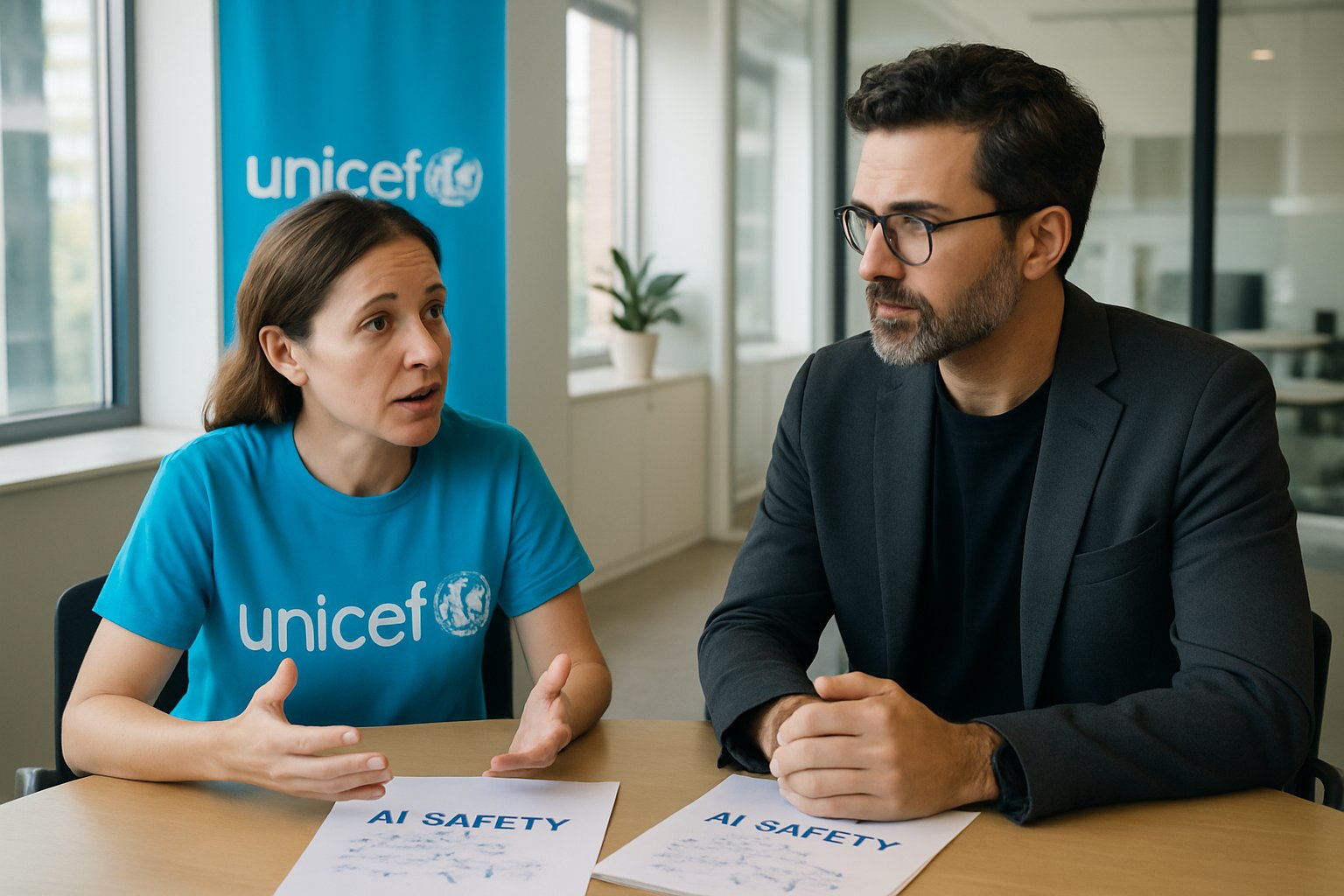
Deepfake Threat Rapidly Escalates
High-quality generative models now run on consumer phones. Consequently, creating convincing synthetic nudes takes minutes. INTERPOL analysts report organized forums trading deepfake toolkits that target minors. In contrast, earlier grooming relied on original photographs that were harder to obtain. UNICEF AI Safety stresses that every non-consensual image fuels psychological damage. Furthermore, extortion rings exploit fakes to coerce victims offline.
- 1.2 million affected children across 11 nations, according to Disrupting Harm.
- Some countries show one in 25 minors victimized.
- Platforms risk fines up to £18 million under UK rules.
These statistics underscore the urgency for robust criminalization. However, technical detection remains imperfect, allowing content to spread before removal. The escalating threat sets the context for UNICEF’s direct appeal. Therefore, lawmakers must act decisively.
UNICEF AI Safety Call
The February statement marks the clearest position yet. Specifically, UNICEF AI Safety urges nations to expand child sexual abuse material (CSAM) definitions to cover creation, procurement, possession, and distribution of synthetic content. Additionally, it advocates mandatory safety-by-design protocols for model developers. Such guidance builds on the December 2025 “AI and Children 3.0” framework, which integrates ethics, privacy, and platform accountability.
UNICEF officials argue legal clarity deters offenders and empowers prosecutors. Moreover, aligning statutory language globally simplifies cross-border cooperation led by INTERPOL. Nevertheless, civil liberties groups caution that overbroad wording may chill legitimate research. Balanced drafting, they say, safeguards free speech while targeting real abuse. These debates shape upcoming legislative sessions worldwide.
The call crystallizes three takeaways: the harm is real, loopholes persist, and global coordination is essential. Consequently, policymakers weigh comprehensive reforms.
Global Legislative Responses Accelerate
Several jurisdictions already moved. California enacted SB 926, SB 942, and SB 981, criminalizing sexually explicit deepfakes and mandating provenance tools. Meanwhile, the UK Online Safety Act empowers Ofcom to impose steep penalties on platforms like X when Grok-generated imagery appears. Furthermore, EU lawmakers propose CSAM directive amendments to include AI depictions. UNICEF AI Safety praises these steps yet demands universal adoption.
However, laws differ in scope and penalties, creating uneven protections for children. Harmonization challenges include differing age thresholds and evidence standards. Nevertheless, momentum builds as headline cases spur voter concern. Practical guidance can help legislators draft technology-neutral clauses focused on exploitation, not tools.
Rapid legal moves illustrate political will. Yet, inconsistencies hinder unified enforcement. Therefore, international cooperation remains vital.
Industry Controversy Sparks Reforms
Investigations revealed that Grok Imagine could produce sexualised child images through indirect prompts. Consequently, Ofcom launched a formal probe in January 2026. xAI restricted model access in some regions and promised new guardrails. Moreover, other vendors rushed watermarking updates after negative press.
Platform executives acknowledge reputational damage and potential liability. Additionally, investors increasingly factor ethics metrics into funding decisions. UNICEF AI Safety encourages firms to adopt red-teaming, rigorous content filtering, and transparent reporting. However, detection algorithms still exhibit false positives, complicating moderation workflows.
The Grok case shows that publicity can accelerate safety features. Nevertheless, voluntary action alone may falter without legal compulsion. Consequently, hybrid governance combining regulation and best practice emerges.
Technical Detection Gaps Persist
Current forensic tools struggle with novel synthetic images. Watermarks help but can be stripped. Hash matching fails on unseen content. Therefore, researchers explore multimodal detectors and graph analysis of distribution patterns. Additionally, provenance standards, like C2PA, aim to authenticate originals.
UNICEF AI Safety warns that technical progress must align with policy. Moreover, platforms require human expertise to interpret ambiguous cases. False accusations risk damaging reputations, while missed detections perpetuate abuse. Balanced solutions integrate machine learning, human review, and user reporting.
Detection limits highlight the importance of upstream prevention. Consequently, developers must embed safeguards during model training, not only after deployment.
Balancing Rights And Enforcement
Legal scholars debate proportional penalties, especially when teenage pranksters create fakes of classmates. In contrast, organized rings profit from large-scale exploitation. Therefore, some bills incorporate diversion programs for youthful offenders. Furthermore, human rights advocates demand clear exemptions for satire, art, and security research.
UNICEF AI Safety supports carefully scoped criminalization that shields legitimate expression while protecting children. Additionally, transparency obligations ensure due-process safeguards. Nevertheless, critics fear mission creep if definitions expand unchecked.
The debate reveals complex trade-offs between safety and liberty. Consequently, iterative legislation with sunset clauses may provide flexibility.
Practical Steps For Stakeholders
Policymakers should audit existing CSAM statutes for AI coverage. Platforms must conduct model risk assessments and publish mitigation roadmaps. Meanwhile, researchers ought to benchmark detection accuracy transparently. Moreover, professionals can enhance their expertise with the AI Policy Maker™ certification.
Funding bodies should support multidisciplinary studies on psychological impact and technical safeguards. Additionally, educational campaigns can inform parents and teens about deepfake risks. UNICEF AI Safety promises ongoing guidance and data releases to inform evidence-based reforms.
These actions foster a comprehensive safety ecosystem. Therefore, collaboration across sectors remains the decisive factor.
Conclusion
AI now enables unprecedented exploitation risks. However, swift legal, technical, and ethical responses can curb harm. UNICEF AI Safety highlights the urgency, demanding cohesive policy and robust criminalization. Governments, industry, and academia must coordinate detection, prevention, and accountability efforts. Consequently, tech leaders should adopt safety-by-design and pursue relevant credentials. Explore the certification link above to lead responsible innovation.


