

AI CERTS
2 hours ago
UNESCO Challenge Boosts Global Ethics Partnership
Challenge Model Fully Explained
The challenge unfolds in three phases. Initially, online training delivers hydrology, governance, and biodiversity modules. Subsequently, participants join fieldwork inside UNESCO biosphere reserves. Finally, selected teams receive seed funding and mentorship to pilot their concepts locally. Furthermore, every participant becomes a community ambassador, continuing work after the programme closes. This structure embeds the Global Ethics Partnership into tangible field action, ensuring local priorities steer solutions.
Notably, the design mirrors agile product cycles, enabling rapid testing and iteration. In contrast, traditional grants often demand lengthy proposals before experimentation. The approach therefore accelerates innovation while preserving accountability.
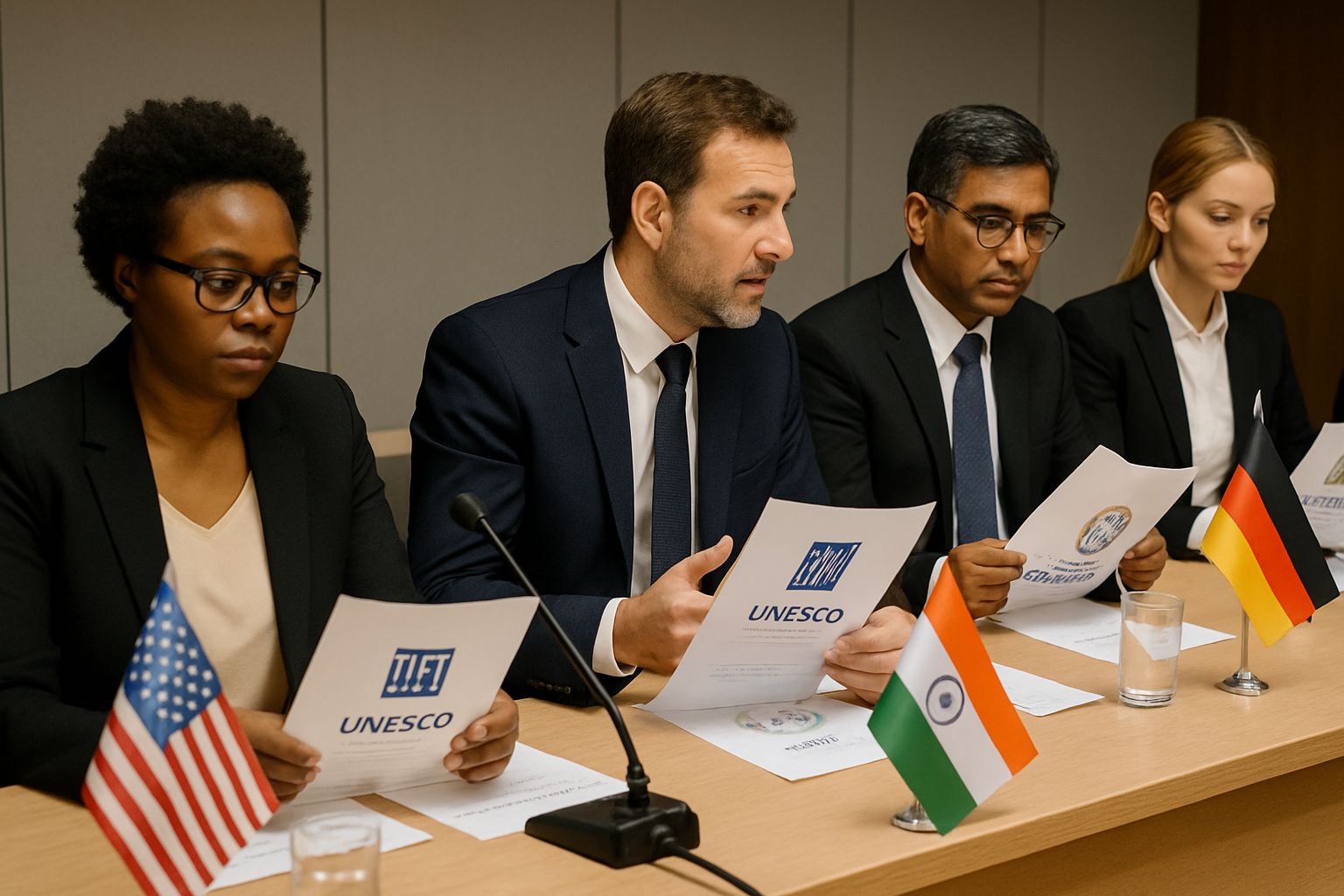
Key takeaways: rapid learning, contextual pilots, and ethical oversight drive measurable outcomes. However, sustained funding remains vital for long-term impact. The next section explores recent developments that address this gap.
Recent 2025 Developments Overview
May 2025 saw the Ecuador edition of the Amazon Water Resilience Challenge host a four-day field week. Meanwhile, virtual sessions prepared 25 youth leaders weeks earlier. Winning teams later showcased prototypes during a November grand final. Additionally, UNESCO highlighted alarming figures: one billion children face climate hazards, and 251 million remain out of school. These statistics reinforce why Education resilience sits at the programme’s core. France, a UNESCO host country, echoed the call for expanded funding during the Paris steering meeting. The Global Ethics Partnership featured prominently in those remarks, framing ethical collaboration as non-negotiable.
Takeaway: 2025 updates demonstrate momentum and reinforce ethical imperatives. Consequently, attention now shifts to the partners enabling scale.
Core Partners And Supporters
UNESCO leads strategy, yet delivery hinges on diverse collaborators. The Water Agency coordinates logistics and technical mentoring. Moreover, luxury group LVMH finances seed grants, linking corporate responsibility to community outcomes. Regional universities provide laboratories and faculty guidance, embedding science rigor in pilot design. France supplies diplomatic backing, leveraging its seat within UNESCO’s headquarters. Local NGOs, park authorities, and water funds ensure cultural alignment and long-term stewardship. Therefore, ethical governance extends from headquarters to hillside villages, illustrating the Global Ethics Partnership in action.
Key partners at a glance:
- UNESCO – strategic convening power
- The Water Agency – programme implementation
- LVMH – financial backing
- UTPL and University of Azuay – academic expertise
- Paute Water Fund – regional resource mobilisation
Summary: Inclusive coalitions multiply resources and credibility. Nevertheless, coordinated management must guard against mission drift, an issue we examine next.
Tangible Benefits And Impacts
Youth participants gain technical proficiency, leadership skills, and networking opportunities. Consequently, local employment prospects improve. Communities receive low-cost water filters, early-warning apps, and resilience lesson plans for Education continuity. Furthermore, private partners earn reputational returns while testing sustainable supply-chain interventions. For policymakers, pilot data informs national safeguards frameworks, supporting Sustainable Development Goals. Remarkably, the Global Ethics Partnership anchors each benefit in transparent decision-making, reducing reputational risk.
Current numbers are encouraging. Seed grants funded seven prototypes, five of which remain active after six months. Moreover, two pilots already attracted municipal co-investment, signalling pathways to scale. However, detailed longitudinal studies are still pending.
In summary, immediate impacts look promising, yet robust evidence will decide long-term success. Therefore, understanding risks is essential.
Key Risks And Limitations
Scaling pilots into national policy often stalls once seed money ends. Moreover, short challenge cycles rarely allow rigorous third-party evaluation, leaving evidence gaps. In contrast, traditional programmes embed long monitoring phases but sacrifice speed. France’s auditors recently urged UNESCO to publish clearer key performance indicators. Additionally, community politics can obstruct implementation despite technical readiness.
Nevertheless, the Global Ethics Partnership mandates open data sharing, enhancing transparency and peer review. Future cohorts will also integrate independent evaluators from leading science institutes. Consequently, credibility should strengthen. Yet financial continuity remains uncertain.
Key point: risks exist, but ethical frameworks and external audits offer mitigation. We now explore alignment with global safeguards.
Future Scale Up Pathways
UNESCO plans to replicate the model across 20 biosphere reserves by 2027. Meanwhile, talks with the African Union target school-safety pilots that merge water resilience with Education continuity. Additionally, a proposed trust fund would pool corporate donations, multilateral grants, and green bonds. Professionals can enhance their expertise with the AI Cloud Architect™ certification, aligning cloud skills with humanitarian data needs. Furthermore, France is exploring tax incentives for companies contributing at least €1 million to resilience funds. These policy levers embed financial safeguards into the scaling roadmap.
The Global Ethics Partnership will steer governance, ensuring equitable resource allocation and respect for indigenous rights. Moreover, UNESCO aims to integrate challenge findings into curriculum reforms, embedding resilience across Education systems. Consequently, knowledge transfer becomes systematic rather than ad hoc.
Key takeaway: strategic finance, curriculum change, and ethical oversight create a viable scale pathway. The conclusion summarises remaining action items.
Conclusion And Next Steps
UNESCO’s resilience challenge marries agile innovation with ethical governance. Moreover, local pilots deliver immediate community value while informing broader policy. France’s diplomatic support, rigorous science, and focused safeguards strengthen credibility. Nevertheless, sustained funding and independent evaluation will determine ultimate success. Therefore, stakeholders should commit multi-year resources, embed monitoring, and expand the Global Ethics Partnership toolbox.
Interested professionals should review upcoming cohort calls and pursue certifications that bridge technology with humanitarian goals. Explore the linked AI Cloud Architect™ programme and position yourself at the centre of resilient action.


