

AI CERTS
3 months ago
UK Police Facial Recognition and Algorithmic Bias
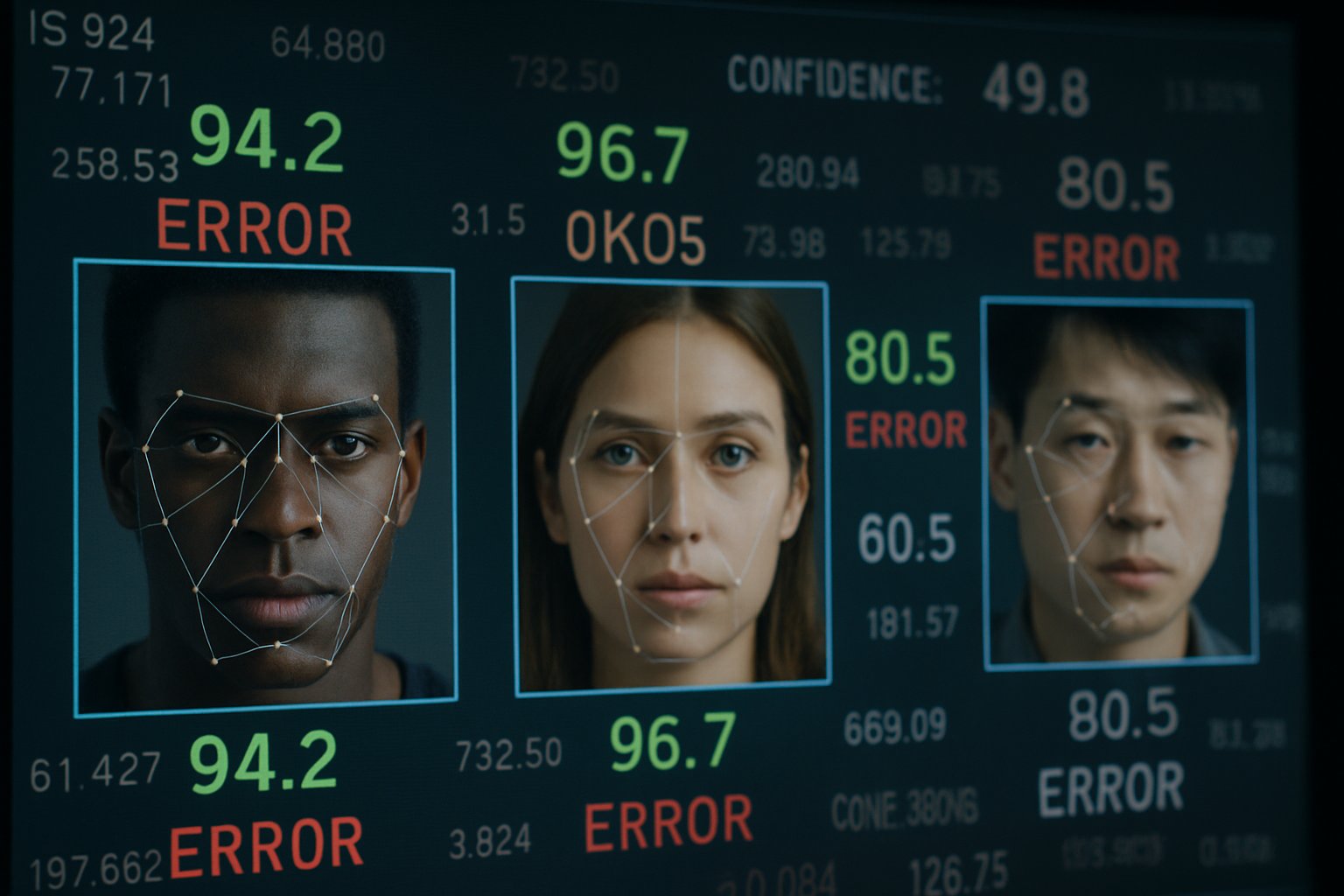
Consequently, false matches rise sharply for Black and Asian citizens.
Industry players warn these errors erode Public Safety by undermining trust.
Meanwhile, the Home Office prepares a nationwide rollout despite the warnings.
Independent data from the National Physical Laboratory show alarming FPIR gaps across demographics.
For instance, FPIR reached 5.5% for Black subjects at low thresholds, versus 0.04% for white faces.
These numbers ignite legal scrutiny and heated policy debate.
Therefore, stakeholders must examine the system before deployment escalates.
Algorithmic Bias Testing Highlights
National Physical Laboratory auditors evaluated three police algorithms during 2023 to 2025.
Moreover, their controlled trials captured performance at multiple threshold settings.
At the lowest setting, FPIR ballooned to 4.0% for Asian faces and 5.5% for Black faces.
Conversely, white subjects saw only 0.04%.
This 100-fold disparity exemplifies Algorithmic Bias in stark statistical terms.
Subsequently, the lab noted that higher thresholds reduced measured gaps.
However, higher thresholds also missed genuine matches, complicating Public Safety goals.
The complex trade-off forces decision-makers to prioritize either equity or detection.
Therefore, any deployment plan must publish threshold choices and anticipated FPIR impacts.
Without that transparency, communities cannot judge risks responsibly.
These findings reveal extreme demographic variation.
Consequently, policymakers face an urgent accuracy versus fairness dilemma.
Against this backdrop, the numeric details merit deeper exploration.
Statistical Gaps Fully Explained
Researchers caution that measured error rates hinge on watchlist size, lighting, and camera position.
Additionally, subject motion further alters matching reliability.
Therefore, FPIR statistics alone cannot predict street performance without context.
The NPL study tested only thousands of images, limiting confidence intervals.
In contrast, real deployments scan millions of passers-by each month.
Algorithmic Bias therefore varies dynamically with context, not just code.
Sample diversity therefore remains a pressing research priority.
Moreover, Cambridge auditors criticised the small sample of Black women, where 9.9% false matches occurred.
Such sparse sampling impedes definitive claims of bias removal at higher thresholds.
Consequently, the Home Office promise of "no statistically significant bias" remains disputed.
Professor Pete Fussey argues the numbers cannot justify blanket confidence.
Nevertheless, proponents still highlight an 89% true-positive rate in some trials.
The statistics demonstrate sensitivity to environmental and sampling factors.
Moreover, they challenge simplistic success narratives.
With the numbers contested, attention shifts to differing stakeholder positions.
Stakeholder Perspectives Widely Diverge
Police leaders emphasize arrest totals, citing 580 captures in twelve months.
Furthermore, they claim live human verification prevents wrongful detentions.
Public Safety arguments assert faster offender location and quicker missing person finds.
In contrast, civil-society organisations stress psychological harm and chilled protests.
Liberty’s Charlie Whelton warns "racial bias shows damaging real-life impacts".
Meanwhile, the Equality and Human Rights Commission labels parts of the Met policy unlawful.
Additionally, the watchdog plans to intervene in ongoing judicial reviews.
The Home Office nonetheless announced ten mobile vans for national expansion.
Campaigners allege this move ignores Algorithmic Bias evidence.
Consequently, parliamentary committees expect heated hearings early next year.
Perspectives remain polarised between safety claims and civil-rights concerns.
Therefore, legal scrutiny becomes the next battleground.
Understanding the legal and ethical framework clarifies those tensions.
Legal And Ethical Implications
Court rulings have already curtailed certain deployments, notably in South Wales during 2020.
Moreover, the EHRC contends current Metropolitan Police policy breaches European rights standards.
Internationally, the EU AI Act would label this high-risk technology and impose strict oversight.
Consequently, UK lawmakers must decide whether voluntary guidelines suffice.
Minderoo auditors advise suspending LFR in public places until statutory safeguards exist.
Additionally, equality law demands that discriminatory impacts on Black and Asian groups receive rigorous assessment.
Therefore, impact assessments could become evidence in future discrimination claims.
Nevertheless, police forces continue pilot operations while consultations proceed.
The Information Commissioner has asked for clarity on data retention periods.
Failure to resolve these issues risks costly litigation.
Judges increasingly reference statistical evidence when weighing proportionality.
The legal landscape is tightening, yet operational rollouts advance.
Consequently, technical mitigation becomes pivotal.
Attention thus turns to available countermeasures.
Technology Mitigation Strategies Viable
Developers propose algorithm retraining with balanced datasets to curb Algorithmic Bias.
Additionally, dynamic threshold adjustment per demographic profile receives research attention.
However, critics fear adaptive thresholds may entrench surveillance disparities.
A simpler tactic involves deploying higher thresholds universally, though detection may drop.
Therefore, decision support dashboards must expose live error rates for accountability.
Meanwhile, officer training and clear use-case definitions can limit misuse.
Moreover, certification frameworks promise independent assurance of security controls.
Professionals can enhance their expertise with the AI Security Level-2 certification.
Such credentials build organisational capacity to audit systems continuously.
Consequently, technical and procedural safeguards must advance together.
Certification Pathways For Professionals
- Risk assessment modules covering Algorithmic Bias detection
- Secure data pipeline design ensuring demographic balance
- Governance techniques aligned with Home Office standards
Mitigation options against Algorithmic Bias exist yet demand sustained investment.
Moreover, personnel skills remain a decisive factor.
The strategic journey now requires concrete actions and timelines.
Recommendations And Next Steps
Based on current evidence, several immediate steps appear prudent.
Firstly, the Home Office should publish full NPL datasets, including threshold breakdowns.
Secondly, forces must release deployment logs detailing watchlist composition and outcomes.
Thirdly, independent auditors should verify Algorithmic Bias levels during live operations.
Additionally, community observers could attend deployments to monitor racial impact.
Moreover, policymakers should legislate minimum transparency and oversight requirements.
Consequently, public confidence and Public Safety objectives can align.
Finally, organisations should mandate relevant certifications to ensure competent oversight teams.
Trained professionals will better interpret error metrics and adjust systems responsibly.
Therefore, wider adoption can proceed only after these safeguards mature.
These steps balance innovation with accountability.
Nevertheless, sustained oversight remains essential.
Failure to act decisively may entrench discriminatory policing for a generation.
In summary, UK police facial recognition stands at a crossroads.
Independent tests have exposed Algorithmic Bias and widened public concern.
Meanwhile, government expansion plans highlight competing priorities of efficiency and equity.
Furthermore, statistical disparities for minority groups undermine legitimacy.
Transparent data, rigorous certification, and lawful frameworks present a viable path forward.
Consequently, leaders should act now, equip teams with the highlighted certification, and commit to fairness.
Explore the linked program and strengthen your capacity to safeguard technology and society.
Additionally, share this analysis with colleagues to foster informed debate.
Balanced dialogue remains the cornerstone of responsible innovation.
Regular red-team exercises can further surface hidden failure modes.


