

AI CERTs
2 hours ago
Uber CEO calls out superficial AI at Davos
Investors crowded snow-covered Davos hoping for clarity on corporate AI futures. They instead heard a blunt warning from Uber CEO Dara Khosrowshahi. He argued many enterprises still stage superficial showcases rather than real AI Transformation. His critique pierced a week of optimistic spending forecasts and glossy demos. Meanwhile, boardrooms tout record budgets, yet processes remain rooted in pre-AI routines.
This article unpacks the confrontation, details practical redesign steps, and reviews emerging governance pathways. Furthermore, it contrasts headline promises with measurable outcomes reported by Uber and peer leaders. Consequently, technology executives can assess whether their own initiatives represent genuine transformation or expensive theater. Finally, readers gain pointers to certifications that help close the growing skill gap.
Davos Warning Signals Rise
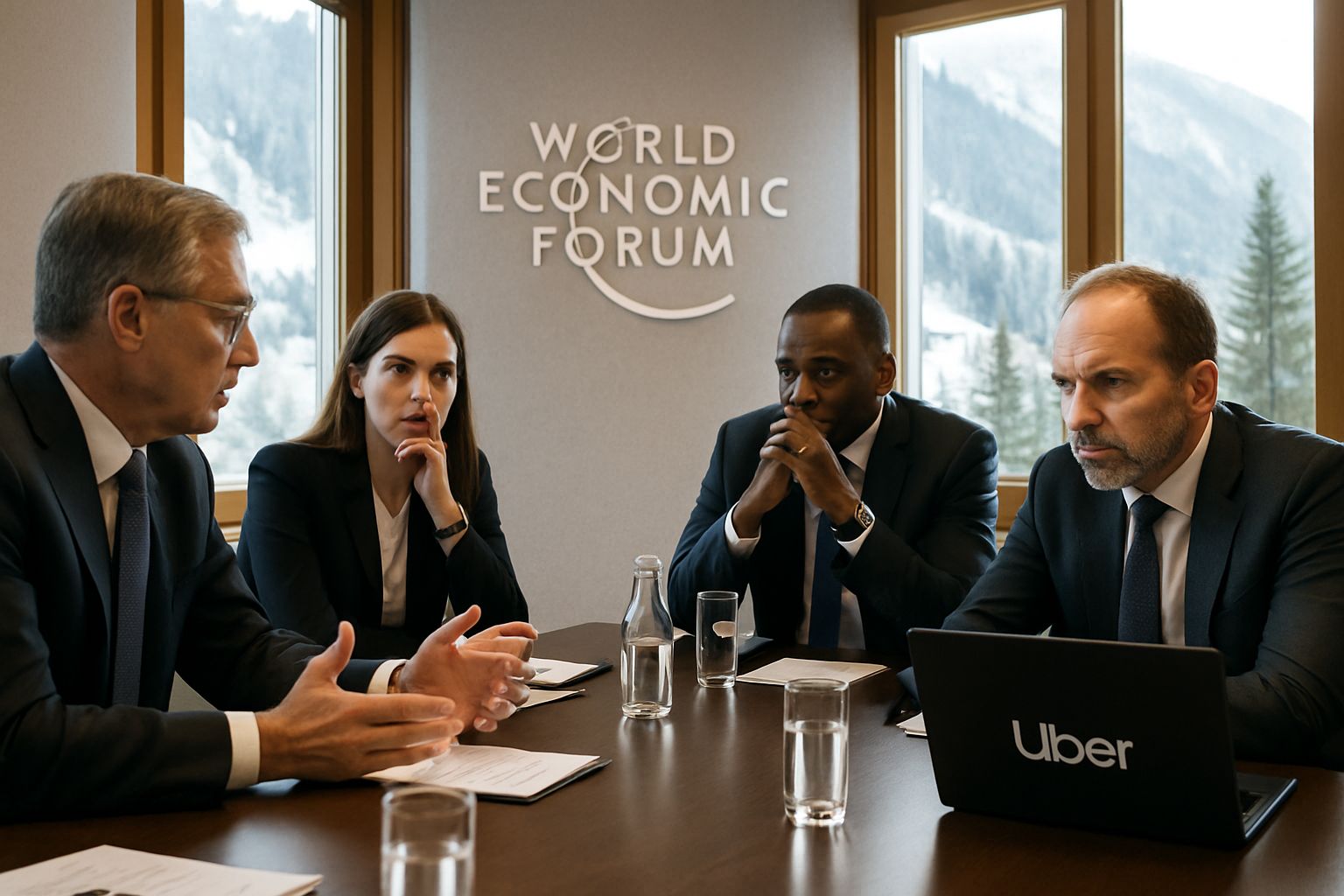
Khosrowshahi addressed the World Economic Forum on 20 January 2026. Moreover, he accused many delegates of simply "saying the right words" about AI Transformation. He labeled the practice "play-acting" and urged leaders to rebuild policies from scratch.
In contrast, DeepMind’s Demis Hassabis cautioned that junior roles already face pressure from generative systems. Anthropic CEO Dario Amodei echoed that entry-level hiring at his firm is slowing. Consequently, the Davos mood swung between productivity euphoria and employment anxiety.
- “Play-acting their way into a pretend transformation” — Khosrowshahi, Davos 2026.
- “We actually need less and not more people” — Amodei, Anthropic.
- “It may soon impact the junior level” — Hassabis, DeepMind.
These remarks underscored an urgent gap between aspiration and execution. Therefore, deeper operational redesign emerged as the logical next focus. The following section explores what that redesign entails.
Redefining Applied AI Models
At Uber, Khosrowshahi differentiates surface chatbots from fully agentic workflows. Accordingly, he champions internal agents that plan, decide, and act across support, pricing, and routing. He claims these systems already deliver hundreds of millions in operational gains.
An illustrative case involves customer-service policy rewrites. Previously, representatives followed static scripts. Consequently, an agent reasons through thousands of rules, composing personalized resolutions in seconds.
The lesson is clear: models succeed when freed from obsolete constraints. Nevertheless, deploying such systems requires disciplined engineering culture. Next, we examine how that culture is developing inside Uber.
Superhuman Engineering Inside Uber
Inside the engineering org, 80 to 90 percent of developers now pair with coding copilots. Meanwhile, tools like Anysphere Cursor and Anthropic Claude automate linting, test generation, and documentation. Khosrowshahi told Kara Swisher these copilots turn each engineer into a "superhuman" contributor.
Moreover, Uber integrates agentic services directly into production pipelines, not isolated sandboxes. Every commit triggers model-based static analysis that flags performance regressions before staging. Consequently, release velocity has increased without a parallel hiring surge.
Embedded agents plus cultural openness yielded measurable value. Therefore, stakeholders demanded broader investment across the enterprise. Funding trends across industries support that push, as the next section details.
Rapid Enterprise Spending Momentum
For context, Uber continues scaling budgets alongside peers. Surveys from RBC and BCG confirm accelerating budget allocations for generative systems. RBC found 90 percent of CIOs plan higher spending during 2026. Additionally, 60 percent already operate production workloads, up sharply from 39 percent.
Key spending signals include:
- BCG reports some firms will double AI budgets within twelve months.
- IBM sees retail brands shifting 52 percent beyond traditional IT allocations.
- Boards increasingly assign AI strategy directly to the CEO, not the CIO.
Nevertheless, spending alone does not guarantee outcomes. Khosrowshahi’s "play-acting" critique suggests evaluating policy rewrites alongside invoices. Therefore, differentiating leaders must translate checks into structural change.
Budget graphs indicate momentum, yet strategic depth remains uneven. Consequently, governance and skills become decisive over the coming year. Those factors also shape looming workforce impacts, explored next.
Labor Disruption Concerns Mount
Junior technologists feel the earliest tremors. Uber already pilots reskilling academies for support staff. Meanwhile, chief economists at Davos predicted reskilling waves across multiple sectors.
In contrast, Khosrowshahi argues productivity gains outweigh headcount reductions when companies redeploy talent. He cites expanded autonomous delivery pilots requiring novel oversight roles. However, critics counter that not all displaced workers transition smoothly.
Policy makers therefore debate updated social safety nets, tax incentives, and education subsidies. Consequently, enterprise leaders must participate in these conversations to protect reputation and pipeline.
Labor signals remain mixed and sector specific. Nevertheless, consensus at Davos stressed proactive adaptation over reactive layoffs. Practical governance frameworks can support that shift, as the following subsection explains.
Governance And Certification Pathways
Robust governance starts with clear data provenance, continuous monitoring, and bias auditing. Moreover, multidisciplinary councils can align legal, security, and product mandates. Several executives admitted their councils still lag spending. Uber reports weekly model audits to satisfy regulators.
Professional upskilling fills part of that gap. Professionals can enhance expertise through the AI+ UX Designer™ certification. Additionally, the program covers usability, ethics, and organizational change for agentic systems.
Effective governance demands both policy rigor and skilled practitioners. Therefore, certification pathways complement internal controls. We now recap the main insights and outline immediate next steps.
Conclusion And Strategic Outlook
Davos leaders share optimism, yet Khosrowshahi’s rebuke exposes lingering superficiality. Successful teams break rules, rebuild workflows, and embed reasoning agents deep inside operations. Surveys confirm capital is available; however, organizational redesign determines returns. Labor signals caution against complacency, urging proactive reskilling and governance. Consequently, executives should audit existing projects, retire legacy policies, and pilot agentic overhauls. Additionally, investing in accredited training such as the AI+ UX Designer™ program strengthens talent pipelines. Uber's journey illustrates what disciplined overhaul can achieve. Take the first step now, evaluate your strategy, and transform intent into measurable impact.


