

AI CERTS
3 months ago
Uber-Avride Dallas Move Escalates Mobility Competition
Moreover, the pilot highlights Uber's hybrid network strategy blending human drivers and Autonomous fleets. Meanwhile, Avride gains commercial exposure ahead of larger funding milestones. In contrast, local regulators will scrutinize safety data before approving fully driverless operations. Therefore, every early trip supplies critical performance metrics. The stakes extend beyond Dallas. Global investors expect robotaxi markets to surge toward billions by 2030. Nevertheless, only sustained consumer trust will crown winners in this high-stakes race.
Dallas Launch Signals Race
Initially, the service covers nine square miles across Downtown, Uptown, Deep Ellum, and Turtle Creek. Riders who select UberX, Uber Comfort, or Uber Comfort Electric may be matched automatically. However, the app allows users to opt out if they prefer a human driver.
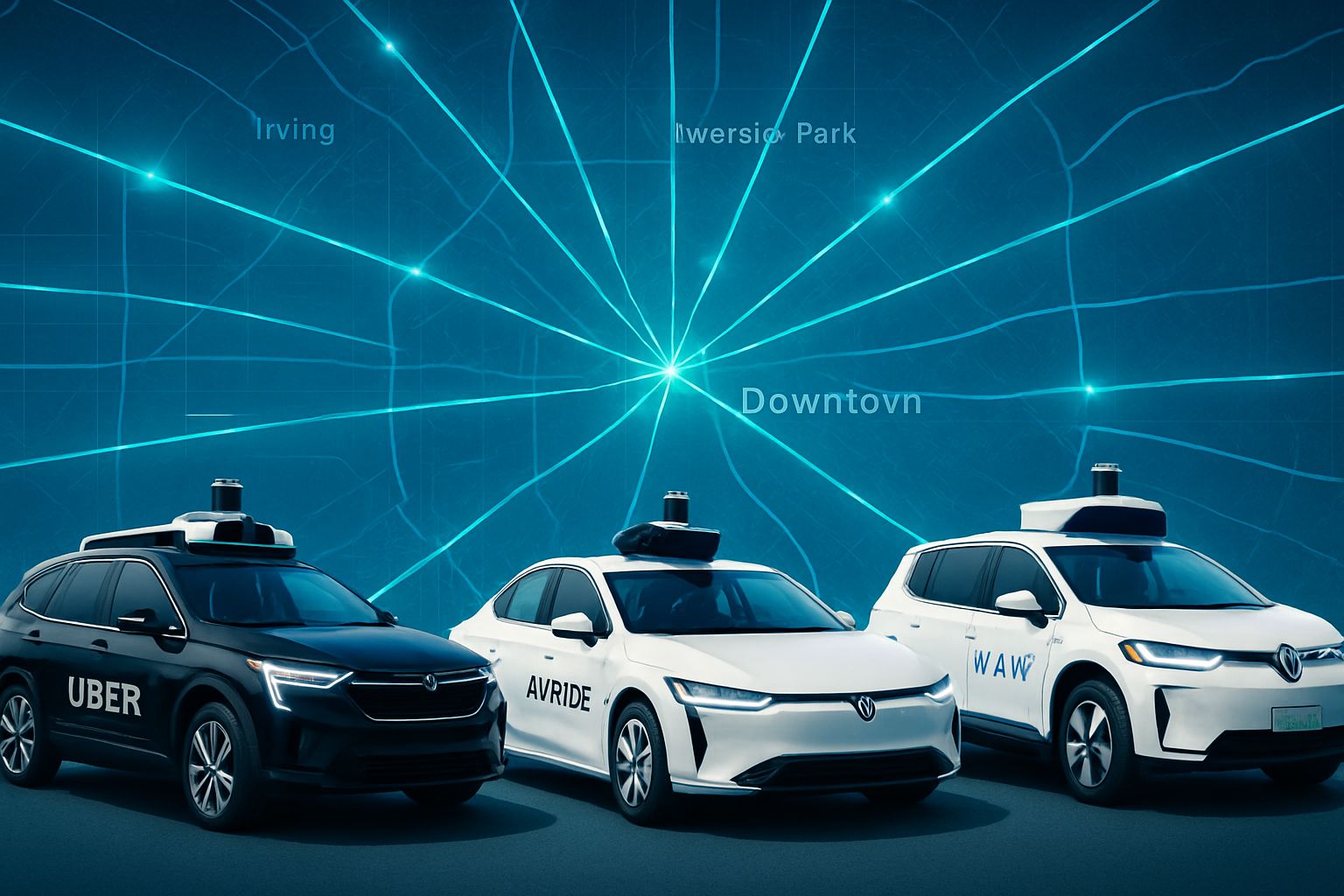
Each Avride Robotaxi currently includes a trained specialist seated in front. Moreover, Uber states that fully driverless rides will follow pending regulatory approval. Texas law permits such pilots, yet incident reporting remains mandatory.
During day one, the fleet size stayed undisclosed, although executives promised expansion to hundreds within years. Consequently, fleet scale will decide trip availability and the wider Mobility Competition.
Local headlines framed the move as a pre-emptive strike against Waymo, Alphabet’s seasoned Robotaxi operator. In contrast, Waymo plans a fully driverless debut in Dallas during 2026, positioning itself as a formidable Rival.
The Dallas pilot intensifies the Mobility Competition and accelerates rider exposure to autonomous travel. Next, industry watchers will examine how the hybrid network underpins broader scale.
Uber Hybrid Network Strategy
Uber’s platform already hosts human drivers, couriers, and multiple autonomous partners. Furthermore, executives call this architecture a hybrid network. The approach lets Uber hedge technology bets while satisfying investors eager for margin expansion.
Over the last two years, the company announced more than twenty autonomy partnerships covering Robotaxi, delivery, and freight. Additionally, management targets ten cities with autonomous fleets by 2026. The Avride integration illustrates that ambition in action.
Consequently, the company sometimes promotes competitors to its existing suppliers. Waymo operates on the same app in Phoenix, yet now faces Avride as an in-app Rival within Dallas. Nevertheless, executives argue that marketplace choice benefits riders and accelerates adoption.
Uber’s multifleet tactic broadens inventory and strengthens its hand in the Mobility Competition. However, the model increases operational complexity, leading observers to scrutinize support systems in coming months.
Avride Technical Edge Explained
Avride equips Hyundai Ioniq 5 electric crossovers with LiDAR, radar, and camera suites. Moreover, the firm claims a robust neural planning stack optimized for urban maneuvers. Its system targets SAE Level 4 capability inside defined Dallas geofences.
Funding of up to $375 million from the ride-hailing giant and Nebius supports vehicle engineering, charging depots, and cloud simulation. Meanwhile, executives project hundreds of cars in Dallas over several years. Consequently, capital intensity remains high, yet volume could lower per-mile costs versus human drivers.
Analysts note that software modularity, local mapping, and remote supervision differentiate Avride from each Robotaxi Rival. Nevertheless, sustained uptime and safety performance will prove that edge.
Avride’s hardware-software stack delivers potential efficiencies, adding fresh energy to the Mobility Competition. Next, Waymo’s response will shape public perception of autonomous leadership.
Waymo Plans Intensify Quickly
Waymo already runs more than 250,000 paid weekly trips across Phoenix, San Francisco, and Los Angeles. In July, the company revealed plans to deploy fully driverless Robotaxi service in Dallas during 2026. Furthermore, Avis will manage fleet logistics, underscoring a capital-light scaling model.
In contrast, Waymo omits onboard specialists from mature deployments, relying on remote oversight alone. Consequently, the Dallas timeline sets a one-year showdown among autonomous rivals Uber and Avride.
Waymo’s aggressive roadmap escalates the Mobility Competition and pressures regulators to compare safety data. However, divergent technical philosophies may produce varied rider experiences that analysts will monitor.
Market Forecasts Diverge Widely
Research firms forecast staggering growth for global autonomous ride-hailing. MarketsandMarkets projects a USD 45.7 billion sector by 2030, citing 91.8% CAGR. Grand View Research estimates a slightly smaller USD 43.8 billion figure.
However, analysts debate timeframes, cost curves, and regional regulation. Some models assume rapid battery price declines that may not materialize. Nevertheless, investors keep funding players like Avride due to enormous upside.
- USD 45.7B global value projected by 2030
- Up to 91.8% compound annual growth rates cited
- More than 20 autonomy partnerships on the ride-hailing platform
- $375M in funding commitments announced in 2025
Forecast divergence underscores uncertainty yet also fuels the Mobility Competition narrative. Consequently, prudent stakeholders monitor both technology metrics and financial indicators before scaling bets.
Risks And Challenges Persist
Despite optimism, safety incidents involving self-driving vehicles have triggered intense scrutiny. In California, regulators halted Cruise operations after pedestrian injuries. Consequently, Dallas officials will demand detailed incident reports from Avride and Waymo.
Meanwhile, labor advocates warn about driver displacement as fleets transition to automation. However, the company contends its hybrid model preserves flexibility and supply. Insurance costs and uncertain liability frameworks add further friction.
Moreover, high-priced sensors and compute still burden vehicle economics. Therefore, scale alone may not guarantee profitability.
These challenges temper excitement yet sharpen focus within the Mobility Competition. Next, policy expertise will become vital for executives shaping deployment roadmaps.
Developing Needed Policy Skills
Regulatory fluency is becoming a core leadership requirement across mobility companies. Consequently, professionals seek structured learning pathways to guide ethical deployment and compliance. Professionals can enhance their expertise with the AI Policy Maker™ certification. Moreover, the curriculum covers risk assessment, transparency standards, and stakeholder communication.
In contrast, ad-hoc learning often leaves gaps that surface during audits. Therefore, structured programs build confidence among regulators and investors.
Building policy skills equips leaders to navigate regulation and fuels responsible growth amid the Mobility Competition. Finally, the market now awaits real-world performance data to validate strategic bets.
Conclusion
Dallas has emerged as a proving ground for next-generation ride-hailing experiments. The joint rollout showcases hybrid networks, fresh capital, and ambitious timelines. Meanwhile, Waymo prepares a fully driverless counterpunch. Consequently, stakeholders will compare safety records, rider satisfaction, and unit economics. Regulatory clarity, technological robustness, and effective policy training will decide lasting winners. Ultimately, the Mobility Competition will define how quickly autonomous travel becomes everyday reality. Embrace the shift, deepen your policy expertise, and position yourself for the coming mobility era.


