

AI CERTS
3 hours ago
Tuya’s Physical AI Assistant Debuts, Redefining Smart Living
Announced on 25 December 2025, the platform—branded “Hey Tuya”—aims to weave intelligence into daily Life. Moreover, the launch illustrates how multimodal AI, edge networking, and a multi-agent stack can converge. Professionals eager to capitalize on this shift can validate their knowledge with the AI for Everyone™ certification.
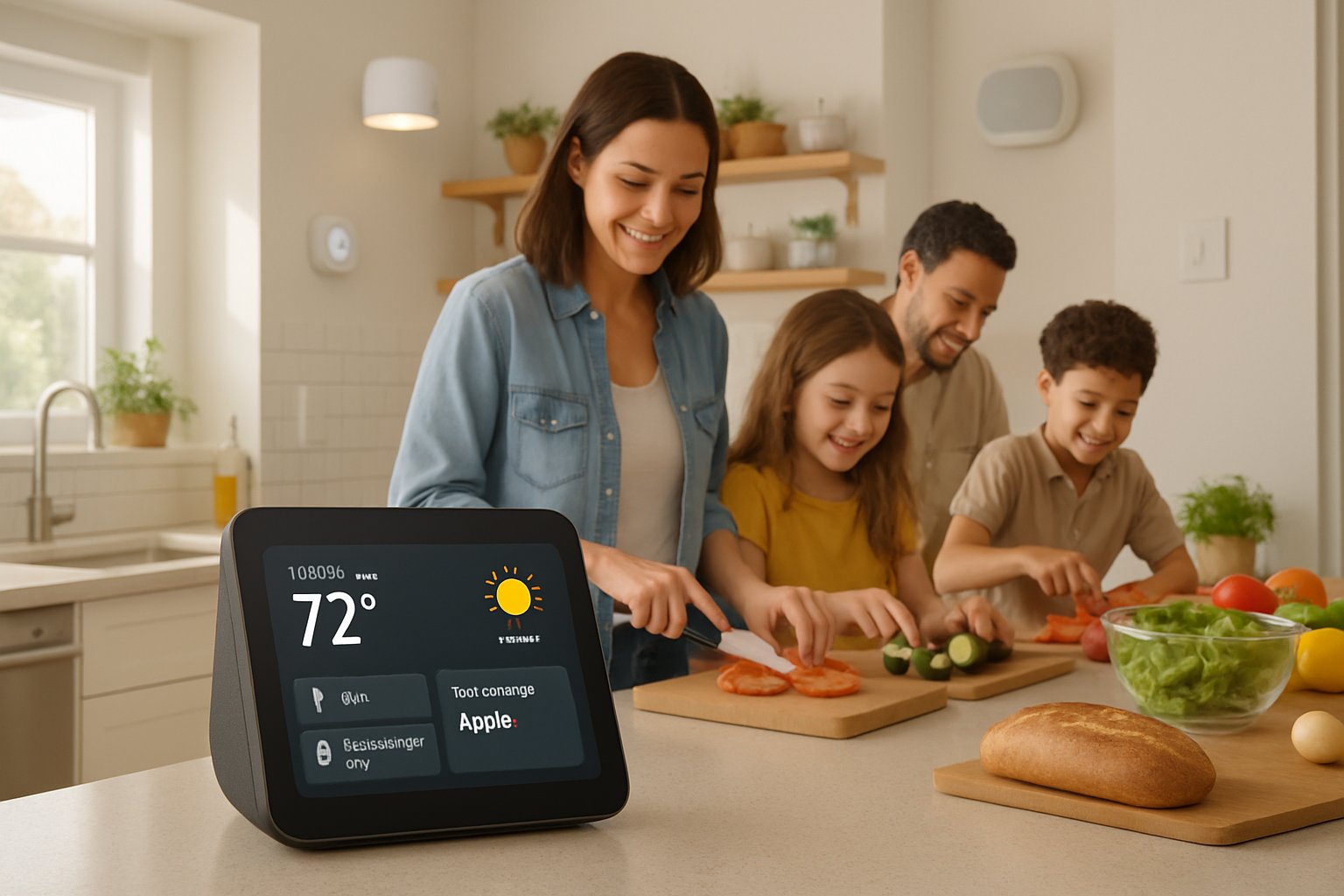
Launch Signals New Era
“Hey Tuya” entered public beta inside the Tuya App and on Tuya.AI. Tuya framed the release as a leap toward integrated IoT automation. Furthermore, the company highlighted platform scale: 12,000+ AI agents, 155 million daily interactions, and 1.62 million developers.
This Physical AI Assistant differs from earlier gadgets. Instead of controlling one speaker, it coordinates wearables, security cameras, HVAC, and toys simultaneously. Additionally, role-based sub-agents handle tasks like energy savings or health reminders.
Analysts note that rivals—Amazon, Google, Apple—still silo intelligence per device. In contrast, Tuya pushes cross-vendor orchestration through Matter and other bridges.
The launch underscores Tuya’s broader 2024-2025 R&D push, including edge acceleration showcased at CES 2025. However, market adoption will depend on privacy assurances and interoperability maturity.
Key takeaway: Tuya positions itself as the connective tissue for smart environments. Consequently, enterprise planners should track developer traction before committing resources.
Inside Tuya Technology Stack
The company’s Physical AI Engine (PAE) blends sensors, actuators, and large language models. Moreover, its AD-RTN ensures low-latency messaging between cloud and edge gateways.
OmniMem provides short- and long-term memory so the Physical AI Assistant recalls preferences. Additionally, multi-agent governance coordinates specialized bots under a supervisor agent.
On-device inference handles urgent commands, while complex cognition resides in the cloud. Consequently, Tuya balances privacy, cost, and speed.
Key components include:
- Edge compute nodes for real-time perception
- T-RTC for instant video or voice streaming
- Open SDKs enabling third-party agents
These modules let developers embed Life routines without reinventing networking layers. Nevertheless, rigorous security audits remain essential.
Section summary: Tuya assembled a layered architecture marrying cloud power with edge agility. Therefore, engineers should evaluate latency benchmarks before deployment.
Market Context And Competition
Grand View Research projects the overall AI market reaching trillions by 2030. Meanwhile, edge hardware alone could surpass tens of billions.
This climate favors platforms that simplify IoT integration. Tuya competes directly with Alexa, Google Assistant, and SmartThings. However, its white-label strategy may attract manufacturers lacking deep AI budgets.
Physical AI Assistant adoption also depends on regional privacy laws. EU GDPR requirements differ from U.S. CCPA rules. Moreover, local processing advocates tout open-source choices like Home Assistant as safer.
Tuya reported Q3 2025 revenue near $82.5 million, indicating sustained growth. Nevertheless, analysts await independent user-retention figures.
Summary: Competition remains fierce, yet holistic orchestration offers clear differentiation. Consequently, investors will watch loyalty metrics closely.
Key Benefits And Use-Cases
Tuya advertises tangible gains:
- Proactive comfort—rooms pre-conditioned before arrival
- Energy optimization through real-time consumption analysis
- Security alerts integrating vision, motion, and sound
- Health monitoring via wearables and ambient sensors
- Developer monetization through service subscriptions
Furthermore, multi-device routines can cross brands—a common hurdle today. The Physical AI Assistant thus converts isolated gadgets into cohesive experiences.
Business facilities also benefit. Conference rooms can adjust lighting, signage, and ventilation based on calendar data. Additionally, industrial campuses may streamline maintenance scheduling.
Independent experts argue that true value emerges when assistants reduce cognitive load. However, reliability must surpass 99 percent to avoid frustration.
Section wrap-up: Benefits span convenience, savings, and new revenue lines. Therefore, proof-of-concept pilots should validate ROI metrics early.
Risks Demand Careful Oversight
Continuous sensing raises obvious privacy risks. Moreover, long-term memory could expose sensitive patterns if breached.
Tuya claims robust encryption, yet watchdogs urge transparent audits. In contrast, local-only models reduce exposure but limit breadth.
Regulatory scrutiny will intensify as Life data grows. Consequently, vendors must offer granular consent toggles and data-deletion paths.
The Physical AI Assistant also faces reliability challenges. Edge setups may fail silently during network outages. Additionally, false-positive automations can waste energy or endanger occupants.
Summary: The platform must balance ambition with accountability. Consequently, buyers should demand third-party penetration tests before rollout.
Developer And Partner Outlook
Over 1.6 million developers have joined Tuya’s ecosystem. Furthermore, 12,000+ agents already extend the Physical AI Assistant.
Partners leverage open APIs to integrate wearables, EV chargers, and niche sensors. Moreover, Tuya’s LLM integrations—including Mistral—simplify natural-language features.
Nevertheless, fragmentation persists. Competing standards like HomeKit and proprietary clouds still fragment the IoT market. Therefore, partners must assess overlap.
Two developer imperatives stand out. First, create differentiated vertical agents—health, eldercare, hospitality. Second, adhere to regional compliance lines from launch.
Takeaway: The ecosystem offers fertile ground, yet thoughtful roadmap planning remains vital. Consequently, product managers should pilot small before scaling.
Strategic Takeaways For Leaders
Tuya’s move signals a maturing smart environment era. Moreover, cohesive orchestration unlocks new business models across residential and commercial sectors.
Executives should track adoption indicators—daily active devices, churn, and cross-brand routine success rates. Additionally, they must align privacy frameworks with evolving regulation.
Upskilling teams is equally important. Professionals can deepen domain fluency through the earlier referenced AI for Everyone™ certification. This coursework covers fundamentals needed to evaluate emerging assistants.
Finally, leaders should prepare multi-year integration roadmaps. Consequently, vendor lock-in risks decline, and ROI transparency improves.
Section summary: Vision, governance, and talent must intersect for impact. Therefore, board-level oversight should guide deployment pacing.
Conclusion:
Tuya’s Physical AI Assistant introduces a compelling blueprint for unified device intelligence. Nevertheless, privacy, reliability, and competitive pressures remain unresolved. Moreover, thoughtful pilot programs and continuous expertise development will separate early winners from laggards. Consequently, now is the time to assess your organization’s readiness and pursue relevant certifications to stay ahead.


