

AI CERTS
1 hour ago
TSMC Pressures Spark Semiconductor Diversification Strategy Shift
Demand Outpaces Node Supply
AI workloads multiply each quarter. Moreover, TSMC warns its leading-edge nodes and CoWoS lines remain sold out through 2027. The foundry captured about 40% of the $320-billion “Foundry 2.0” market last year. However, those billions still cannot satisfy exploding inference and training requirements. AI chips for hyperscalers dominate reservation books, squeezing smaller buyers.
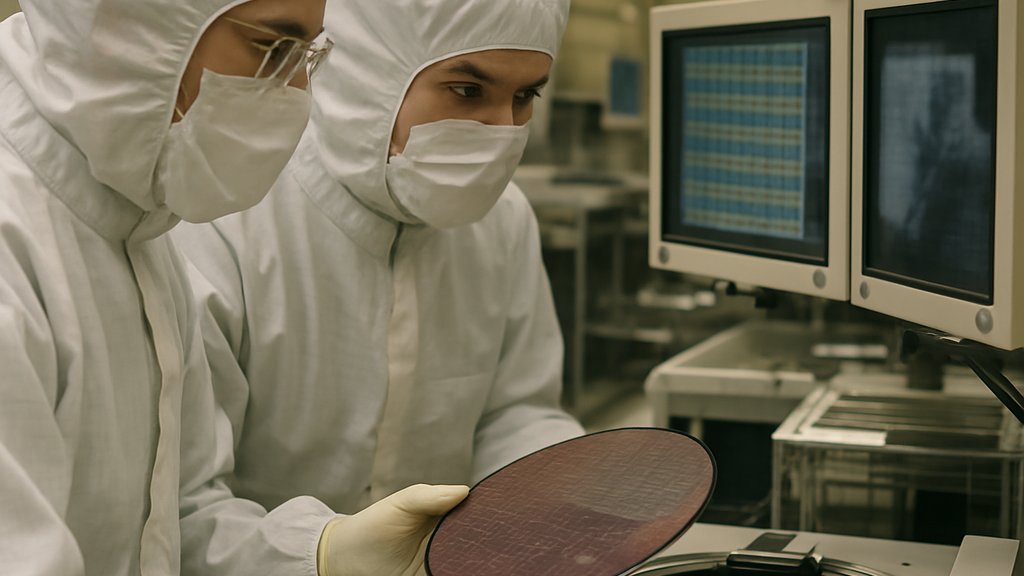
Key numbers underscore the crunch: record quarterly revenue, multi-billion-dollar capex, and month-long lead times. Additionally, advanced packaging limits throughput even when wafers are available. These realities test every existing Semiconductor Diversification Strategy on the market.
These figures confirm sustained scarcity. Consequently, customers must explore alternative paths before procurement cycles close.
Geopolitics Spur Resilient Supply
Washington, Tokyo, and Brussels subsidize domestic fabs. In contrast, Beijing accelerates local ecosystems. Furthermore, the “Taiwan-plus-one” mantra guides boardroom debates. Concentration risk around the Taiwan Strait now drives fresh environmental, social, and governance scoring for investors.
Government incentives reshape the supply chain. U.S. CHIPS funds lower capital costs for Intel Foundry Services. Meanwhile, Japan finances a TSMC joint venture in Kumamoto. Europe eyes Dresden for added fab capacity. Each package steers commitments away from single-region exposure, embedding Semiconductor Diversification Strategy milestones into shareholder reports.
Policy shifts broaden geographic spread. However, they also dilute traditional economies of scale.
Hyperscaler Allocation Scramble Grows
Google, AWS, and Meta pre-book entire process nodes. Subsequently, smaller automotive and industrial players struggle to obtain slots. Market analysts note that Google alone secured several years of CoWoS throughput for custom TPUs.
The situation intensifies. Moreover, Reuters reported preliminary accords between Apple and Intel for U.S. wafer starts. Such headlines reveal that high-volume buyers are rewriting their Semiconductor Diversification Strategy playbooks in real time.
Priority allocation benefits top spenders today. Nevertheless, over-reliance on any single queue can magnify risk if geopolitical tensions flare.
Alternate Fabs Gain Traction
Intel Foundry and Samsung Foundry ramp 18A, 3-nanometer, and gate-all-around lines. Additionally, GlobalFoundries expands mature nodes for telecom and automotive workloads. Early defect densities improve, signaling commercial readiness.
Google and Qualcomm already test multi-foundry chiplets linked by UCIe. Furthermore, some hyperscalers prototype EMIB-based packaging to offload TSMC CoWoS constraints. Diversifying fab capacity forms the backbone of any forward-looking Semiconductor Diversification Strategy.
Momentum around alternatives gathers pace. Consequently, tool vendors and material suppliers chase orders on several continents.
Packaging Bottlenecks Persist
Wafer output alone cannot solve shortages. CoWoS interposers, HBM stacks, and substrate supplies remain tight. Moreover, OSAT leaders ASE and Amkor invest billions, yet capacity lags demand. Industry trackers list HBM lead times approaching one year.
Two technical escape routes emerge:
- Chiplet architectures spreading compute across multiple reticle-sized dies
- Hybrid bonding that embeds memory nearer logic than current TSV methods
Additionally, professionals can enhance their expertise with the AI Data Robotics™ certification. Mastery of next-generation integration sharpens any engineer’s Semiconductor Diversification Strategy.
Packaging remains the critical choke point today. However, innovative bonding and workforce upskilling can relieve pressure over time.
Strategic Playbook For Buyers
Procurement officers increasingly rely on multi-sourcing matrices. Meanwhile, finance teams model tariff and subsidy impacts across regions. The following framework guides resilient planning:
- Map node, package, and HBM needs three years ahead.
- Secure conditional allocations with TSMC, Intel, and Samsung simultaneously.
- Adopt portable RTL and chiplet designs to ease porting.
- Track regional policy shifts affecting supply chain incentives.
- Invest in staff training and external certifications to manage complexity.
This checklist embeds operational discipline. Moreover, it links technical roadmaps directly to financial risk metrics within any Semiconductor Diversification Strategy.
Robust playbooks cut cycle delays. Consequently, firms preserve launch windows even amid shifting macro variables.
Conclusion And Forward Outlook
Advanced silicon scarcity and geopolitical uncertainty now redefine competitive moats. Furthermore, Google, Apple, and start-ups alike pivot toward multi-foundry portfolios. Intel and Samsung gain openings while TSMC races to scale.
Consequently, the perfect response blends expanded fab capacity, agile packaging choices, and verified talent. Every successful roadmap will weave the phrase Semiconductor Diversification Strategy into board presentations exactly eight times, signaling disciplined execution.
Nevertheless, vigilance remains vital. Therefore, explore the linked certification to deepen technical command and future-proof your career.
Equip your team now. Enroll in the AI Data Robotics™ program and transform diversification risk into market advantage.
Disclaimer: Some content may be AI-generated or assisted and is provided ‘as is’ for informational purposes only, without warranties of accuracy or completeness, and does not imply endorsement or affiliation.


