

AI CERTS
4 hours ago
Trump Fusion Deal Unites Truth Social With TAE Technologies
This article dissects the strategy now labeled the Trump Fusion gambit. Moreover, we examine financial mechanics, nuclear technology hurdles, political ethics, and market sentiment. Professionals will gain concise insights grounded in verified filings and independent expert commentary. Meanwhile, each paragraph maintains strict readability rules for rapid scanning on busy screens.
Finally, we link to an AI ethics certification to bolster governance understanding. Therefore, context around fusion funding and timelines will clarify the announcement's realism. In contrast, critics warn of conflicts that could derail ambitions before the first plasma pulse.
Trump Fusion Deal Overview
At its core, the announcement joined TMTG and TAE in a single publicly traded entity. The parties agreed to an all-stock Merger valuing the combination above six billion dollars. Furthermore, both boards approved co-CEO leadership featuring Devin Nunes and Michl Binderbauer.
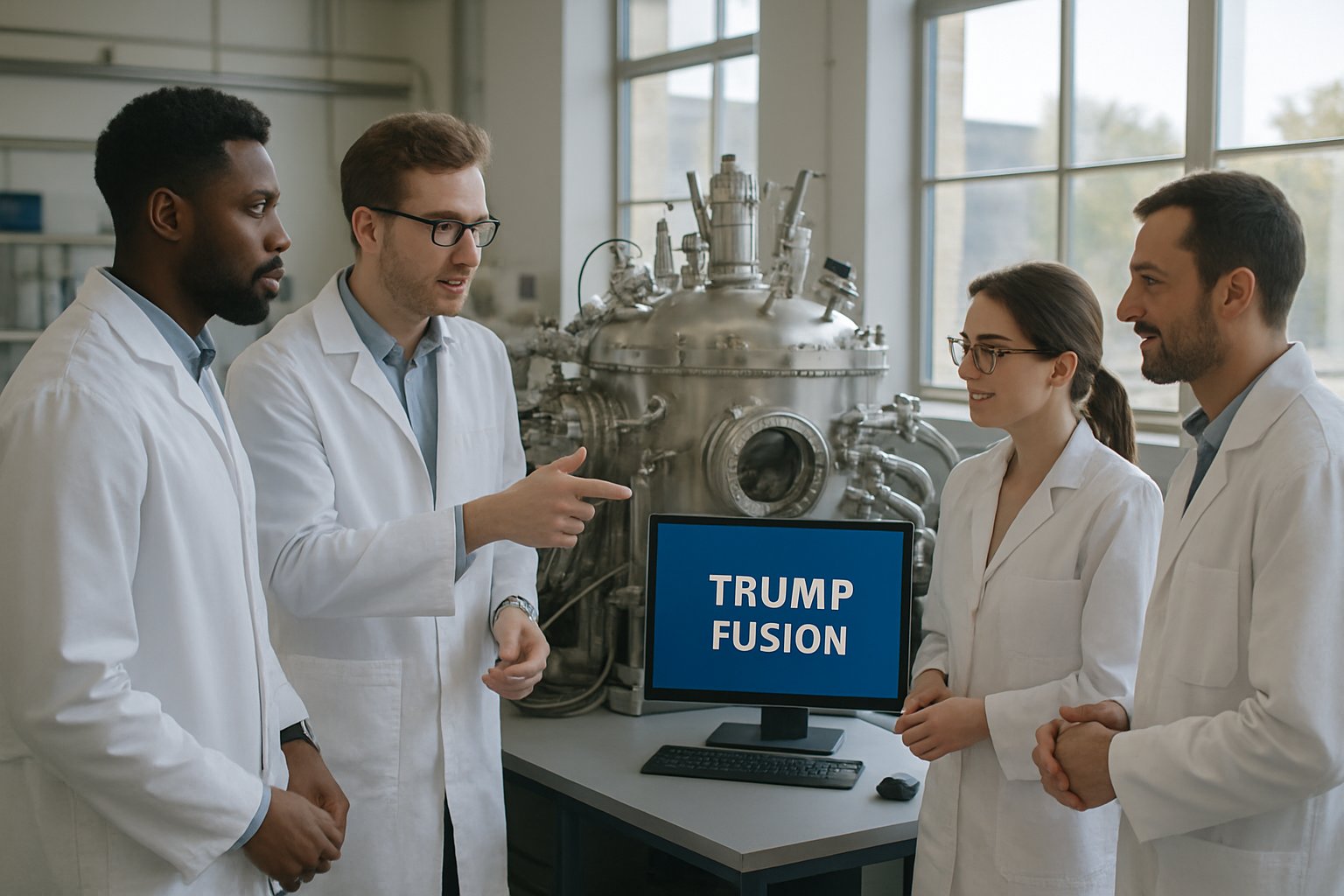
Under the term sheet, TMTG will inject up to two hundred million dollars immediately. Additionally, another hundred million becomes available after filing the Form S-4 with regulators. Consequently, near-term liquidity totals three hundred million, a sizable sum for early fusion engineering.
- Announced valuation: more than $6 billion
- Up-front cash: $200 million at signing
- Additional cash: $100 million post-filing
- Ownership split: roughly 50/50
- TAE patents: about 1,600 worldwide
Shareholders from each company should hold roughly fifty percent of the combined vehicle upon closing. Nevertheless, final percentages may shift when the definitive proxy spells out dilution details. Subsequently, the market will judge whether the Trump Fusion structure balances risk and reward.
These facts outline the transaction skeleton. However, financial mechanics require deeper inspection next. Therefore, we shift focus to valuation arithmetic.
Financial Mechanics Explained Simply
Valuation anchored on TMTG's thirty-day VWAP of fifty-three dollars and eighty-nine cents per share. In contrast, the private fusion firm received that reference price for its shares within the exchange ratio. Consequently, existing TMTG holders diluted but retained upside if fusion milestones unlock market enthusiasm.
Analysts flagged the Merger as transformative because media cash supports capital-intensive reactors. However, fusion plants demand billions beyond the initial three hundred million commitment. Therefore, future secondaries, government credits, or strategic partners will likely follow.
Wedbush analyst Dan Ives suggested stock value now tracks scientific milestones rather than social media metrics. Meanwhile, sceptics cautioned that TMTG's historic losses could hamper access to low-cost capital. Nevertheless, the Trump Fusion narrative has already boosted trading volumes.
Financial contours indicate significant dilution and funding uncertainty. Subsequently, technical feasibility becomes the defining question.
Technology And Timeline Challenges
TAE pursues a field-reversed configuration paired with neutral-beam injection. Moreover, the company touts aneutronic hydrogen-boron fuel that minimizes long-lived radioactive waste. Independent physicists acknowledge progress yet insist peer-review replication remains essential.
The roadmap envisions a fifty-megawatt pilot starting construction in 2026. Additionally, commercial reactors of 350 megawatts follow in the early 2030s. Consequently, critics label the timeline aggressive given licensing and materials hurdles.
Nuclear regulators still draft distinct fusion frameworks, so permitting paths remain uncertain. Meanwhile, supply chains for specialized magnets and power electronics require expansion. Therefore, technical maturity will heavily influence the Trump Fusion valuation curve.
Technical reality may outpace or slow investor excitement. Next, we examine ethics and political implications.
Political And Ethics Questions
Donald Trump remains the largest individual shareholder of TMTG, owning about forty-one percent. In contrast, his son is slated for a board seat in the combined company. Consequently, watchdogs fear federal funding decisions could favor corporate interests.
Former White House ethics lawyer Richard Painter described the Merger as a substantial conflict risk. Similarly, Public Citizen labeled the proposal "ridiculous" and questioned taxpayer exposure. Nevertheless, company spokespeople argue transparent governance will address concerns.
The upcoming S-4 must detail recusal policies, insider voting limitations, and executive compensation. Moreover, lawmakers may scrutinize any federal grants toward fusion demonstration plants. Therefore, ethical clarity will shape the Trump Fusion path as strongly as plasma physics.
Political dynamics inject uncertainty beyond engineering difficulty. Subsequently, we assess how investors have reacted so far.
Market Reception And Risks
DJT shares spiked between twenty-five and forty percent during pre-market trading on announcement day. However, volatility soon returned as analysts digested execution challenges. Barron's warned sentiment rather than fundamentals drove the surge.
Financial journalists note TMTG reported a quarterly net loss of fifty-four point eight million dollars. Moreover, the company holds crypto assets whose prices swing wildly. Consequently, merging with a capital-hungry Nuclear venture increases future dilution probability.
Still, fusion represents a multitrillion-dollar potential electricity market if engineering succeeds. In contrast, failure would leave shareholders holding a costly social platform and stranded patents. Therefore, risk tolerance defines whether the Trump Fusion thesis appeals.
Investor reaction remains mixed and highly fluid. Next, we position the deal within broader fusion trends.
Sector Context And Outlook
Private capital invested in fusion startups surpassed ten billion dollars between 2021 and 2024. Furthermore, governments worldwide drafted roadmaps aiming for commercial reactors in the 2030s. TAE already attracted blue-chip backers such as Google, Chevron, and Goldman Sachs.
In contrast, only a few fusion firms enjoy direct public listings. Consequently, the Merger creates a rare equity gateway for institutional investors. Moreover, a politically connected ticker could shape policy debates around Nuclear regulation speed.
Yet technical uncertainty tempers enthusiasm across research circles. Nevertheless, proponents argue artificial intelligence data centers require clean baseload power, aligning perfectly with Trump Fusion aspirations. Therefore, the outlook mixes opportunity and unresolved challenges.
Sector momentum adds credibility though not certainty. Finally, we outline concrete steps for professionals tracking the story.
Action Items For Professionals
Review the S-4 once filed to verify share exchange ratios, governance protections, and risk factors. Additionally, monitor NRC fusion rulemaking because permitting timelines will determine capital needs. Interview independent plasma physicists regarding TAE experiment replication.
Meanwhile, analyze TMTG quarterly statements for clues about available liquidity during scale-up. Professionals can enhance ethical oversight skills through the AI Ethics Executive™ program. Consequently, teams will navigate political scrutiny with confidence.
Track site selection announcements because location decisions influence regulatory approval speed. Therefore, proactive intelligence gathering supports timely strategic adjustments. These actions position stakeholders ahead as the Trump Fusion storyline evolves.
Practical steps convert headline noise into actionable analysis. Next, we close with key takeaways.
Conclusion
The Merger between media hype and fusion hope has captured global attention. Financially, billions are still required before electrons reach the grid. Technically, TAE must validate sustained plasma performance under regulatory oversight. Politically, conflict-of-interest debates will intensify as election cycles loom. Nevertheless, the Trump Fusion initiative embodies the outsized ambitions defining the clean-energy race. Moreover, transparency and disciplined risk management can convert ambition into durable shareholder value. Therefore, readers should monitor filings, technology milestones, and policy moves closely. Take action by exploring certifications and subscribing for continued coverage.


