

AI CERTS
1 day ago
Trifold phone review: Samsung Galaxy Z TriFold under fire
Moreover, it synthesizes findings from The Verge, TechRadar, and analyst commentary to present a balanced verdict. Foldables form barely two percent of shipments, yet Samsung pushes further. However, three panels and two hinges introduce complexity alongside opportunity. Industry leaders claim the TriFold merges phone convenience and tablet workspace. Nevertheless, preliminary tests suggest rough edges undermine that promise. Readers exploring premium devices, or shaping roadmaps for consumer tech portfolios, will find clear takeaways below.
TriFold Pricing Shock Analysis
Samsung set the Korean launch price at KRW 3,590,400, roughly US$2,500. That figure instantly places the TriFold among the most expensive mobile devices ever sold. Moreover, U.S. pricing remains unknown, limiting carrier subsidy speculation. Analysts told the Wall Street Journal the cost equals buying a premium phone and mid-range tablet together. Consequently, value seekers question whether three screens truly save money or pocket space. This Trifold phone review compares competing foldables priced near US$1,800, showing a sharp premium gap. In contrast, Huawei’s tri-fold prototype never exceeded US$2,000 in local channels. Device advocates argue the larger 10-inch display justifies the surcharge. Nevertheless, early reviewers labeled the sticker shock “hard to swallow” for mainstream buyers. These numbers underscore a crucial narrative. However, price alone never seals fate; usability must follow.
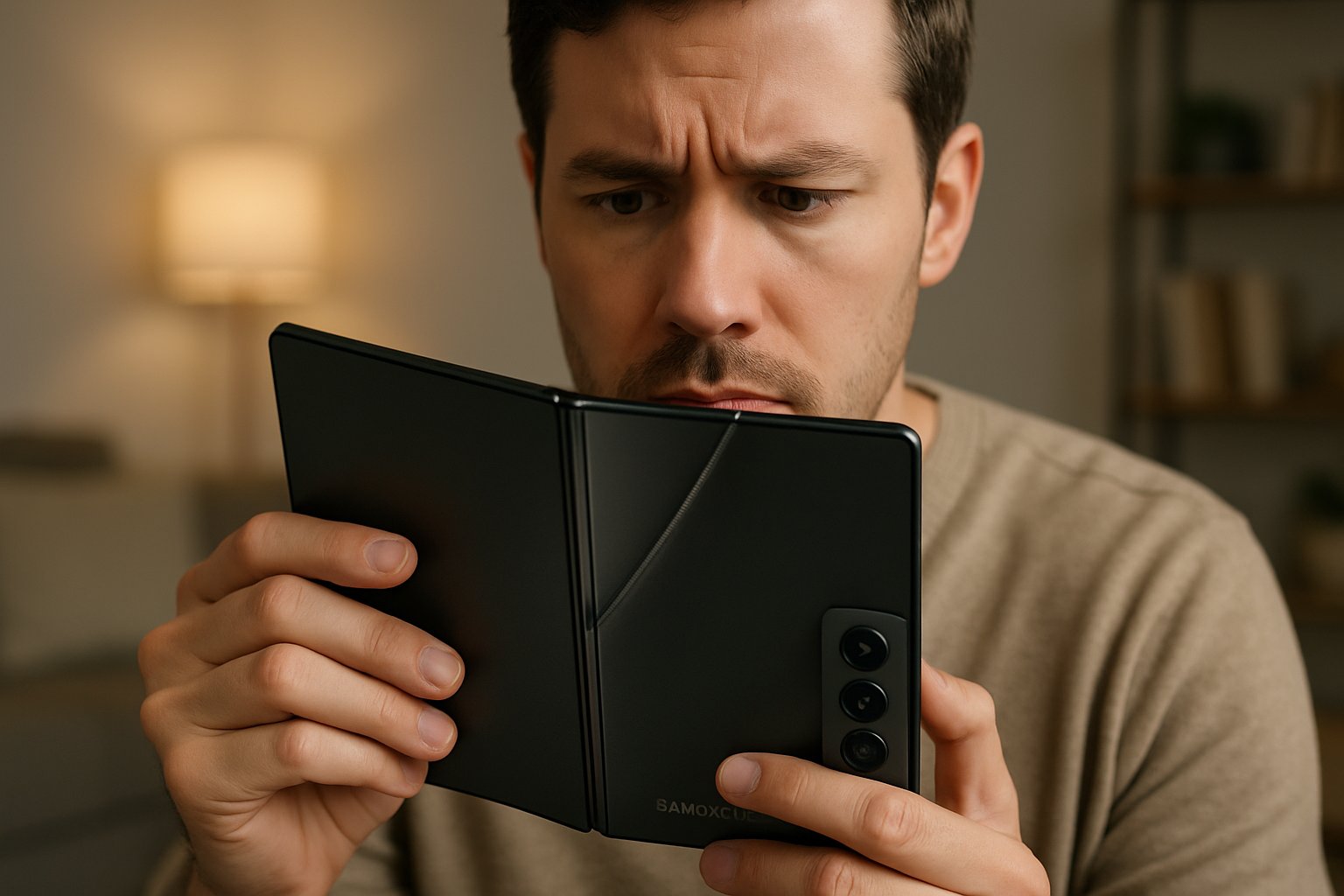
High pricing isolates the TriFold from mass adoption. Subsequently, design realities will decide whether early skepticism hardens.
Design Ergonomics Key Issues
The tri-panel layout unfolds into a striking 10-inch canvas. However, weight distribution challenges emerged during every hands-on session. Reviewers noted a top-heavy feel that tires wrists within minutes. Additionally, two pronounced hinge ridges interrupt swipe gestures, undermining fluid navigation. Those quirks feed accusations of half-baked features that slipped past user-experience testing. Consequently, skeptics claim Samsung rushed hardware refinement to maintain innovation headlines. The glossy inner screen also reflects overhead lighting, making outdoor reading difficult. Company engineers suggest future coatings will cut glare, yet that promise helps no early adopter. Expensive mobile shoppers expect flawless ergonomics at this price tier. Meanwhile, missing S Pen support surprised productivity fans who anticipated tablet-grade note taking. This Trifold phone review therefore flags design polish as a decisive weakness.
Ergonomic flaws erode everyday comfort, amplifying cost concerns. Moreover, durability evidence further intensifies caution.
Durability Under Real Stress
Foldables live or die by hinge resilience. JerryRigEverything’s extreme test produced grim footage of the TriFold snapping under heavy pressure. Furthermore, dust entered hinge cavities despite Samsung’s IP48 rating. Consequently, TechRadar concluded the tri-fold mechanism remains vulnerable in daily pockets. Samsung's foldable brand endured similar skepticism during earlier generations, yet two hinges double exposure points here.
- The inner screen cracked during over-extension within 45 seconds.
- Hinges seized after simulated beach sand exposure.
- Scratch tests reached layer five before permanent pixel damage.
- Thermal heat gun restored flexibility briefly but worsened panel creasing.
These observations extend beyond lab theatrics. Expensive mobile owners rarely risk outdoor adventures when a repair could cost hundreds. Nevertheless, Samsung promises enhanced hinge materials in future batches. This Trifold phone review notes that promise remains unverified. Meanwhile, analysts predict warranty costs will influence carrier stocking decisions.
Fragility fears compound ergonomic issues already discussed. Therefore, software value must compensate, or adoption will stall.
Software And Feature Gaps
Samsung leverages One UI to enable three simultaneous app panes. However, reviewers found inconsistent third-party optimization. Instagram stretched awkwardly, while productivity suites displayed redundant toolbars. Consequently, critics again cited half-baked features undermining the premium narrative. DeX desktop mode shows promise; moreover, it launches directly on the 10-inch display without accessories. Yet, memory management closed background tasks unexpectedly during Android Central testing. TriFold firmware updates may resolve these quirks over time. Premium buyers expect seamless apps, not forced workarounds. Nevertheless, early buyers function as unpaid beta testers.
Professionals can enhance their expertise with the AI Product Manager™ certification. Such programs teach rigorous feature validation strategies that might have prevented these oversights.
This Trifold phone review therefore advises cautious optimism regarding software evolution.
Current software misses consistency required for enterprise reliability. In contrast, market forces still shape opportunity for improvement.
Foldable Market Context Overview
Foldables captured roughly two percent of U.S. smartphone shipments in 2024, according to Counterpoint. Moreover, tri-fold devices hold an even slimmer slice. Consequently, carriers treat the category as a marketing differentiator, not a volume driver. Market analysts warn that expensive mobile experiments rarely reach scale without subsidies. In contrast, traditional slabs enjoy mature supply chains and lower prices. Galaxy Z branding provides Samsung leverage with enthusiasts, yet critics wonder if novelty fatigue has begun. Additionally, regulatory pressure on repairability may complicate tri-fold adoption. Half-baked features also risk damaging confidence among cautious consumer tech decision makers. This Trifold phone review situates the TriFold within that uncertain landscape.
Market data paints a niche future unless costs drop and reliability rises. This Trifold phone review signals that outcome hinges on value perception. Subsequently, user sentiment becomes the decisive variable.
Analyst And User Verdicts
Early adopters on Korean forums praise screen real estate for multitasking. However, many returned units after noticing seam glare and heft. Meanwhile, Wall Street Journal analysts called the TriFold “unlikely to sway practical users.” Social sentiment tracking by Brandwatch shows neutral-to-negative ratios climbing after durability videos went viral. Moreover, enterprise IT managers monitoring consumer tech trends reported low interest in pilot deployments. Galaxy Z loyalists still applaud Samsung’s willingness to chase ambitious concepts. Nevertheless, their forums increasingly discuss postponing upgrades. Expensive mobile fatigue appears tangible across multiple demographics. This Trifold phone review aggregates those voices to present an evidence-based verdict.
Perception aligns with technical shortcomings outlined earlier. Consequently, strategic recommendations must balance innovation with prudent risk management.
Strategic Industry Takeaways Ahead
Samsung’s TriFold demonstrates that technical ambition alone cannot secure success. Therefore, pricing, ergonomics, and durability must improve in unison. For manufacturers, iterative hinge engineering should outrank feature proliferation. Moreover, software alignment with large panels demands closer collaboration with third-party developers. Retailers might position the device as a luxury showcase rather than a mainstream upgrade path. Meanwhile, professionals evaluating consumer tech roadmaps should weigh repair costs and residual value carefully. Regulatory shifts toward right-to-repair could also sway purchase recommendations. This Trifold phone review underscores those strategic imperatives for stakeholders across the supply chain.
Addressing current flaws will decide the tri-fold’s future viability. Overall, this Trifold phone review recommends a wait-and-see approach. Subsequently, market watchers should track U.S. launch pricing and firmware updates.


