

AI CERTs
2 hours ago
TikTok’s Latest Marketing Ethics Breach Exposed
Short-form videos dominate consumer attention, yet their back-end mechanics remain opaque. Consequently, regulators now scrutinize TikTok’s paid ecosystem with sharper eyes. Central to the investigation is a Marketing Ethics Breach involving undisclosed AI advertising. However, recent tests reveal that provenance data vanishes when content passes through TikTok’s pipeline. Meanwhile, user feeds fill with persuasive clips that look human but originate from powerful Algorithms. Advertisers exploit this disguised Influence to drive sales and shape opinions. In contrast, Transparency tools exist on paper, yet enforcement lags behind promises. Therefore, policymakers weigh fines that could cost TikTok hundreds of millions. This article unpacks the players, failures, and potential fixes shaping the unfolding debate.
Marketing Ethics Breach Impact
Regulatory heat intensified on 15 May 2025 when the European Commission cited TikTok’s incomplete ad repository. Moreover, the Commission warned that non-compliance could trigger fines up to six percent of global revenue. Such penalties could exceed 1.3 billion dollars, underscoring the gravity of the Marketing Ethics Breach. Additionally, TikTok disputed some findings yet affirmed a commitment to improve Transparency. Meanwhile, creators feared reputational damage after seeing AI avatars impersonate them without notice. Consequently, public trust eroded, and brand safety managers flagged significant Influence degradation.
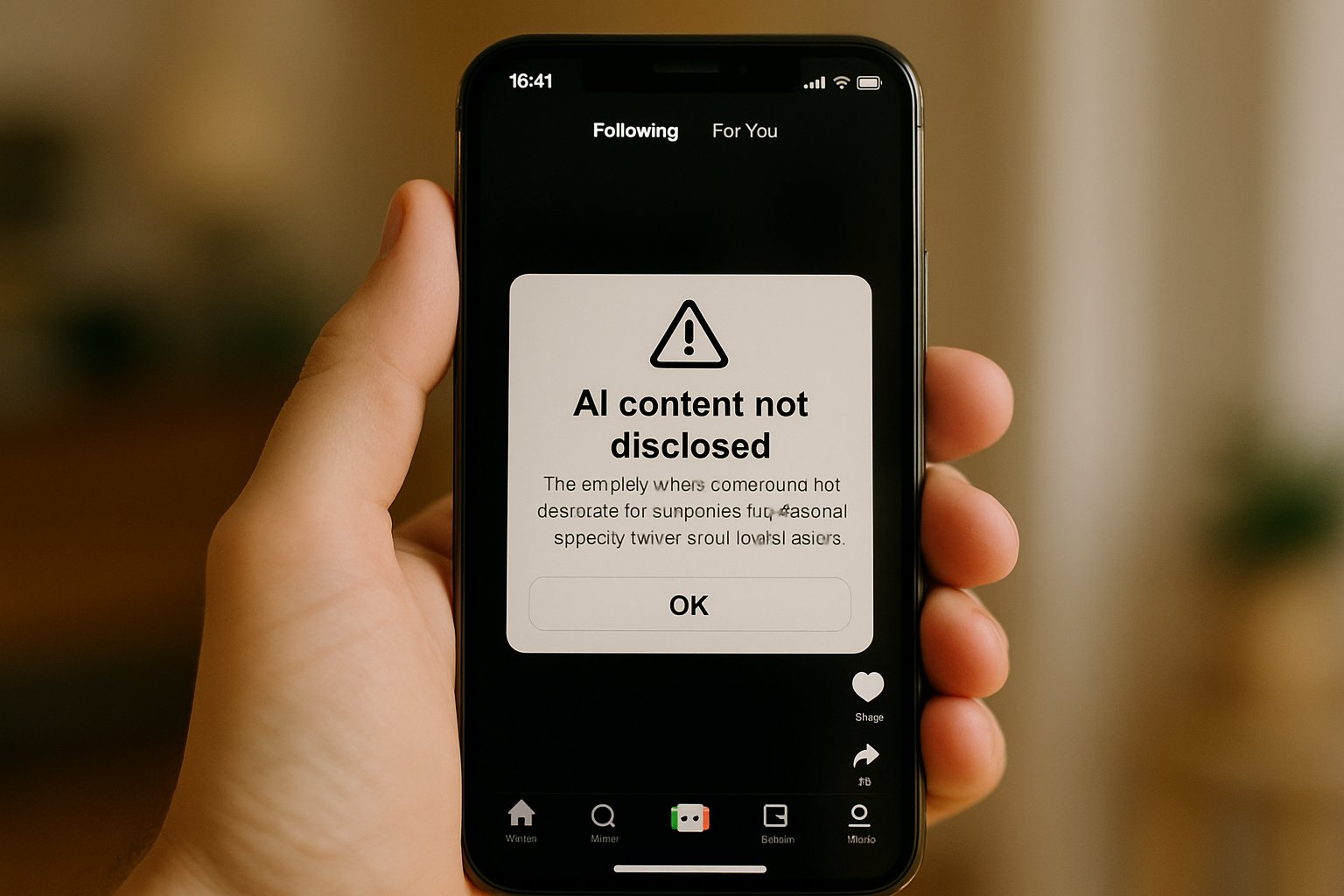
These impacts reveal real financial and reputational stakes. However, the deepest cracks appear within the platform’s technical stack.
Regulatory Wake Up Call
Europe’s Digital Services Act demands searchable data on every sponsored impression. However, TikTok’s repository lacked payer identities, targeting logic, and creative provenance. Subsequently, Brussels extracted binding commitments that include quarterly audits and strict Policy milestones. TikTok must integrate Content Credentials and retain them across uploads, according to the promised roadmap. Nevertheless, experts doubt enforcement will match rhetoric without stronger penalties or civil liability. Business of Apps estimates TikTok earned 23 billion dollars in 2024, amplifying regulatory leverage. Therefore, investors monitor the Marketing Ethics Breach closely for potential earnings shocks.
Regulators have signaled clear intentions to act. Meanwhile, technical realities complicate swift compliance.
Technical Disclosure Fail Points
Washington Post testers uploaded Sora-generated videos containing C2PA metadata to eight platforms. Only one platform preserved the tag; TikTok silently stripped it during re-encoding. Consequently, machine-readable Transparency evaporated before reviewers could flag synthetic origin. Algorithms detect some anomalies, yet false negatives remain common. Moreover, TikTok’s Ads Manager relies on self-declaration via an easily ignored toggle. Spark Ads further obscure lineage because they begin as organic posts lacking mandatory disclaimers. Therefore, the Marketing Ethics Breach persists at scale even when detection tools exist.
Key failure modes include:
- Metadata stripping during upload
- Inadequate self-declaration compliance
- Conversion of organic posts to ads
These technical gaps sabotage both Transparency and Policy objectives. Consequently, accountability pressure shifts toward advertisers and creators.
Advertiser Creator Fallout Risks
August 2025 exposed concrete harm when Nexon promoted AI streamers for The First Descendant. Creators alleged stolen likenesses, while audiences felt misled by synthetic endorsements. Moreover, Nexon and TikTok opened a joint probe, citing potential Marketing Ethics Breach elements. Brand managers worry that hidden Algorithms could fabricate testimonials or deepfake product demos. Furthermore, influencer contracts now include strict Policy clauses on disclosure and provenance. In contrast, some marketers praise AI’s ability to scale creative Influence cheaply and rapidly. Nevertheless, reputational risk rises whenever viewers discover unlabeled manipulation.
Advertiser trust depends on predictable safeguards. Therefore, attention shifts to financial incentives.
Business And Legal Stakes
AI lowers production costs, giving growth teams tempting margins. Consequently, undisclosed AI ads proliferate because returns outweigh potential penalties—for now. Investors still discount ByteDance valuations due to lingering Marketing Ethics Breach uncertainty. Moreover, European regulators can fine up to six percent of turnover, roughly 1.38 billion dollars. Class-action lawyers also explore deceptive advertising theories under US consumer protection Policy. Meanwhile, industry coalitions like C2PA lobby platforms to retain provenance data by default. Advertisers face a choice: embrace verified Transparency or risk appearing in enforcement headlines. Brands can upskill teams with the AI+ UX Designer™ certification to embed ethics.
Financial exposure now rivals creative upside. Nevertheless, solutions exist for rebuilding confidence.
Restoring Trust Through Action
First, platforms must bake Content Credentials into every encoding workflow. Additionally, Ads Manager should default the AI disclaimer on when Algorithms are detected automatically. Secondly, regulators can mandate independent audits that verify both openness and Policy adherence. Creators deserve simple tools that flag potential Influence misuse before content goes live. Moreover, brands should monitor campaign dashboards for undeclared AI assets, reducing future Marketing Ethics Breach events. Industry groups propose watermark standards and public exposure dashboards to deter misconduct. Consequently, sustained collaboration can align incentives across stakeholders.
Collective action can rebuild fragile trust. Finally, lessons emerge for the wider ad ecosystem.
TikTok’s situation illustrates how innovation often outpaces governance. However, unchecked AI ads threaten credibility across the entire industry. Investors, regulators, and creators already feel the weight of this Marketing Ethics Breach. Moreover, advertisers risk backlash and fines if they ignore the mounting Marketing Ethics Breach warnings. Algorithms can support compliance when provenance tags remain intact. Consequently, early adoption of standards and certifications will set winning brands apart. Explore emerging credentials to future-proof your strategy and champion ethical growth.


