

AI CERTS
6 hours ago
Tech Corps Strategy Targets Global AI Influence
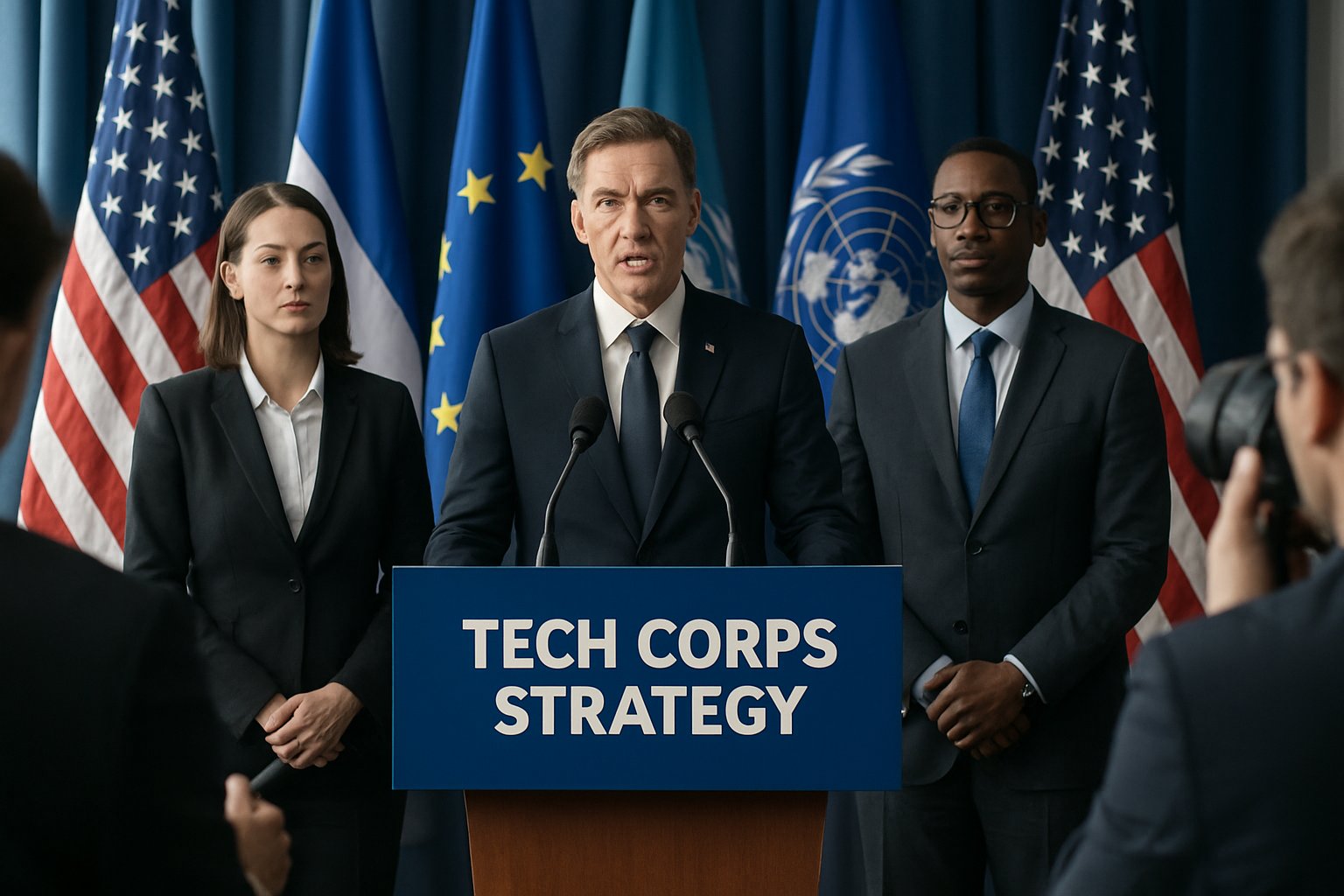
Furthermore, the initiative sits within the broader American AI Exports Program, an executive branch effort linking policy, financing, and diplomacy.
Analysts immediately framed the move as Washington's clearest answer yet to Beijing's Digital Silk Road campaign.
Moreover, administration officials pitched the corps as a twenty-first-century update to the venerable Peace Corps model.
In contrast, critics warned that mixing development work with strategic rivalry may strain host-country trust.
This article dissects scope, funding, risks, and opportunities, giving professionals a fact-rich view of how the Tech Corps Strategy may reshape AI markets.
Origin And Policy Drivers
Kratsios traced the concept to President Trump’s July 2025 AI Action Plan executive order.
However, practical design accelerated after interagency reviews highlighted gaps in field implementation assistance.
Therefore, officials borrowed from the Peace Corps playbook to create a rapid-response technical volunteer force.
The American AI Exports Program provides the policy umbrella.
Meanwhile, Commerce and EXIM coordinate export packages covering chips, servers, models, and cloud credits.
Consequently, the Tech Corps Strategy becomes the human layer delivering last-mile deployment and training.
Administration talking points stress that four leading U.S. AI firms plan to invest nearly $700 billion in infrastructure this year.
Officials argue that exporting that capacity, not only hardware, safeguards liberal values in emerging digital economies.
Originating in high-level strategy reviews, the corps links policy ambition with frontline expertise.
However, understanding the intended scale requires examining the numbers next.
Therefore, we next explore how Washington plans to bankroll the scheme.
Program Scale Details
Bloomberg obtained advance briefs indicating a target of 5,000 volunteers over five years.
Additionally, a first cohort of roughly 500 professionals will begin recruitment later this year.
Peace Corps infrastructure and safety protocols will support in-person and virtual placements lasting six to twelve months.
Reported FY2026 Peace Corps funding stands at $410 million.
Nevertheless, administration aides hint at supplemental appropriations plus private donations to meet higher costs.
Corporate sponsors may fund equipment, travel, and local stipends, mirroring past public-private development models.
Volunteers will focus on health, agriculture, energy, and citizen-service AI pilots requested by host ministries.
In contrast, Chinese vendors often integrate proprietary cloud stacks without comparable advisory capacity.
The headline figures showcase bold ambition yet leave funding specifics unresolved.
Consequently, financing mechanics merit closer scrutiny.
Therefore, we next explore how Washington plans to bankroll the scheme.
Financing And Partnerships
EXIM, DFC, and USTDA will supply concessional loans, guarantees, and technical grants.
Moreover, the International Trade Administration will curate an online marketplace matching U.S. vendors with foreign buyers.
Commerce officials claim these tools make the Tech Corps Strategy financially viable for lower-income states.
The model resembles infrastructure deal packages used in energy diplomacy.
However, AI projects require reliable power, data centers, and bandwidth, inflating capital needs.
Consequently, multilaterals like the World Bank may co-finance large backbone investments.
- EXIM loan guarantees for data centers
- DFC equity stakes in cloud infrastructure
- USTDA feasibility grants for AI pilots
Private cloud giants also stand to benefit.
Meanwhile, embedding volunteers who understand their toolchains lowers integration friction and lock-in risk.
Such dynamics could amplify perceptions of China AI Dominance US Policy rivalry.
Financing plans blend public credit, corporate capital, and development funds into one bundle.
Nevertheless, strategic intent cannot mask wider geopolitical stakes.
Subsequently, we assess those stakes and competing narratives.
Geopolitical Stakes Analyzed
U.S. officials frame the initiative as a democratic alternative to Beijing's Digital Silk Road.
However, some partner capitals fear excessive dependence on any single supplier ecosystem.
Independent policy experts from CNAS caution that governance, privacy, and procurement transparency will determine credibility.
The Tech Corps Strategy seeks to lock in standards before rivals cement market share.
Meanwhile, export controls tighten against advanced chip shipments to Chinese customers.
That dual track complicates enforcement and messaging, according to trade lawyers.
In contrast, Beijing offers turnkey finance but imposes few governance safeguards.
Consequently, recipient states must weigh immediate affordability against long-term autonomy.
Repeated references to China AI Dominance US Policy underscore the administration's competitive mindset.
Geopolitics infuses every design decision, from volunteer placement to license terms.
Therefore, operational hurdles deserve equal attention.
Next, we examine those hurdles in detail.
Operational Challenges Ahead
Recruiting thousands of AI specialists willing to relocate presents immediate difficulty.
Moreover, volunteers need cultural training, security clearances, and liability coverage.
Peace Corps administrators must adapt medical, evacuation, and oversight protocols for high-tech work.
Hardware supply creates another bottleneck.
Additionally, energy-hungry GPU clusters require stable grids, which many partner countries lack.
Consequently, financing agencies could face cost overruns or project delays.
Data governance poses ethical risk.
Nevertheless, public details on privacy frameworks remain thin.
Host governments worry about surveillance or dual-use scenarios, echoing debates around China AI Dominance US Policy.
Operational complexity threatens timelines and trust.
However, robust talent development may offset some strain.
Therefore, the next section explores workforce pipelines feeding the corps.
Talent Pipeline Implications
University career centers already report student interest in international AI placements.
Furthermore, mid-career engineers see the program as a sabbatical opportunity with strategic impact.
Professionals can upskill via the AI Researcher™ certification beforehand.
Government planners intend to recruit from historically black colleges, veteran networks, and diaspora tech communities.
Moreover, virtual deployments will allow caregivers and disabled experts to contribute remotely.
Such flexibility aligns with diversity goals embedded in the Tech Corps Strategy.
Peace Corps alumni associations will mentor incoming cohorts, preserving institutional memory.
Subsequently, performance data will inform future security clearances and public-private fellowship programs.
Successful volunteers could later lead AI centers in their host nations, deepening influence.
A broad talent funnel underpins sustainability and credibility.
Consequently, stakeholder coordination now turns toward actionable next steps.
Our final section outlines those next moves.
Next Steps For Stakeholders
Congress will debate supplemental funding during FY2027 appropriations hearings.
Meanwhile, Peace Corps leadership must publish detailed implementation memos covering safeguards, partner country lists, and oversight.
Industry groups should submit vendor-neutral toolkits to protect against proprietary lock-in allegations.
Development NGOs plan to monitor data rights and inclusion outcomes.
Moreover, think tanks urge transparent metrics tracking how the Tech Corps Strategy influences adoption rates.
Quarterly dashboards could compare progress against China AI Dominance US Policy benchmarks.
Global South policymakers should negotiate clear exit strategies to avoid long-term dependency.
Nevertheless, early engagement may unlock concessional financing unavailable elsewhere.
Consequently, timing discussions before the first recruitment wave concludes will be essential.
Immediate actions by legislators, agencies, companies, and civil society will shape program legitimacy.
Therefore, close monitoring remains vital.
Conclusion
The Tech Corps Strategy represents Washington's boldest fusion of diplomacy, development, and technology to date.
However, adequate funding, volunteer readiness, and data safeguards will decide whether rhetoric becomes reality.
Consequently, stakeholders should audit financing pipelines, training curricula, and host-country governance frameworks now.
Moreover, earning trust will require transparent metrics contrasting achievements against China AI Dominance US Policy indicators.
Professionals eyeing overseas impact can align early with the Tech Corps Strategy through continuous learning and certification.
In that vein, pursuing the AI Researcher™ credential boosts readiness for deployment roles.
Therefore, explore program details, champion the Tech Corps Strategy, and position yourself at the frontier of global AI cooperation.


