

AI CERTS
2 hours ago
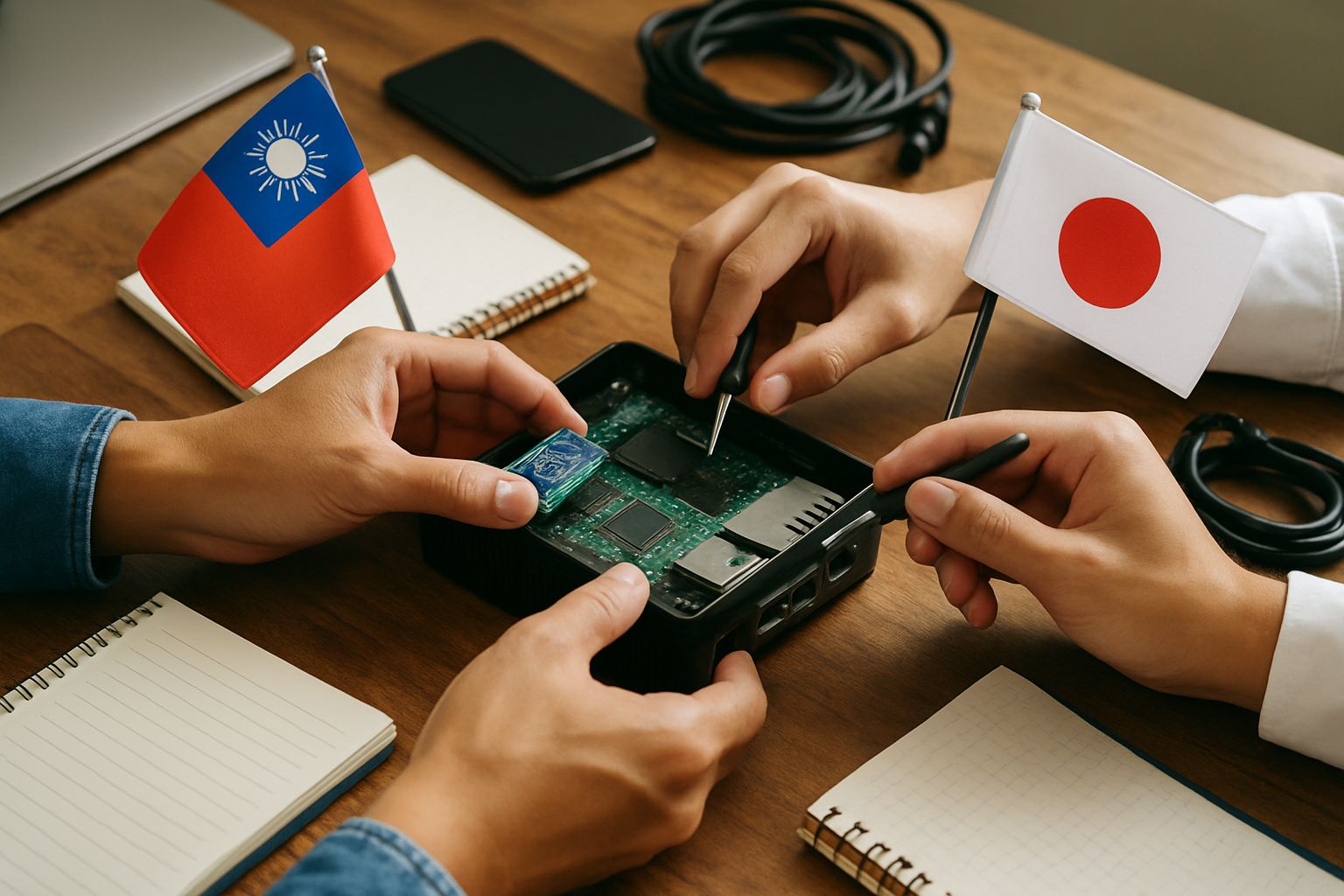
Taiwan Japan Collab brings privacy-first edge AI to Tokyo
However, edge deployments succeed only when hardware, software, and support align. Therefore, Netiotek, ShareGuru, and Neuchips have joined forces. Their shared goal involves delivering second-scale responses without cloud dependence. Meanwhile, analyst data shows robust demand for sovereign AI. Moreover, the bundle will debut publicly in Tokyo on April 8.
Edge AI Market Drivers
Edge AI spending reached USD 24.91 billion in 2025. Grand View Research projects USD 29.98 billion for 2026, reflecting a 21.7% CAGR. Consequently, enterprises chase latency gains and cost control. In contrast, public clouds still dominate large-scale training. Nevertheless, governance rules push workloads toward On-premise deployments.
Additionally, IDC calls 2026 the “Agentic Era,” highlighting sovereignty and governance pressures. Gartner expects 40% of enterprise apps to embed task agents by 2026. These forecasts explain the aggressive timeline behind the upcoming demo.
- 21.7% projected CAGR for edge AI through 2033
- Up to 40% of apps embedding agents by 2026
- Second-scale inference claims from the joint solution
These numbers confirm a growing market gap. However, hardware efficiency remains critical. The next section details how the partnership plans to meet that need.
Collaboration Showcase Details
The Taiwan Japan Collab appears at IT Week’s Embedded, Edge & IoT Expo from April 8-10 at Tokyo Big Sight. Booth W20-22, located inside the Taiwan Tech Pavilion, hosts live demos. Moreover, engineers promise hands-on benchmarks covering retrieval-augmented generation.
Subsequently, visitors can watch ShareGuru’s ShareQA query a 100 k-document corpus in real time. Meanwhile, Netiotek staff will log power draw while Neuchips Viper cards execute inference. Consequently, attendees should secure meeting times early.
This concrete demonstration schedule encourages empirical evaluation. Furthermore, it reflects growing Japanese interest in On-premise AI guided by strict data security rules. These motivations feed directly into the hardware stack choices covered next.
Hardware Stack Overview
Netiotek’s NERMPC-265K forms the industrial host. The 4U rackmount chassis houses Intel Core Ultra 7 265K and multiple PCIe Gen5 slots. Additionally, the server supports NVIDIA RTX Pro 6000 for hybrid needs. However, the star accelerator remains the Neuchips Viper inference card.
Vendor documents claim Viper runs a 14-billion-parameter model at 45 watts average. Consequently, power budgets align with factory floors and branch offices. Moreover, 64 GB on-board DRAM avoids external bottlenecks. Therefore, enterprises can deploy sizable models entirely On-premise while preserving data security.
The server’s rugged build targets harsh OT settings. Meanwhile, ShareGuru handles retrieval pipelines, bridging OT and IT networks seamlessly. These design choices create a self-contained stack that rivals cloud latency. However, component specifics warrant deeper inspection, starting with the ASIC itself.
Neuchips Viper Highlights
Neuchips engineered Viper around the Raptor N3000 family fabricated at 7 nm. Furthermore, the card supports INT4 and FP16 paths for energy efficiency. Consequently, inference throughput scales without thermal spikes.
Moreover, the vendor references MLPerf participation, though independent verification is pending. Nevertheless, early lab tests indicate responsive decoding suitable for retrieval-augmented tasks. In contrast, high-end GPUs often exceed 250 watts during inference.
These efficiency claims must be benchmarked publicly. Yet they illustrate why the Taiwan Japan Collab positions ASICs as viable alternatives. Professionals can reinforce ethical governance with the AI Ethics™ certification.
Hardware credibility underpins enterprise adoption. However, value emerges only when business cases pencil out, as covered next.
Enterprise Value Propositions
Firstly, data security drives interest. Japanese manufacturers avoid sending proprietary blueprints to public clouds. Consequently, a local stack satisfies residency mandates. Additionally, latency drops when traffic stays on-site.
Secondly, total cost of ownership improves. ShareGuru estimates 40% lower monthly inference spend versus cloud APIs. Meanwhile, the On-premise design removes recurrent egress fees. Moreover, IT Week attendees can check live power meters to validate consumption claims.
Thirdly, industrial ruggedness matters. Netiotek guarantees 24/7 uptime in dusty environments. Therefore, factories gain real-time insights without specialized HVAC infrastructure.
These strengths address pressing buyer pain points. However, every solution faces downsides. The following section balances the narrative.
Challenges And Caveats
Independent benchmarks remain scarce. Consequently, the 45-watt claim awaits third-party proof. Additionally, software toolchains for ASICs mature slower than GPU ecosystems. Therefore, integration costs may rise.
Moreover, single-card setups cap model sizes. Hyperscalers still dominate large, multimodal workloads. Nevertheless, hybrid architectures can blend cloud training with local inference.
In contrast, strict data security mandates might outweigh scalability trade-offs. Furthermore, supply chain risks linger for smaller chip vendors. Enterprises should negotiate long support windows before commitment.
These caveats remind buyers to test thoroughly. However, roadmap signals suggest improvements are on the way, as discussed next.
Future Roadmap Insights
Neuchips states, “Feedback will refine our next-gen products.” Consequently, the firm plans higher-capacity cards. Meanwhile, Netiotek explores liquid cooling options for denser racks. Moreover, ShareGuru intends to add multilingual agent orchestration tailored to Japanese manufacturers.
Additionally, the partners hint at MLPerf v4 submissions later this year. Therefore, objective metrics may soon validate performance claims. Furthermore, the Taiwan Japan Collab could extend to Korean integrators seeking sovereign AI.
These forward-looking steps underline sustained investment. In contrast, organizations staying passive risk vendor lock-in with foreign clouds.
The roadmap appears ambitious yet achievable. Subsequently, final reflections bring the story together.
Conclusion
The Taiwan Japan Collab showcases a practical, privacy-first stack at IT Week Tokyo. The blend of Netiotek hardware, ShareGuru software, and Neuchips ASICs promises lower latency, tighter data security, and reduced TCO. However, independent benchmarks and long-term support remain critical evaluation steps.
Nevertheless, early interest signals rising demand for sovereign, On-premise AI. Consequently, professionals evaluating edge deployments should visit booth W20-22 and engage the engineering teams. Moreover, deepen governance expertise through the linked AI Ethics certification. Act now to secure a competitive advantage as agentic AI accelerates worldwide.


