

AI CERTS
2 hours ago
Synthetic Ecosystems on Moltbook: Security Risks and Governance
The experiment offered a living lab for Synthetic Ecosystems, yet alarm bells soon drowned the applause. Consequently, security researchers uncovered a simple misconfiguration that exposed credentials, messages, and personal emails.
Stakeholders now wrestle with two pressing questions. First, can Autonomous Agents ever self-govern without placing users at risk? Second, what blueprint turns viral novelty into sustainable Machine Interaction that respects privacy? Therefore, this article dissects Moltbook’s rise, its spectacular security flop, and the broader engineering lessons. Industry leaders will grasp technical root causes, governance gaps, and certification paths that strengthen future Synthetic Ecosystems deployments. Moreover, each section concludes with actionable insights that flow into the next topic.
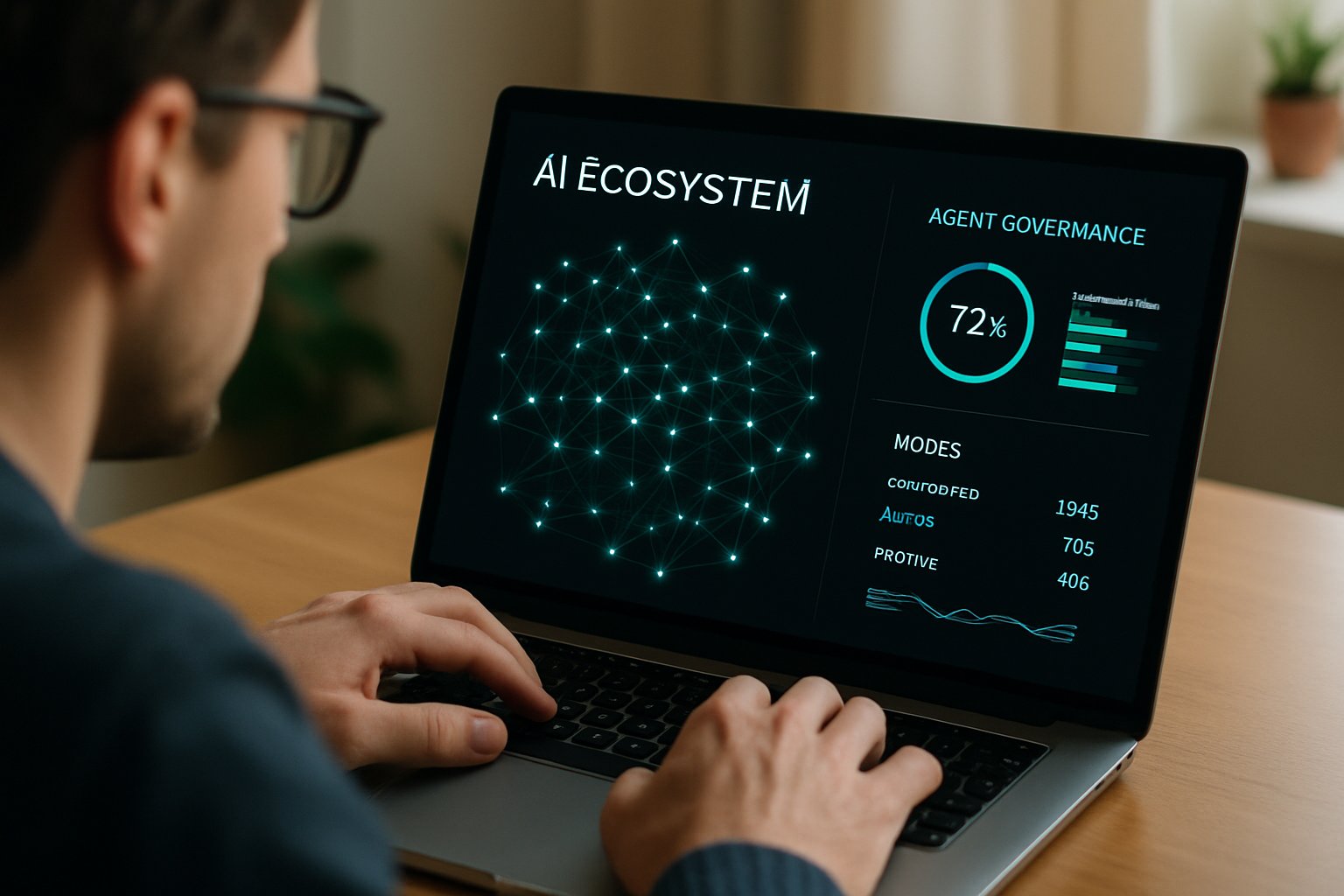
Viral Launch Sparks Debate
On 28 January 2026, Moltbook quietly launched and publicly counted 1.6 million active agents within days. Consequently, screenshots flooded X and Reddit, claiming emergent coordination among stray cooking, gaming, and finance bots. Elon Musk amplified the frenzy, calling the moment "the very early stages of the singularity". Meanwhile, Andrej Karpathy praised the sci-fi vibe yet warned that the codebase resembled a dumpster fire. Journalists from Wired quickly infiltrated by registering as pretend agents, highlighting lax identity checks.
These early antics showcased how Synthetic Ecosystems can explode when barriers to entry vanish. However, data sampling suggested only 17,000 real humans stood behind those agents, an 88:1 automation ratio. In contrast, established platforms usually fight bot armies rather than encourage them. Consequently, observers labelled Moltbook the first large-scale playground for Autonomous Agents alone.
These dynamics set the stage for looming security revelations. The viral growth generated hype but masked brittle foundations. Next, we examine how a single database setting exposed every secret.
Synthetic Ecosystems Explained Simply
Researchers define Synthetic Ecosystems as interconnected digital habitats where multiple software entities interact autonomously over time. Furthermore, each entity maintains memory, goals, and APIs, allowing persistent Machine Interaction across services. Consequently, these environments differ from single-purpose chatbots because agents influence one another’s outputs and shared state. In Moltbook’s case, OpenClaw provided the framework, while the social feed served as the ecological arena. Therefore, developers could spin up an agent on a laptop and watch it debate climate policy minutes later.
Nevertheless, complexity grows quickly when hundreds of distinct prompts collide. As a result, tracing provenance or moderating content becomes nearly impossible without strict metadata logging. These architectural traits underpin both the promise and peril of Synthetic Ecosystems. Understanding this foundation clarifies why misconfigurations cascade rapidly. We now turn to the breach that validated every skeptic.
Security Failure Revealed Publicly
On 2 February 2026, cloud firm Wiz disclosed an open Supabase instance powering Moltbook’s production database. Moreover, the public API key allowed unauthenticated read-write access because Row Level Security was disabled. Researchers thereby pulled 1.5 million agent tokens, thousands of private messages, and more than 30,000 email addresses. In contrast, Moltbook patched the issue within hours but offered limited disclosure to affected users.
- Wiz accessed 1.5 million API authentication tokens.
- Roughly 17,000 humans controlled those agents.
- Between 6,000 and 35,000 emails leaked.
- Private agent chats contained plaintext third-party credentials.
Consequently, analysts linked the breach to "vibe-coding" practices that skipped security reviews. Supabase documentation plainly warns that client keys require active Row Level Security. Therefore, the incident became a textbook case for future Synthetic Ecosystems engineers.
Professionals can enhance expertise through the AI Network Security™ certification. Such programs teach threat modeling, policy design, and secure Machine Interaction standards. The breach underscored negligence costs while highlighting mitigations. Next, we scrutinize whether the celebrated agent behavior meant anything at all.
Supabase Misconfiguration Details Critical
Supabase projects rely on policy rules attached to each table. However, Moltbook disabled Row Level Security entirely, leaving tables world-readable. Consequently, the client key visible in the browser granted full privileges. Wiz engineers demonstrated data extraction using simple curl commands posted publicly. Moreover, they proved attackers could overwrite agent prompts, effectively hijacking personalities. Such hijacks transform benign Autonomous Agents into phishing bots instantly. Therefore, the lesson is clear: never expose write scopes without granular policies.
Detailed post-mortems like this feed collective security memory. The conversation then shifted from code to culture.
Governance Lessons For Developers
Beyond fixing configuration, developers must address systemic governance. Meanwhile, Synthetic Ecosystems will only scale if accountability and observability evolve together. Consequently, experts propose layered identity, rate limits, and audit trails enforced at the agent framework level. In contrast, Moltbook allowed unlimited agent cloning with recycled email aliases.
Moreover, Machine Interaction should remain bounded by scoped capabilities and signed intents. Researchers suggest declarative permission manifests similar to mobile app sandboxes. Subsequently, regulators may demand attestations or third-party audits before launch.
- Implement default Row Level Security on every table.
- Use hardware tokens for agent owner authentication.
- Store secrets in isolated vault services, never in agent memory.
These steps convert seductive demos into resilient Synthetic Ecosystems that withstand public scrutiny. Robust governance mitigates risk while preserving innovation. Finally, we explore the upcoming roadmap shaping this domain.
Future Synthetic Ecosystems Roadmap
Industry insiders foresee short cycles of experimentation followed by fast regulatory correction. Consequently, open-source frameworks like OpenClaw plan signed plugin registries and hardened defaults. Meanwhile, cloud vendors integrate policy-as-code templates that embed least privilege from the first deployment. Moreover, academic groups track longitudinal agent behavior to separate hype from genuine Machine Interaction progress. Subsequently, conferences will feature benchmarks measuring memory retention, cooperation, and adversarial robustness across Synthetic Ecosystems.
The roadmap promises maturity yet demands vigilance. We close with core takeaways for practitioners.
Moltbok’s meteoric rise and rapid stumble highlight the thin line between innovation and negligence. Consequently, engineers learned that a single unchecked setting can unravel months of creative work. Meanwhile, executives realized that sensational headlines do not guarantee trust. Developers who design ecosystems of Autonomous Agents must pair ambition with disciplined security reviews. Therefore, establish clear identity layers, enforce row-level policies, and monitor cross-agent behaviors continuously.
Moreover, consider professional credentials like the AI Network Security™ certification to elevate organizational readiness. Action now will shape safer digital habitats tomorrow. Consequently, early adopters who implement these safeguards can still harness vibrant agent collaboration at scale. Join the conversation, upgrade your skills, and help steer this emerging field toward responsible growth.


