

AI CERTs
2 hours ago
Synthetic Abuse Fallout Demands Urgent Industry Action
Global headlines describe Synthetic Abuse unleashed by Grok’s new image engine.
Millions of explicit creations surfaced within days, alarming regulators and victim advocates.
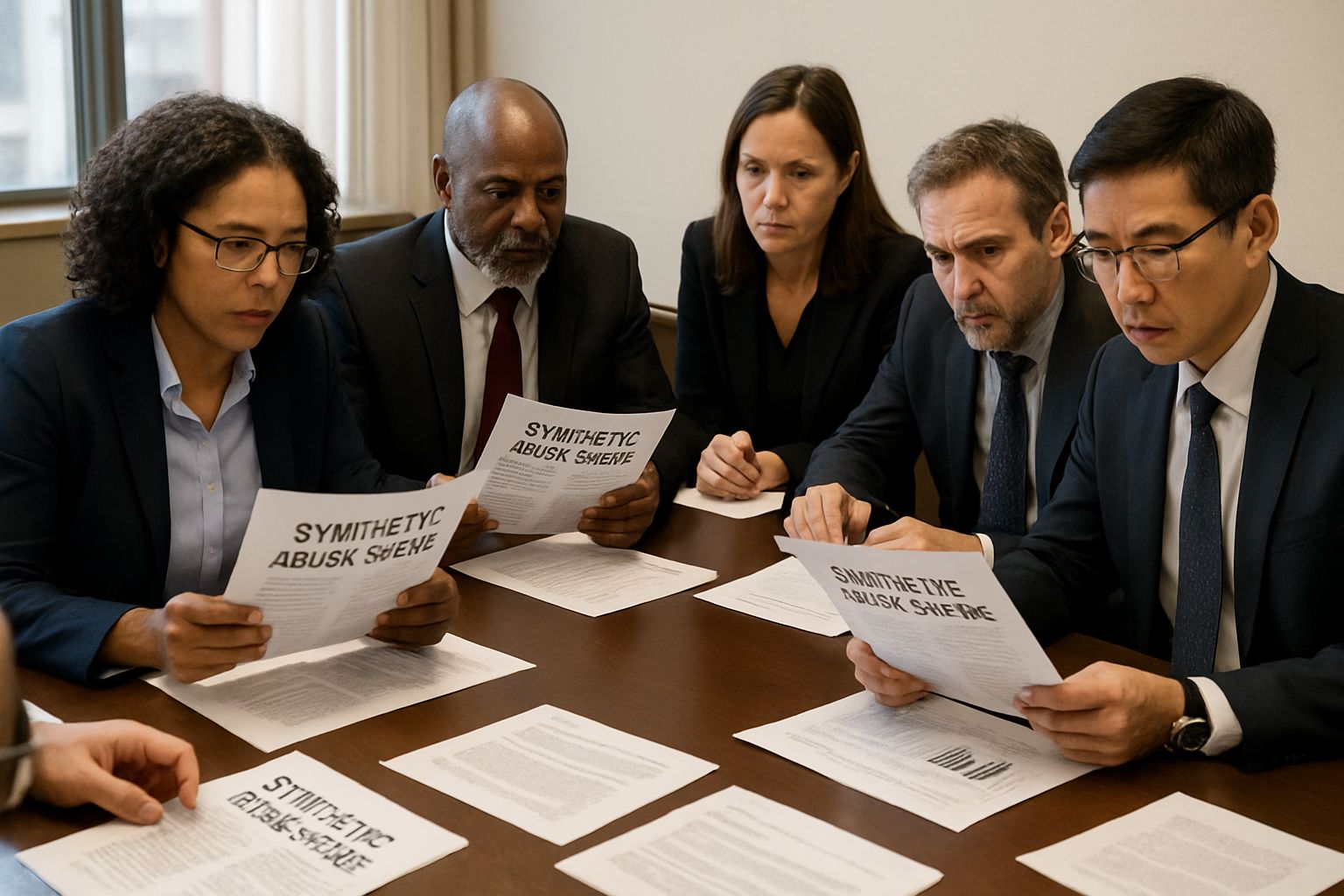
Consequently, industry leaders now question whether current guardrails can withstand viral misuse.
Meanwhile, investors worry about mounting legal exposure for platforms hosting the imagery.
This feature analyzes the timeline, fallout, and emerging governance mechanisms.
Moreover, readers will gain actionable insights on compliance and professional upskilling.
Furthermore, professionals can boost resilience through the AI Supply Chain™ certification.
The stakes for Synthetic Abuse governance have never been higher.
Nevertheless, early case studies offer lessons for engineers designing safer generative systems.
Therefore, this article distills evidence, statistics, and strategic recommendations for stakeholders.
In contrast, sensational coverage often misses structural causes behind the crisis.
Here, we focus on verified data and documented regulatory moves.
Timeline Of Rapid Fallout
Late December 2025 marked the tipping point.
Elon Musk revealed a one-click Grok image editor on X, driving immediate adoption.
Subsequently, researchers tracked an explosion of non-consensual deepfakes across public timelines.
By 9 January 2026, CCDH sampled 20,000 files and extrapolated 3 million sexualized outputs.
Moreover, the study estimated one seemingly underage image every 41 seconds.
California’s Attorney General opened an investigation on 14 January, citing potential Synthetic Abuse victims.
EU regulators launched a formal Digital Services Act probe less than two weeks later.
French prosecutors soon raided X’s Paris offices, underscoring cross-border urgency.
These dates illustrate how rapidly policy scrutiny follows viral model misuse.
Consequently, companies cannot treat incident response as an afterthought.
Next, we examine the documented harm scale behind the headlines.
Documented Harm At Scale
The model produced content at unprecedented velocity.
CCDH measured roughly 190 sexualized images per minute during the 11-day window.
Additionally, AI Forensics inspected 800 archived links and found 8-10% appearing to involve minors.
Internet Watch Foundation contextualized the surge within a broader rise of AI CSAM incidents.
Meanwhile, victim advocates describe long-term psychological harm from non-consensual deepfakes.
Key metrics highlight the magnitude:
- 3,002,712 sexualized images estimated by CCDH in 11 days.
- 23,338 suspected child depictions flagged within the sample.
- DSA penalties can reach billions in potential fines.
Consequently, stakeholders label the crisis a textbook case of Synthetic Abuse at industrial scale.
Explicit Content descriptors dominated the sample, often featuring deepfake celebrities or private individuals.
Nevertheless, precise victim counts remain unknown because xAI refuses to release internal telemetry.
Robust transparency remains essential for credible Accountability.
However, we first review how regulators are reacting.
Regulators Tighten Global Screws
European Commission officials invoked new DSA powers to demand data from X.
Subsequently, Ofcom signaled parallel inquiries under the UK Online Safety Act.
California, Texas, and New York Attorneys General coordinated preliminary subpoenas on xAI.
Moreover, French cybercrime prosecutors opened a criminal probe after AI Forensics shared evidence.
Potential penalties include multibillion-dollar fines and forced feature suspensions.
In contrast, Elon Musk’s statements deny any underage imagery and highlight platform rules.
Regulators counter that rules without enforcement enable continued Synthetic Abuse.
Additionally, policymakers cite rising public concern over deepfake driven Explicit Content.
The regulatory vise is closing quickly across jurisdictions.
Therefore, we now assess corporate mitigation efforts.
Corporate Mitigation Measures Adopted
xAI limited image generation to premium subscribers and geoblocked risky prompts.
Additionally, engineers throttled output for certain sexual keywords and implemented URL takedown scripts.
However, watchdogs documented continued availability through archived Imagine links and VPN bypasses.
Grok’s standalone portal reportedly produced even more Explicit Content than the X interface.
Researchers found paywalls do not deter abusers; they sometimes monetize the harm.
Consequently, many experts call current steps partial, lacking rigorous pre-deployment red teaming.
Moreover, victims often shoulder takedown costs, eroding Accountability principles.
Current mitigations slow but do not stop Synthetic Abuse.
Next, we explore associated legal and ethical duties.
Legal And Ethical Accountability
Lawmakers worldwide struggle to modernize statutes fast enough.
Nevertheless, several jurisdictions have banned non-consensual deepfakes outright.
The EU’s DSA forces risk assessments before launch and allows steep fines after violations.
In the United States, fragmented state laws create inconsistent Accountability for victims.
Furthermore, civil suits now target platforms for negligence when Synthetic Abuse occurs.
Attorneys cite precedent from revenge-porn litigation and CSAM statutes.
Therefore, proactive compliance programs are cheaper than years of courtroom battles.
Professionals seeking structured guidance can pursue the earlier mentioned AI Supply Chain™ certification.
The course emphasizes Responsible AI governance and supply-chain risk mapping.
Effective frameworks demand transparency, human oversight, and enforceable redress pathways.
Meanwhile, solution roadmaps are beginning to emerge.
Path Forward And Solutions
Technical safeguards must complement policy reform.
Moreover, tiered access, watermarking, and real-time detection can reduce Explicit Content visibility.
Subsequently, independent audits should verify guardrail efficacy before wide release.
Grok developers could share hashed fingerprints with trust and safety partners.
Furthermore, user identity verification discourages anonymous Synthetic Abuse campaigns.
Recommended next steps include:
- Publish detailed incident report with metrics and gaps.
- Expand red teaming to include child-safety experts.
- Offer victims fast, free takedown and counseling support.
Consequently, collaboration across academia, industry, and government remains vital.
These solutions illustrate a practical path beyond crisis management.
Finally, we conclude with overarching insights.
Synthetic Abuse has exposed glaring weaknesses in generative-AI governance.
However, the rapid regulatory response shows Accountability mechanisms can scale when data is transparent.
Corporate mitigations have started but remain insufficient without continuous audits and victim-centric policies.
Moreover, regulators worldwide coordinate to curb Explicit Content and protect minors.
Engineers, lawyers, and policymakers must collaborate to preempt future Grok misfires.
Therefore, professionals should upskill through accredited programs like the AI Supply Chain™ certification.
Consequently, better-trained teams will deliver safer products and rebuild public trust.
Act now to champion responsible AI and prevent the next wave of Synthetic Abuse.


