

AI CERTS
2 hours ago
Swarmer’s Nasdaq Play Signals Autonomous Warfare Shift
However, public capital comes with scrutiny. The company filed an S-1 on 2 February 2026, targeting $15 million through a micro IPO. Lucid Capital Markets will steer the offering, while analysts debate valuation and regulatory risk.
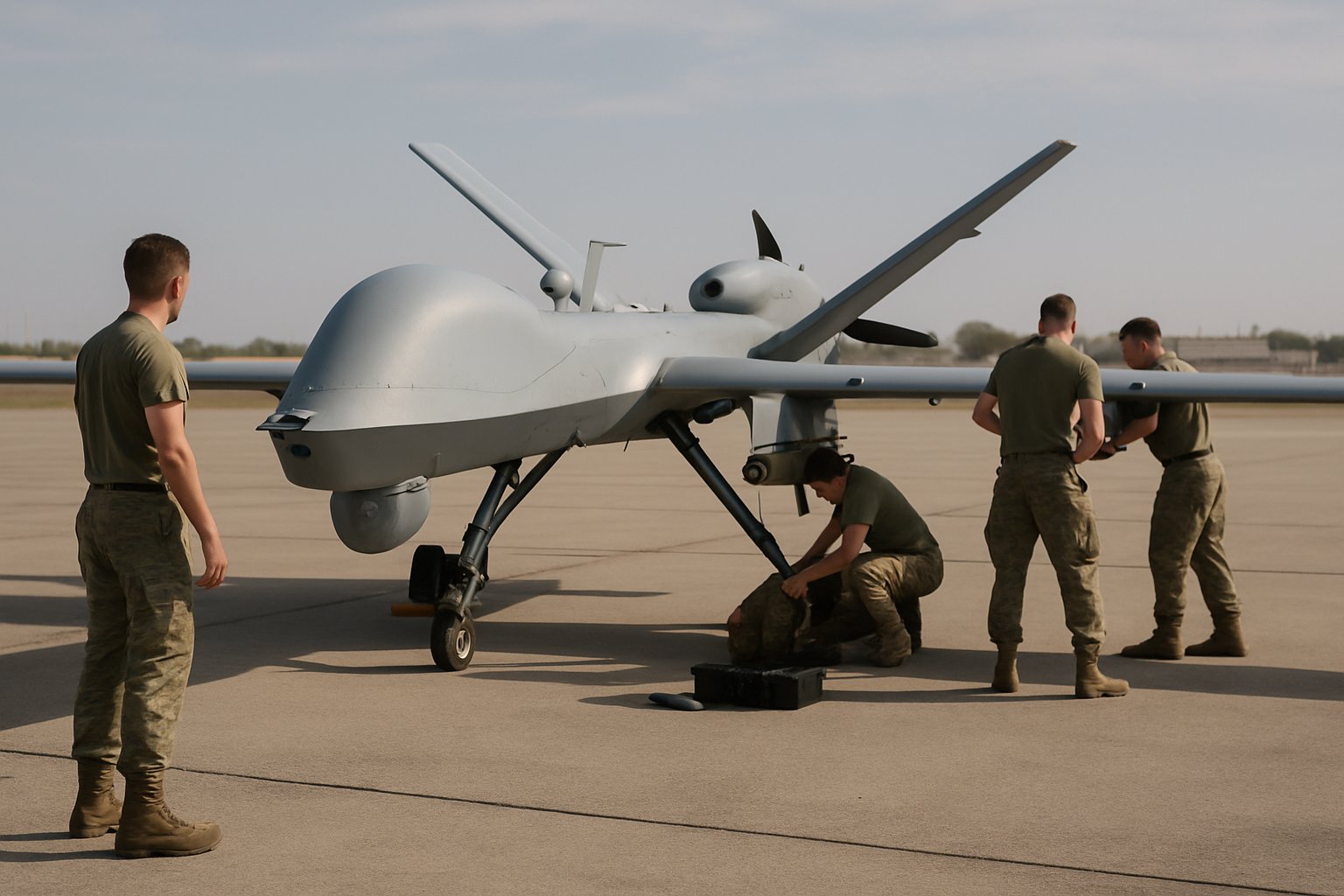
Consequently, professionals need a clear view of Swarmer’s technology, finances, and governance before backing the issue. This article dissects the filing, evaluates competitive context, and highlights implications for the broader Autonomous Warfare landscape.
Nasdaq Debut Key Details
Firstly, the S-1 outlines a 3,000,000 share float priced between $4 and $6. At the midpoint, Swarmer would raise $15 million and command an undiluted market value near $60 million. Moreover, proceeds will fund product development, working capital, and international expansion.
Lucid Capital Markets acts as sole bookrunner, which signals a lean syndicate typical for an early-stage defense IPO. Meanwhile, Swarmer awaits Nasdaq approval of the SWMR ticker, a step that often finalizes days before pricing. Subsequently, the company will launch a virtual roadshow to gauge demand from institutional funds focused on disruptive defense software. Investors drawn to Autonomous Warfare innovations may view the offering as a ground-floor entry into the drone-swarm niche.
These deal terms highlight modest dilution yet significant execution pressure. However, technology credibility under fire remains the stronger story, which the next section explores.
Technology Under Fire Conditions
Swarmer sells Trident OS, MINAS AI, and STYX C2, a stack enabling heterogeneous drone collaboration. In contrast, most legacy primes bundle software with proprietary airframes, locking customers into expensive hardware cycles. Swarmer claims over 100,000 Combat Missions since 2023, offering a battlefield dataset that sharpens its algorithms. Consequently, each flight supplies corner-case scenarios crucial for resilient Autonomous Warfare decision loops.
MINAS allocates targets across the swarm, while STYX lets one operator supervise dozens of airframes simultaneously. Furthermore, Trident OS supports multiple radio protocols and chipsets, making the platform hardware-agnostic. This flexibility appeals to small drone manufacturers in Ukraine seeking rapid field integration. Nevertheless, export controls will limit certain advanced autonomy features, preserving human authority within lethal decision chains.
The combat dataset and flexible stack underpin Swarmer’s perceived edge. Consequently, industry attention now shifts to overall market sizing and adoption velocity.
Market Growth Drivers Today
Globally, Grand View Research valued the drone sector at $83.8 billion in 2025. Moreover, analysts forecast a 9.5% CAGR through 2033, reaching roughly $182 billion. Within that pie, Business Research Company pegs drone-swarm management at $2.34 billion, scaling toward $7.8 billion. Therefore, investors chasing Autonomous Warfare enablers believe software will capture disproportionate margin inside this fast lane.
In contrast, hardware margins compress as commoditized airframes flood defense catalogs. Consequently, licensing models like Swarmer’s $250-$6,000 per-unit fees look attractive for militaries needing scale. Additionally, NATO allies increasingly demand interoperable software after observing Ukraine’s swarm tactics against armored targets. These macro factors frame a supportive backdrop. However, revenue traction must validate that opportunity, as the following numbers reveal.
Financial Health Snapshot Now
Swarmer generated just $309,920 in 2025 revenue, down slightly from 2024. Meanwhile, net loss ballooned to $8.53 million as headcount and R&D spending expanded. Operating cash burn reached $4.6 million, leaving the balance sheet dependent on fresh capital. Consequently, IPO proceeds are essential for twelve months of runway and contract fulfillment.
- 2025 revenue: $309,920; net loss: $8.53 million.
- Cash used in operations: $4.6 million.
- Customers: four active; employees: 49 full-time, 38 contractors.
- Series A-1 raised $12.1 million at $6.27 per share.
Furthermore, warrant coverage of 1.59 million shares dilutes early investors if exercised. Nevertheless, management argues that combat credibility offsets early financial weakness.
The numbers confirm a pre-scale stage needing patience and capital discipline. Next, governance complexities may influence that patience among institutional funds.
Governance And Risk Factors
Erik Prince joined as non-executive chairman in December 2025, sparking immediate media discussion. Moreover, critics cite past controversies at Blackwater and fear reputational drag on a civilian Autonomous Warfare vendor. The S-1 discloses an advisory contract but notes no operational control for Prince.
Additionally, export-control regimes, sanctions, and shifting policies on lethal AI present material compliance risk. In contrast, management promises adherence to NIST, DFARS, and upcoming EU drone standards. Regulators will scrutinize software delivered from Ukraine engineering hubs, especially during active Combat Missions. Consequently, investors must weigh geopolitical exposure alongside technical upside.
Ethical Debate Continues Globally
Policy experts argue that meaningful human control remains a red line for acceptable Autonomous Warfare deployments. Nevertheless, militaries facing ammunition shortages view loitering swarms as cost-effective force multipliers. Therefore, the ethical conversation will likely intensify as Swarmer’s code enters NATO inventories.
Governance signals and policy currents shape near-term sentiment. However, strategic prospects depend on execution, which the concluding section assesses.
Strategic Outlook Moving Forward
Swarmer’s roadmap focuses on scaling licensing to drone OEMs across Asia, Europe, and North America. Additionally, the company plans a Warsaw office to support frontline customers and strengthen EU regulatory engagement. Partnership talks with two unnamed defense primes are disclosed in the S-1 but remain non-binding. Meanwhile, product engineers aim to reduce compute requirements, enabling cheaper micro-drone adoption.
Professionals can deepen domain mastery through the AI Robotics Certification™, which aligns with swarm algorithm development. Furthermore, defense procurement teams may use credentialed experts to audit safety layers before broad deployment. Therefore, ecosystem training complements capital inflows, accelerating responsible Autonomous Warfare adoption.
Collectively, roadmap, partnerships, and talent pipelines define success. Consequently, the forthcoming pricing day will test investor conviction.
Swarmer represents a compelling yet risky slice of next-generation defense technology. Its Nasdaq pursuit, modest raise, and battlefield pedigree offer an early read on public appetite. However, balance-sheet fragility, governance scrutiny, and unpredictable Combat Missions data validation pose material hurdles. Moreover, debates around Autonomous Warfare ethics will intensify as algorithms cross more borders.
Consequently, investors should align capital with clear policy guidance and transparent product audits. Professionals who master swarm algorithms through focused certification can shape safer Autonomous Warfare rollouts. Therefore, monitor amended filings, export rulings, and initial trading to gauge real traction of public Autonomous Warfare software.


