

AI CERTS
2 hours ago
StuffCool ChargeCube Review: Mobile Power Hardware Redefined
This article reviews how the device fits within the wider Mobile Power Hardware arena and where scrutiny remains. Moreover, we weigh claims against independent standards and outline next steps for enterprise buyers. Readers will discover technical specifications, market context, and certification pathways that bolster deployment confidence. Finally, we compare ChargeCube to rival mobile charger options from global incumbents.
Market Charging Needs Rise
Remote work increased device counts per desk, from laptops to wearables. Consequently, legacy extension boards struggle with simultaneous power demand and voltage stability. Moreover, energy-efficient laptops now accept USB-C input, encouraging convergence around smarter distribution hubs. Analysts at FoneArena noted this shift when covering the ChargeCube announcement in January.
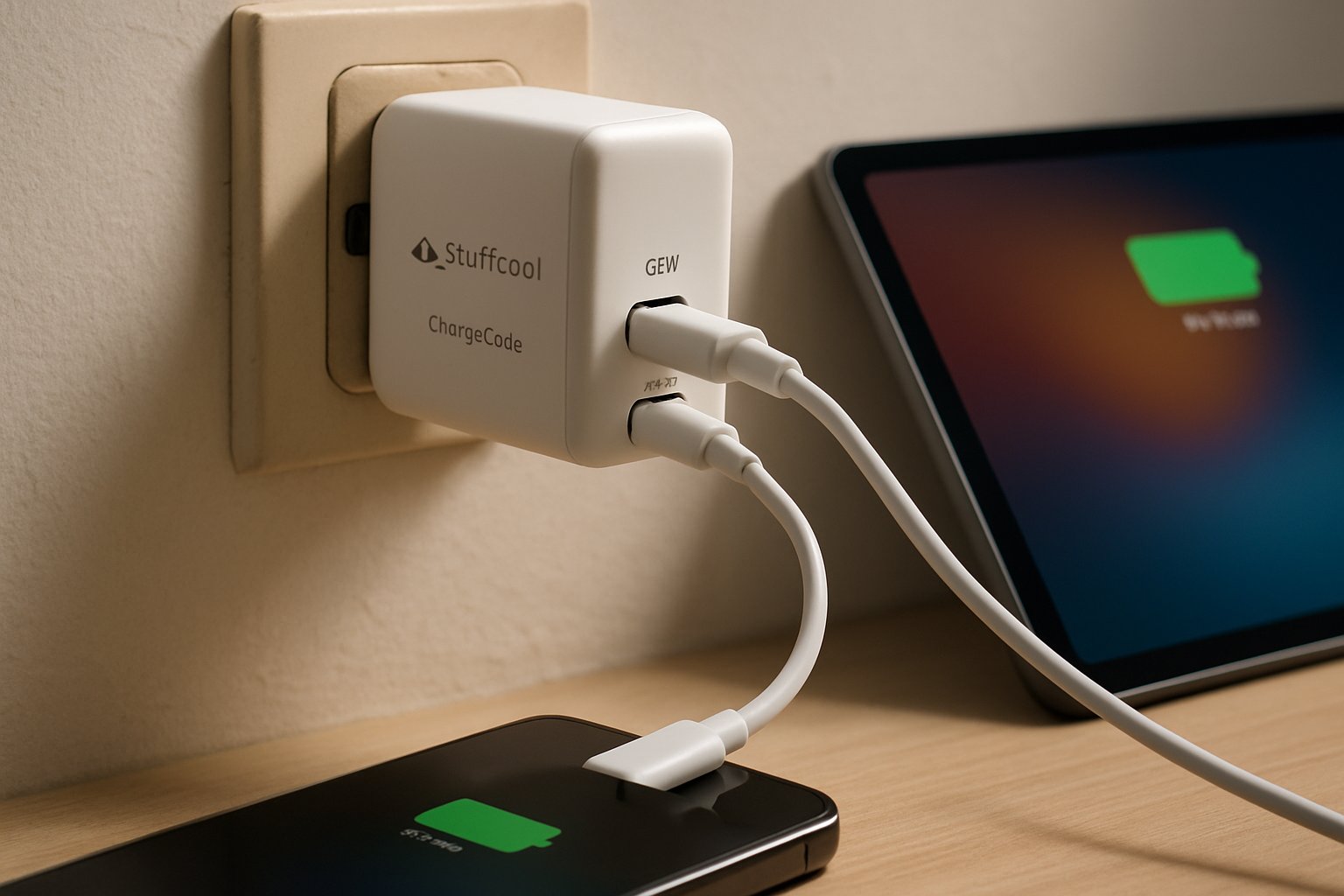
Modern professionals need compact yet powerful hubs. Therefore, any Mobile Power Hardware must satisfy both wattage and footprint expectations before it wins adoption.
Compact Hardware Design Overview
At 120 by 100 by 32.5 millimetres, the cube sits smaller than many phone boxes. Meanwhile, weight stays manageable at 363 grams, easing travel packing. Three universal AC sockets surround the edges, each shielded by child-proof shutters and a sliding lock. Additionally, StuffCool routed a 1.5-metre BIS-approved cable beneath the base for strain relief.
The matte plastic shell feels sturdy, yet vents encourage heat dissipation during heavy sessions. Consequently, this cube delivers laptop charging power without ballooning on a crowded desk. Overall, the ChargeCube represents Mobile Power Hardware that respects limited bag space.
Compact geometry joins thoughtful socket placement. In contrast, many competing mobile charger bricks sprawl lengthwise, forcing cable gymnastics toward neighbouring devices. Next, we inspect charging specs.
GaN Charging Specs Explained
The USB-C port outputs 5 to 20 volts at currents reaching 3.25 amperes, achieving full 65W delivery. Moreover, PPS modulation ranges between 3.3 and 11 volts at 4.5 amperes, benefitting Samsung and Google flagships. The adjacent USB-A port handles Quick Charge profiles up to 18W, covering legacy peripherals.
Consequently, one cube charges a MacBook Air, a smartwatch, and three AC devices without breakers tripping. However, StuffCool has not published multi-port derating charts, leaving unknowns about sustained simultaneous loads. Independent meters will determine whether output holds steady during extended video rendering sessions. Consequently, it delivers serious Mobile Power Hardware capabilities inside a palm-sized enclosure.
Key published specifications include:
- USB-C PD: up to 65W with PPS support
- USB-A: up to 18W Quick Charge
- AC sockets: 240V, 6A, total 1,500W
- Cable length: 1.5 m, BIS-approved
- Dimensions: 120 × 100 × 32.5 mm; weight 363 g
Numbers look reassuring on paper. Nevertheless, real-world verification remains essential before Mobile Power Hardware recommendations reach procurement teams. Therefore, safety metrics come next.
Safety And Compliance Gaps
StuffCool markets surge, overload, and short-circuit protection inside the ChargeCube enclosure. Additionally, the cable carries Bureau of Indian Standards approval for insulation thickness and grounding. In contrast, certification documents for the internal GaN board are not publicly linked. Therefore, enterprises should request BIS listing numbers or third-party UL reports before mass deployment.
Hindustan Times praised the convenience factor yet avoided deep safety commentary during its February column. Moreover, thermal behaviour under combined AC and USB loads still lacks published data. Such metrics are critical for Mobile Power Hardware that may live behind wooden panels.
Certification transparency drives enterprise trust. Consequently, any Mobile Power Hardware must pair marketing claims with verifiable lab reports to satisfy auditors. Next, we examine competitors.
Competitive Landscape Dynamics Shift
Multi-port GaN chargers flood retail channels from Anker, Belkin, Baseus, and Ugreen. However, very few pieces of Mobile Power Hardware integrate universal AC sockets alongside USB outputs. Therefore, the ChargeCube positions itself between travel bricks and bulky floor strips.
Price wise, StuffCool undercuts several import brands, launching at Rs 2,999 with early discounts. Nevertheless, Amazon listings show Anker selling a similar 65W desktop charger for roughly Rs 3,499. Consequently, value hinges on the extra AC sockets and long cable.
This cube narrows a notable niche. In contrast, established mobile charger brands may reply with hybrid cubes later this year. Finally, purchase criteria matter.
Practical Buyer Considerations Today
Corporate IT buyers weigh warranty length, service responsiveness, and safety documents before approving accessories. StuffCool offers a six-month warranty, shorter than many international rivals offering twelve months or more. Moreover, return logistics can influence total cost for any mobile charger fleet during swaps.
Professionals can enhance their expertise with the AI Foundation Essentials™ certification, ensuring informed procurement evaluations. Additionally, teams should maintain a load matrix, pairing laptops with cubes to avoid cable contention.
Critical purchase criteria include:
- Verified BIS or UL certification numbers
- Sustained 65W delivery under thermal load
- Warranty terms exceeding six months
- Cost per watt compared to peers
- User reviews after first production batch
Meeting these checkpoints strengthens adoption confidence. Subsequently, Mobile Power Hardware deployments run smoother and face fewer surprise recalls.
Conclusion And Next Steps
StuffCool's cube blends convenience, speed, and cost, pushing Mobile Power Hardware forward for desk ecosystems. However, independent thermal and certification audits must validate marketing promises before massive rollouts proceed. Moreover, early buyers should monitor multi-port performance to catch firmware or parts revisions quickly.
Nevertheless, the ChargeCube already earns praise for reducing chargers while powering laptops, phones, and monitors from one socket. Therefore, consider ordering a sample, conducting load tests, and enrolling teams in the cited certification for deeper technical literacy. Click to explore more insights and keep your infrastructure agile.


