

AI CERTS
2 hours ago
State Legislation Surge: 46 States Passed 159 AI Laws
However, rapid adoption has created a sprawling legal map that executives must decode quickly. Moreover, federal officials have started challenging state prerogatives, arguing that divergent requirements threaten interstate commerce. The resulting standoff will define how companies develop, deploy, and scale artificial intelligence in the United States. This article unpacks the numbers, examines the arguments, and offers a practical roadmap for navigating forthcoming obligations.
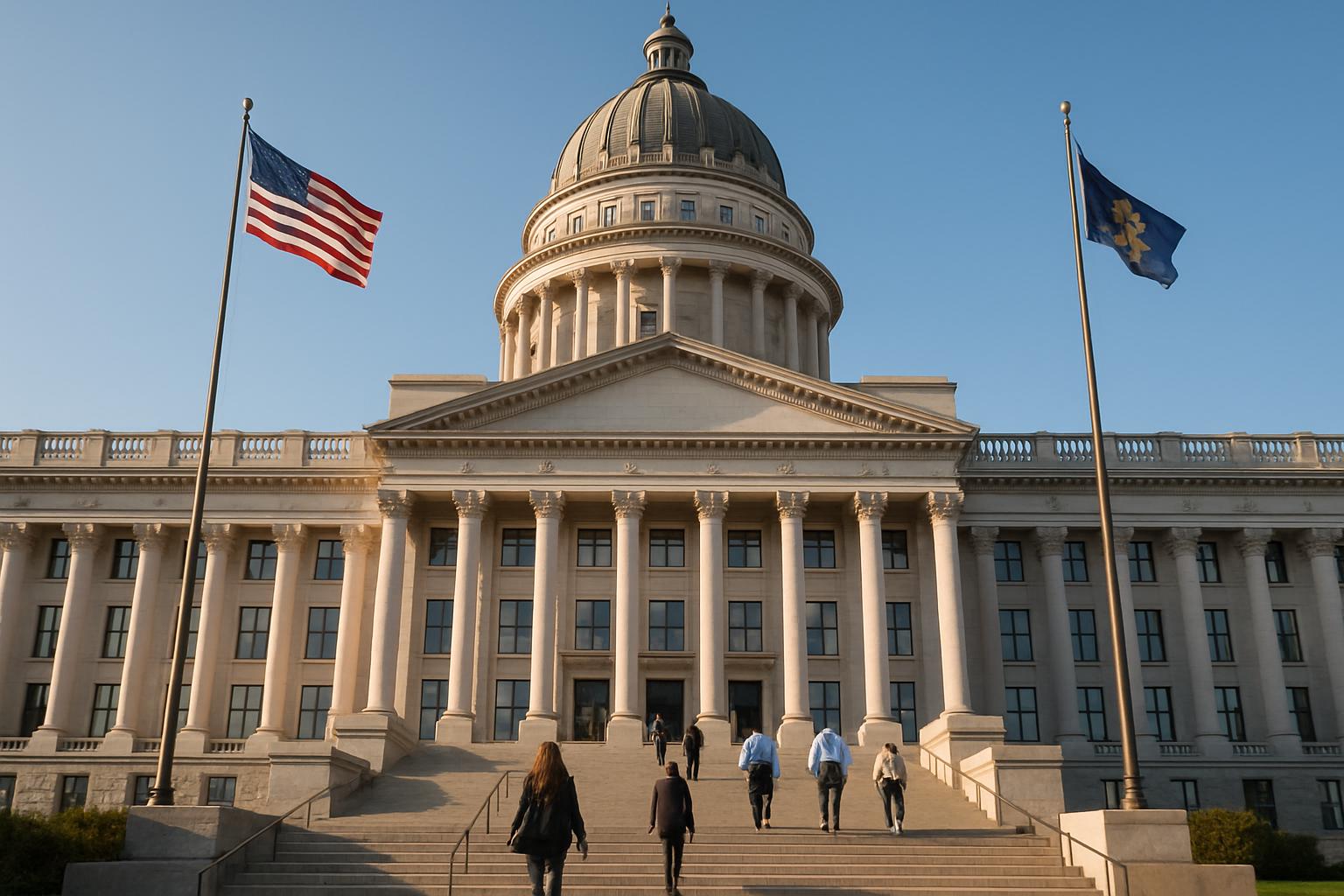
State Legislation Momentum Surges
NYU researchers recorded 159 AI specific statutes adopted during 2025, dwarfing prior years. Additionally, 345 broader technology measures passed, covering privacy, procurement, and workforce initiatives. The tally confirms that State Legislation is no longer exploratory; it is assertive and iterative. In contrast, only 113 comparable AI Laws reached governors’ desks in 2024, according to BSA analysis. Therefore, annual growth exceeded forty percent.
Observers attribute the spike to election-year concerns, corporate lobbying, and consumer anxiety about deepfakes. Moreover, states see opportunity to claim first-mover prestige and attract high-skill investment. Consequently, legislative calendars now allocate dedicated AI hearings across budget, judiciary, and education committees. These developments underline a structural shift rather than a passing trend. However, understanding the causes clarifies potential future trajectories. Effective State Legislation continues reshaping boardroom priorities.
Drivers Behind Rapid Expansion
Several macro forces explained the legislative acceleration. First, high profile incidents involving biased algorithms galvanized bipartisan outrage. Furthermore, looming federal inaction encouraged states to fill governance gaps swiftly. Trade associations warned that unclear Regulation could delay product launches, spurring compromise language acceptable to industry.
Meanwhile, campaign seasons pushed lawmakers to tackle deepfakes and automated persuasion before voters headed to polls. In contrast, earlier sessions had focused on exploratory hearings rather than binding mandates. Subsequently, committees adopted model text circulated by the National Conference of State Legislatures. Moreover, academic centers supplied quick-turn legal templates addressing transparency, safety, and fair use. Consequently, drafters moved from concept to enrolled bill in weeks, not months. These catalysts reveal why volume will likely rise again. Timely State Legislation fills empirical research gaps. Therefore, federal intervention emerged next. Absent coordination, the Patchwork will expand further. Robust Governance frameworks were rarely available during drafting.
Federal Pushback Intensifies Debate
On 11 December 2025, the White House issued an executive order targeting onerous state AI rules. The order instructed agencies to challenge measures viewed as barriers to interstate commerce. Additionally, it formed a litigation task force and threatened grant withholding for noncompliant jurisdictions. Nevertheless, NCSL leaders promised immediate court action, citing the Tenth Amendment.
Legal scholars argue an executive order cannot preempt duly enacted State Legislation without congressional authority. Furthermore, dormant commerce clause challenges cut both ways, creating uncertainty for plaintiffs and defendants. Consequently, business counsel must prepare for diverging timelines as courts parse jurisdictional questions. Meanwhile, calls for national Regulation resurfaced in Congress, though passage remains unlikely during an election year. These developments sharpen the Patchwork dilemma. In contrast, some innovators welcome diverse experiments. However, costs can be significant. Pending State Legislation could render the order moot.
Fragmentation Risks And Costs
Multiple experts warn that a state Patchwork elevates operational complexity. Daniel Castro labels the situation a "web of inconsistent Laws" that hampers scaling. Moreover, divergent disclosure deadlines force teams to customize user interfaces by jurisdiction. Consequently, go-to-market cycles lengthen, and security reviews multiply.
Legal counsel cites hidden Governance overhead, including staff training and record retention guidelines. In contrast, supporters argue local experimentation yields valuable empirical data. Furthermore, early mover states can refine rules before federal adoption, minimizing unforeseen harms. Nevertheless, firms with nationwide reach still absorb aggregate Compliance costs. Therefore, a coordinated baseline framework could balance innovation and protection. These tensions play out vividly in individual statutes. Conflicting State Legislation magnifies due diligence workloads.
Notable State Case Studies
Some measures illustrate the spectrum of policy choices. Below are headline examples shaping national discourse.
- Colorado AI Act: Defines high-risk systems, mandates audits, and sets phased enforcement dates.
- California Disclosure Laws: Require AI tags on political ads and deepfake content distributed statewide.
- New York Safety Proposal: Demands frontier-model providers craft security plans before market launch.
Furthermore, several states adopted workforce reskilling funds tied to AI procurement. Meanwhile, Utah introduced algorithmic transparency guidelines for law enforcement. Consequently, companies face a mosaic of disclosure, audit, and impact assessment requirements. These examples reveal both creativity and inconsistency. Therefore, proactive planning becomes essential. Each piece of State Legislation reflects unique political culture.
Strategic Compliance Roadmap Ahead
Enterprises can mitigate risk through disciplined Governance and smart tooling. First, map every enacted AI Law against current product workflows. Additionally, assign internal owners for monitoring pending bills via the NCSL database. Subsequently, implement tiered assurance controls aligned with higher risk use cases.
Moreover, track deepfake labeling deadlines through automated content scanners. Firms should also rehearse rapid policy updates when new Regulation emerges. Professionals can enhance their expertise with the AI+ Network Security™ certification. Consequently, teams build muscle memory for continuous Compliance obligations. Nevertheless, collaboration with policymakers remains vital for sustainable outcomes. These steps offer immediate relief. In contrast, long-term certainty depends on harmonized frameworks. Unified tracking of State Legislation prevents costly surprises. Teams should log new Laws weekly to maintain audit readiness. Dedicated Compliance dashboards simplify executive reporting.
The past two years transformed the United States into a laboratory for AI policy. State Legislation produced 159 statutes and ignited fierce federal reaction. Consequently, enterprises must navigate competing Laws while anticipating possible preemption. Furthermore, the current Patchwork exposes costly Governance and Compliance burdens. Nevertheless, disciplined risk mapping, continuous monitoring, and targeted certifications provide actionable defense. Therefore, leaders should track legislative calendars, refine controls, and invest in workforce upskilling now. Explore the referenced certification to strengthen organizational readiness and shape future policy dialogues.


