

AI CERTs
2 hours ago
Starbucks Accelerates AI Supply Chain With Vision Rollout
In retail, speed now defines competitive advantage. Starbucks just accelerated that race on September 3, 2025. The coffee giant announced computer-vision inventory counts for 11,000 North American stores. Consequently, the move aims to shorten its AI Supply Chain and delight customers with fewer stockouts.
Starbucks partnered with NomadGo to deploy computer vision, 3D spatial intelligence, and augmented reality. Moreover, early pilots delivered counts eight times faster and with 99% accuracy, according to both companies. Such precision creates high-frequency demand signals that ripple across procurement and distribution. Therefore, supply managers can replenish faster, wasting less and selling more.
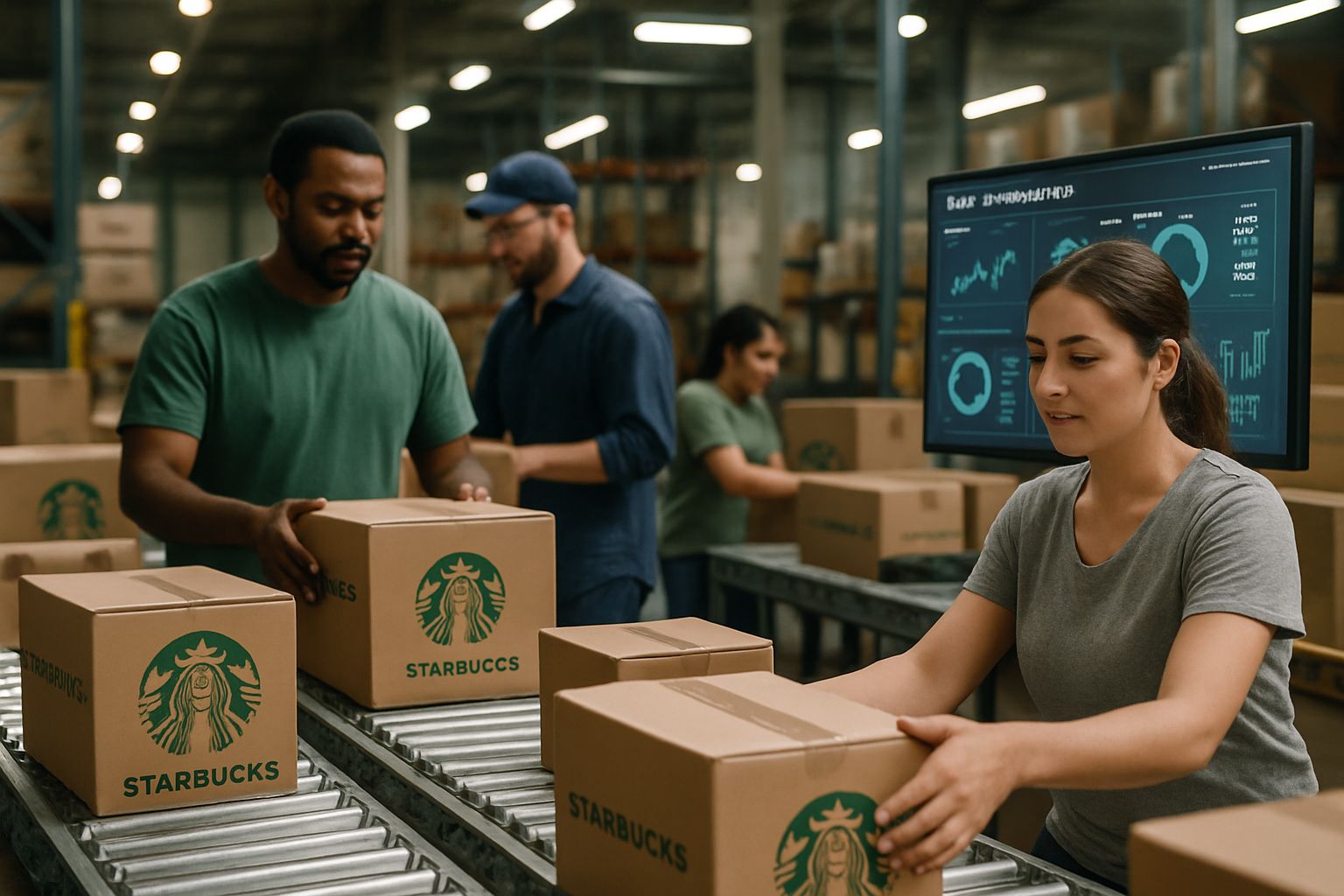
Inventory Vision Speeds Counts
Inside each store, staff now scan shelves with existing tablets. The camera detects SKUs and renders a live augmented reality overlay. Subsequently, partners confirm results on screen and submit counts in seconds. NomadGo claims the workflow is eight times faster than manual clipboards.
Frequent counts improve inventory visibility near real time. Consequently, low stock items trigger replenishment orders sooner. Starbucks calls this cadence “inventory pulses,” reflecting the increased heartbeat of data. Meanwhile, corporate analytics teams ingest the pulses into central planning dashboards.
Ultimately, the AI Supply Chain begins at the shelf edge where each barcode is recognized.
Faster counts supply fresher numbers for planners. However, the greatest impact emerges once those numbers reshape physical flows downstream. Next, we examine how those flows compress last-mile logistics.
Shorter Loops Boost Logistics
Traditional replenishment relied on weekly or bi-weekly schedules. In contrast, rapid data lets Starbucks shift toward smaller, more frequent deliveries. Therefore, trucks arrive with exactly the products consumed since the last pulse. That tighter loop reduces backroom clutter and freezer overload, elevating logistics efficiency.
Moreover, distribution centers can lower safety stock because variability shrinks when store signals update hourly. The AI Supply Chain therefore carries less dead weight, saving capital. Additionally, planners can reroute inventory between regions when demand spikes unexpectedly. Such agility impressed industry analysts during early media briefings.
Executives view the AI Supply Chain as a flywheel for future automation layers.
Logistics gains stem directly from richer, faster store telemetry. Nevertheless, real customer value depends on matching product demand. Let us now explore demand implications in the cafés.
Impacts On Store Demand
Baristas often run short of alternative milks during afternoon rush. With hourly counts, replenishment algorithms predict afternoon demand more precisely. Consequently, oat milk arrives before the next shift, avoiding lost sales. Similar patterns apply to bakery items and cold-brew modifiers.
NomadGo data suggests stores counted inventory eight times more frequently during pilots. More frequent pulses translate into tighter demand forecasting at regional roasteries. Therefore, production scheduling can align with actual consumption instead of static projections. The AI Supply Chain thereby reduces both shortages and surplus.
Precise demand signals enhance product availability while curbing waste. However, technology also reshapes employee routines. The next section reviews labor and efficiency trade-offs.
Balancing Labor And Efficiency
Starbucks frames the system as partner augmentation, not replacement. Deb Hall Lefevre emphasized saved minutes can fund customer interaction. Furthermore, removing clipboards lowers ergonomic strain from crouching behind fridges. Nevertheless, unions remain wary that future updates could reduce headcount.
Manual inventory once absorbed nearly one hour per day in some stores. The automation cuts that work to roughly seven minutes, according to vendor briefings. Consequently, staff can clean machines or craft beverages during reclaimed time. Overall efficiency rises when staff redeploy saved minutes to service tasks.
Starbucks insists its AI Supply Chain still requires human judgement for exceptions.
Labor impacts appear positive yet still anecdotal. Therefore, independent audits will be essential before global expansion. Data validation also matters for broader forecasting gains.
Data Drives Better Forecasting
High-frequency counts feed enterprise planning tools in near real time. Consequently, machine learning models recalibrate demand curves daily instead of weekly. Forecasting accuracy typically improves when variance shrinks, say supply-chain academics. Moreover, smaller forecast errors cut emergency shipping costs between distribution centers.
- 11,000 stores targeted in North America rollout
- Eightfold faster counts compared with manual methods
- 99% counting accuracy in vendor tests
- Hourly inventory pulses possible with existing tablets
The AI Supply Chain therefore acts as a living sensor network across retail nodes. Additionally, corporate teams plan promotions with fresher views of store-level sell-through. Professionals can upskill through the AI Product Manager™ certification. Meanwhile, stakeholders still seek hard ROI numbers from Starbucks.
Better forecasting promises leaner production and smoother store availability. However, verification will decide whether promises become benchmarks. The following section outlines remaining uncertainties and research needs.
Verification And Next Steps
Vendor claims list 99% accuracy and eight-fold speed. Independent auditors must replicate those numbers across lighting and packaging variations. Moreover, integration with ordering systems still rolls out in phases. Consequently, automated replenishment remains a roadmap item rather than a universal feature.
Analysts also await concrete metrics on waste reduction, logistics cost, and labor savings. In contrast, Starbucks has only shared qualitative wins so far. Subsequently, reporters plan interviews with store managers and union representatives. The AI Supply Chain story will mature as those data sets emerge.
Robust validation will cement stakeholder confidence. Therefore, Starbucks must publish numbers soon to maintain momentum.
Conclusion And CTA
Starbucks has boldly linked computer vision to operational goals. Consequently, the company claims a faster AI Supply Chain that beats traditional retail latency. Early pilots showed eight-fold speed, higher accuracy, and promising logistics improvements. Nevertheless, independent studies must confirm waste savings, labor impacts, and forecasting accuracy. Meanwhile, technology professionals watching retail transformation should track these audits closely. For deeper strategic grounding, explore the linked certification and strengthen your supply-chain innovation playbook today.


