

AI CERTS
2 months ago
SpaceX Joins DoD Drone Swarms Orchestrator Contest
Applications closed 25 January, only twelve days after announcement. Meanwhile, Sprint 1 testing starts within ten days of selection, underscoring the program’s urgency. Moreover, observers see the challenge as a sequel to the Replicator push for massed autonomous platforms.
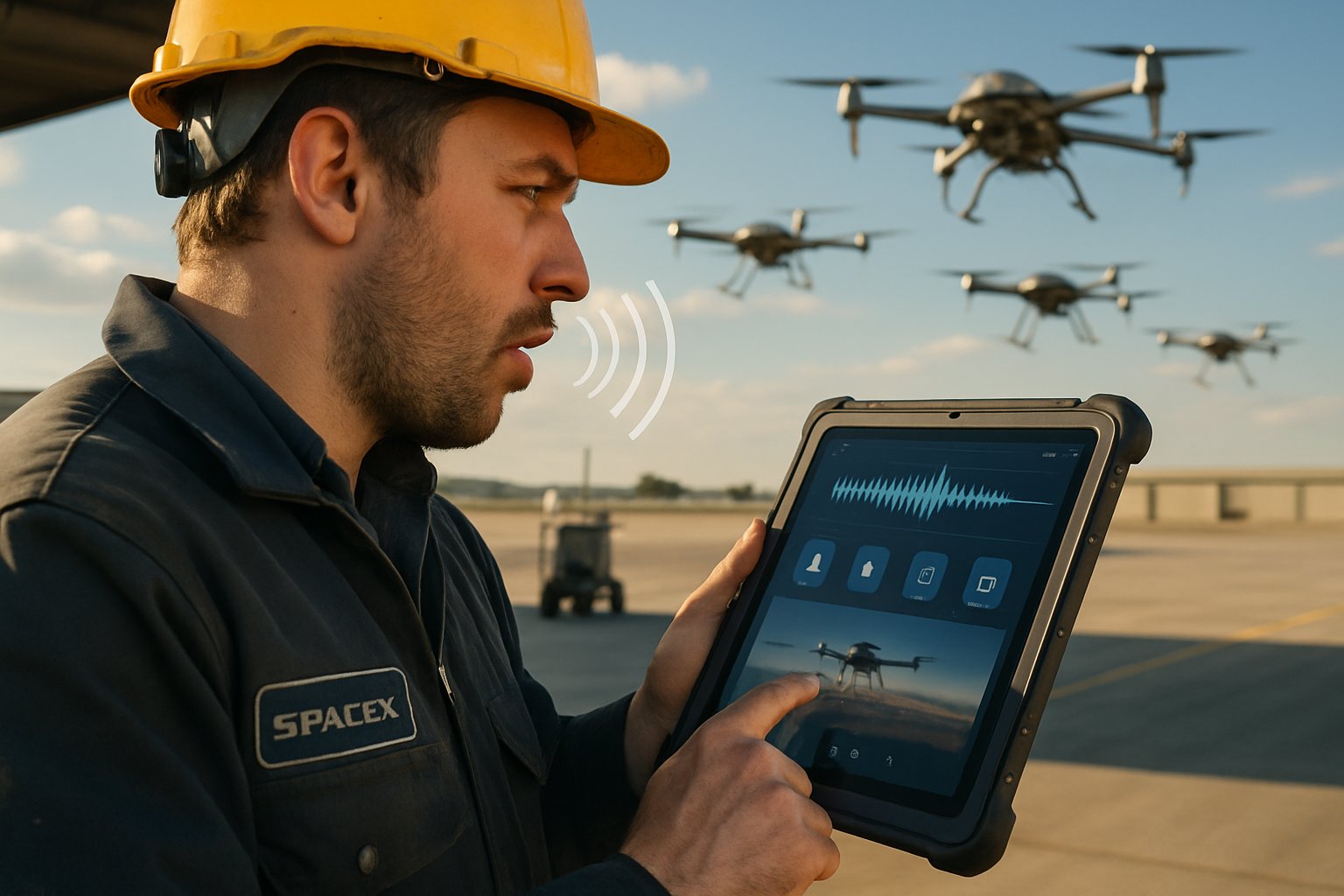
Pentagon Prize Challenge Details
DIU launched the Autonomous Vehicle Orchestrator Prize Challenge on 13 January 2026. Target outcome: reliable Drone Swarms executing plain orders. Therefore, the timeline signals a sprint mindset familiar to software startups.
- Prize pool: up to $100 million across performers.
- Sprint duration: roughly six months total.
- Sprint 1 start: within ten days of award.
- Focus: voice and text intent translation.
- Edge operation: disconnected, vehicle-agnostic requirement.
- Mission assets: heterogeneous Drone Swarms across air, land, sea.
- Oversight: DoD's Defense Innovation Unit and DAWG.
Consequently, DIU insists that prototypes run on government-furnished air, ground and maritime vehicles.
These figures underscore an aggressive acquisition cadence. However, the contest’s secrecy leaves many details undisclosed. Attention now shifts to how SpaceX and xAI will respond.
SpaceX And xAI Roles
Bloomberg sources claim SpaceX and xAI join only a handful of commercial teams. SpaceX already supplies Starlink services to the DoD, yet software remains the contest’s focus. Meanwhile, xAI brings large-language-model expertise gained from its 2025 frontier AI contract.
Analysts expect the duo to leverage cloud training but deliver lightweight edge models on test vehicles. Consequently, observers wonder whether Starlink links will appear although DIU rules supply separate radios.
Aerospace pedigree could accelerate integration. Nevertheless, ultimate judgement rests on orchestration software, not hardware dominance. Technical demands clarify that point.
Key Technical Orchestrator Requirements
DIU specifies that one operator must guide many vehicles through plain language commands. Therefore, the orchestrator needs intent parsing, task allocation, and mission deconfliction engines.
Code must remain vehicle agnostic and run even when satellite links drop. Additionally, it must explain decisions in readable English to keep the human accountable.
Importantly, DIU forbids direct control of weaponry during sprints; only navigation messages are permitted.
Voice Control Command Pipeline
Plain voice enters a speech recognizer, then a language model maps phrases to mission primitives. Subsequently, autonomy libraries convert those primitives into waypoint files broadcast to the Drone Swarms.
Moreover, the pipeline must continue working on embedded processors with only kilobytes of bandwidth. Edge operation demands fully autonomous routing.
These requirements push teams toward compact, explainable models. In contrast, many commercial voice assistants rely on huge cloud footprints. Industry now sees chance beyond defense.
Opportunities For Industry
Winning teams gain fast-track procurement channels under Other Transaction Authority agreements. Furthermore, DIU has signaled follow-on production options for successful orchestrators.
- Dual-use logistics control for industrial Drone Swarms.
- AI copilots for delivery drones and autonomous ships.
- Exportable software modules for allied militaries, pending DoD clearances.
- Consulting revenue for xAI integration support.
Professionals can enhance their expertise with the AI Robotics™ certification, boosting credibility during defense procurements.
These incentives attract major cloud firms and niche autonomy startups. However, ethical and strategic risks accompany the upside. Those tensions surface next.
Ethical And Operational Risks
Critics argue the technology may erode meaningful human control over lethal weaponry. Future of Life Institute campaigns already seek bans on fully autonomous killing systems.
Nevertheless, DIU leaders stress transparent decision logs and retained veto rights. Lieutenant General Frank Donovan stated that humans must always understand system reasoning.
Operationally, disconnected battlefields challenge swarm cohesion once jams disrupt links. Moreover, heterogeneous fleets often misalign sensors, causing friendly-fire hazards.
Ethical dilemmas and engineering gaps complicate adoption. Consequently, program watchdogs demand rigorous safety gates. Stakeholders now look ahead.
Outlook And Next Steps
Analysts forecast early flight demos by late summer, assuming Sprint 3 stays on schedule. Subsequently, DoD evaluators may divide the $100 million among two or three vendors.
SpaceX executives remain silent, yet industry chatter hints at Starlink edge networking trials. Additionally, xAI could recycle large-language-model weights from its prior Pentagon work.
Decisions in coming months may redefine battlefield command paradigms. Meanwhile, commercial sectors will monitor how Drone Swarms migrate into civil logistics. Civil agencies may adapt the system without lethal weaponry attached.
Drone Swarms are leaving laboratories and entering funded field trials. Consequently, DoD stakeholders expect unprecedented scale at minimal human cost. However, commanders must balance speed with safeguards against unchecked weaponry. Selected vendors will succeed only if transparent logs keep humans decisive. Moreover, commercial logistics groups watch because Drone Swarms could transform delivery economics. Professionals who master orchestrator design and earn new credentials will guide future Drone Swarms deployments.


