

AI CERTS
8 hours ago
Solving India’s B2B Brand Identity Challenge
Consequently, marketing teams struggle to justify patient brand spending to finance chiefs. Meanwhile, sales cycles lengthen and global competition grows. Regulators, investors, and marketplace platforms also demand transparent storytelling from vendors. Furthermore, digital channels crowd timelines with commoditized messages, diluting recall.
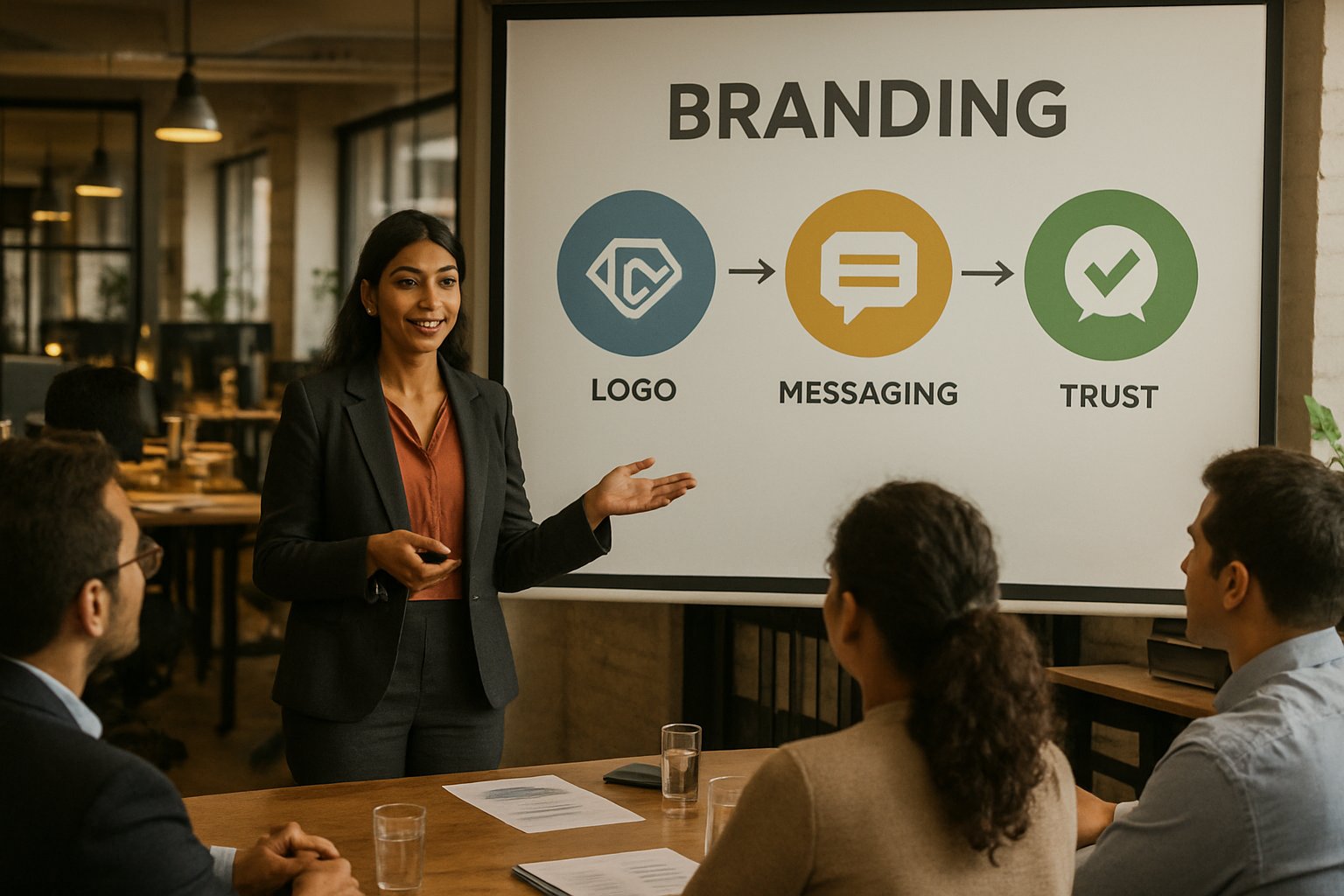
Consequently, leaders wrestle with allocating budgets across trade shows, performance ads, and storytelling assets. In contrast, global peers outspend Indian firms on annual brand programs that span multiple channels. Therefore, lagging investment risks eroding competitiveness just as opportunities in AI and manufacturing expand.
This article unpacks the roots, numbers, and remedies behind India’s paradox. Moreover, it delivers an actionable roadmap for safeguarding corporate value in volatile markets. Read on to understand latest statistics, expert quotes, and certification paths that support transformation.
Strengthening B2B Brand Identity
India’s brand problem begins with buyer psychology. Edelman–LinkedIn research shows 95% of professionals stay out-of-market at any moment. Therefore, companies must win memory long before a tender appears.
LinkedIn India executive Sachin Sharma notes that full-funnel programs now represent "the most dependable path." Absent sustained recall, purchase decisions revert to relationships and channel familiarity. Consequently, weak visibility inflates acquisition Costs and compresses margins.
These realities underscore why B2B Brand Identity must anchor long-term planning. India’s trust gap springs from limited recall and extended buying groups. However, structural market forces deepen the challenge, as the next section explains.
Market Fragmentation Pressures Costs
Government data counts nearly 63.4 million MSMEs across the country. Therefore, reaching decision makers at scale requires broad, consistent communication. Moreover, distributors and local partners mediate many deals, limiting direct influence.
Limited budgets push firms toward short campaigns that chase leads rather than build brand equity. In contrast, fragmented reach inflates Costs because media waste increases.
- MSME base: 110.99 million employees, Government 2023-24 report.
- 75% of marketers report longer sales cycles, LinkedIn 2025 survey.
- 95:5 rule: most buyers not active, Edelman 2024 study.
Consequently, CFOs pressure marketing leaders to justify every rupee quarterly. This finance lens sidelines long-horizon investments that enhance B2B Brand Identity over years.
Fragmentation raises outreach Costs and complicates storytelling. Nevertheless, emerging tactics now tackle this complexity head-on.
Full Funnel Strategy Rise
Indian marketers increasingly design integrated journeys from awareness to account-based conversion. LinkedIn platform data shows higher win rates when brand and demand campaigns run concurrently. Furthermore, video, live events, and subject-matter influencers build early trust.
Subsequently, targeted ads and sales enablement convert that interest efficiently. Virtusa executive Brian Jochum claims quality thought leadership "gets buyers to take action." Such sequencing reinforces brand equity while preserving pipeline velocity. However, many teams still lack measurement frameworks linking awareness lifts to revenue.
Integrated funnels combat siloed spending and strengthen memorability. Next, we examine why thought leadership remains pivotal inside those funnels.
Thought Leadership Demand Surge
Edelman finds executive audiences reward original insights with vendor consideration. Consequently, white papers, short explainer videos, and data dashboards outperform generic blogs. Moreover, Indian tech buyers share credible reports across internal relationships, widening influence.
Experts suggest aligning content calendars with major industry events to maximize reach. Professionals can enhance their expertise with the AI Project Manager™ certification. Such credentials build personal authority and, by extension, corporate B2B Brand Identity.
In contrast, weak content budgets allow competing narratives to dominate share of voice. Therefore, leadership alignment and resource allocation become non-negotiable.
High-impact thought leadership unlocks early attention and positions firms as category definers. Subsequently, successful stories inspire broader brand programs, as we see in SaaS.
SaaS Stories Signal Credibility
Postman, Zoho, and Freshworks increasingly advertise on television and airports. Udit Agarwal of Exotel says advertising "builds memorability and signals credibility" as features converge. Furthermore, Bessemer projects India’s SaaS revenue hitting $50B ARR by 2030.
Therefore, competition for global mindshare will intensify. Consequently, B2B Brand Identity investment differentiates platforms beyond pricing battles. Brand equity also supports premium support tiers, lowering payback periods.
Meanwhile, stronger brands negotiate partnerships and capital on favorable terms, cutting Costs. SaaS cases prove storytelling scales credibility and margin protection. Next, we analyze the metrics that validate such spending.
Measurement And Attribution Roadmap
Marketers often struggle to link early brand touches with closed deals. LinkedIn revenue attribution tools now integrate CRM and ad data natively. Additionally, multi-touch models reveal which webinars, videos, or reports accelerate funnel velocity.
Consequently, finance teams gain confidence to underwrite longer awareness flights. Furthermore, tracking customer lifetime value shows how brand equity lifts retention. Nevertheless, skills gaps persist, especially among manufacturing exporters lacking analytics talent.
Therefore, agencies and certification programs must upskill teams rapidly. B2B Brand Identity dashboards should track aided recall, share of search, and qualified pipeline.
Robust attribution converts brand debates into evidence-led budget decisions. Finally, we outline steps for the vast manufacturing sector that still hesitates.
Actionable Steps For Manufacturers
Industrial sellers often rely on trade fairs and distributor relationships. However, digitization of catalogs and QR based ordering improves discoverability without massive Costs. Additionally, localized video explainers, shot on shop floors, humanize engineering strength.
Such content builds manufacturing pride while strengthening B2B Brand Identity among regional buyers. Moreover, sharing factual thought leadership about safety certifications nurtures trust and brand equity.
Subsequently, channel partners convert warm leads with simplified credit terms. Consequently, firms see shorter payback and higher repeat orders.
Manufacturing marketers can blend digital tools, localized storytelling, and distributor enablement. These moves cement memory while respecting field realities, concluding our analysis.
India’s B2B growth now hinges on strategic memory creation. The evidence shows fragmented markets, longer cycles, and rising competition demand deliberate B2B Brand Identity investment. However, brand work cannot stand alone.
Full-funnel integration, robust attribution, and thought leadership reinforce revenue resilience simultaneously. Consequently, sales teams convert faster and command healthier margins. Meanwhile, certified talent amplifies execution quality.
Therefore, nurturing B2B Brand Identity remains an executive priority. Leaders should launch pilot programs, measure rigorously, and iterate quarterly. Adopt these steps today, and watch sustainable value flourish.


