

AI CERTs
3 hours ago
SoftBank soars on Nvidia-fueled AI infrastructure optimism
Tokyo traders woke on January 22 to a startling sight. SoftBank shares were surging almost 13% before midday trading concluded. The catalyst emerged thousands of kilometres away in Davos. There, Jensen Huang, CEO of the chip giant, portrayed AI as humanity’s next interstate highway system. His declaration of an enormous, five-layer buildout electrified semiconductor and cloud stocks. Consequently, investors rotated into names positioned to supply that emerging backbone. Few conglomerates sit closer to every AI hinge point than SoftBank. However, the sudden rally invites closer inspection of fundamentals, strategy, and looming risks. The following analysis unpacks the market move while mapping next-phase infrastructure realities. Professionals will gain balanced insight for portfolio, product, and career decisions.
Market Rally Explained Now
Tokyo indices opened higher, yet tech outperformed dramatically. Moreover, semiconductor suppliers, data-center landlords, and cloud incumbents led the charge. The benchmark Nikkei gained roughly 2%, while certain large caps eclipsed that lift. Market watchers credited Jensen Huang’s Davos remarks delivered the previous afternoon. During a fireside chat with BlackRock’s Larry Fink, Huang outlined an AI stack requiring synchronized investment. He listed energy, chips, networks, models, and applications as inseparable layers. Consequently, any firm straddling multiple layers enjoyed immediate momentum. Meanwhile, yen weakness magnified foreign capital inflows, reinforcing price action. Short sellers scrambled to close positions, adding mechanical pressure upward.
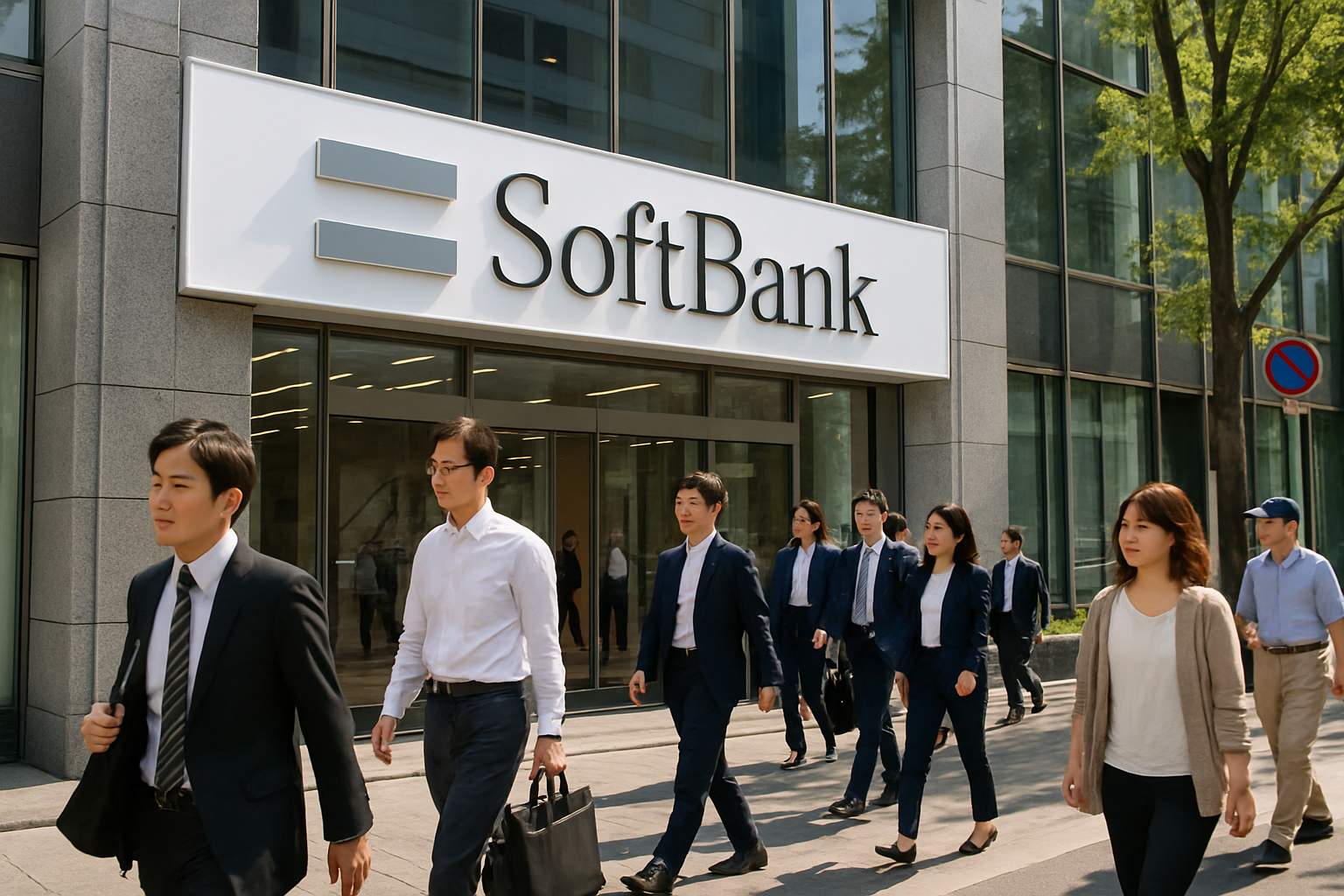
Intraday data from LSEG revealed heavy block purchases minutes after the Tokyo open. Additionally, options activity skewed bullish, suggesting traders anticipate continued upside volatility. Nevertheless, historical precedents caution that sentiment driven spikes often retrace without earnings confirmation. Therefore, analysts quickly scanned balance sheets for sustainable catalysts beyond conference soundbites. Their attention soon settled on one conglomerate with deep exposure across Huang’s five layers.
Davos enthusiasm ignited a broad tactical rally across Asian technology names. However, deeper fundamentals decide whether recent gains can persist into earnings season. Next, we examine SoftBank's latest strategic moves.
SoftBank's Latest Strategic Moves
Masayoshi Son spent 2025 securing positions that mirror Huang’s layered thesis. In December, the group agreed to purchase DigitalBridge for $4 billion in cash. The target owns towers, fiber, and data centers primed for AI workloads. Furthermore, the acquisition complements Son’s majority stake in Arm, the CPU designer powering edge devices. Subsequently, SoftBank completed a second $22.5 billion tranche into OpenAI, lifting ownership near 11%. These transactions followed a 4-for-1 share split effective January first. Consequently, retail access widened, potentially amplifying liquidity during the Davos-driven pop.
Meanwhile, Son emphasised vertical synergies linking compute, connectivity, and foundational models within one umbrella. SoftBank aims to monetise each layer rather than chase isolated margins. Additionally, the Arm holding offers optionality if proprietary architectures displace GPUs in specialised workloads.
Collectively, recent moves signal an aggressive land-grab across the entire AI value chain. However, execution costs and financing complexity could still test investor patience. Investor optimism around Nvidia now intersects with these expensively built positions.
Nvidia Sparks Investor Optimism
Nvidia dominated the Davos conversation despite no new hardware announcements. Instead, Huang reframed national competitiveness through the lens of compute capacity. Consequently, governments and corporates interpreted his narrative as a call to build domestic clusters quickly. Analysts at Bernstein noted that Master-plan language often moves valuation more than spec sheets. Furthermore, Nvidia remains the sole vendor shipping scale-out accelerator stacks today. In contrast, SoftBank relies on partnerships to translate vision into throughput. Nevertheless, Huang’s endorsement legitimises SoftBank’s ecosystem narrative in the eyes of momentum traders.
Huang’s rhetoric revalidated the multi-trillion AI infrastructure storyline captivating capital markets. Therefore, sentiment tailwinds may persist until hard data contradicts the expansion narrative. Next, we assess how that infrastructure thesis unfolds on the ground.
Building Global AI Infrastructure
True AI infrastructure requires capital-dense assets spanning energy, silicon, and hyperscale campuses. DigitalBridge furnishes SoftBank with 11 million square feet of expandable data center footprint. Moreover, DigitalBridge operates fiber routes linking Asian financial hubs to US West Coast clouds. Arm contributes instruction-set leverage that could optimise future accelerator layouts. Meanwhile, Nvidia chips remain the workhorses inside many planned clusters announced by SoftBank partners.
- DigitalBridge deal: $4B value, closing expected H2 2026.
- OpenAI stake: $41B commitment, delivering roughly 11% ownership.
- Share split: 4-for-1 effective Jan 1 2026, shares now 5.71B.
Consequently, SoftBank holds touchpoints from power procurement through application royalties. Nevertheless, such breadth demands flawless project management and disciplined capital allocation. Additionally, professionals may earn the AI Supply Chain™ certification, strengthening large-scale deployment oversight.
A layered portfolio offers synergy, yet coordination risk multiplies with every asset. Therefore, governance discipline remains as vital as capital access. The next section weighs those governance challenges against market exuberance.
Risks And Red Flags
High leverage shadows the conglomerate’s otherwise visionary narrative. Bank of America recently flagged Arm’s reliance on related-party deals as circular financing. In contrast, Moody’s highlighted near-term debt maturities exceeding $15 billion. Consequently, any valuation shock to Arm could cascade through margin loan covenants. Policy risk compounds matters; export controls could restrict next-generation Nvidia accelerators into select geographies.
Moreover, electricity scarcity challenges hyperscale construction timelines, particularly in power-tight Japan. SoftBank must secure guaranteed megawatts, or data halls stay dark. Nevertheless, Son’s playbook often involves sequential financing rounds that stagger risk across partnerships. Investors should monitor quarterly free cash flow and pledged collateral disclosures carefully.
Leverage, policy uncertainty, and energy bottlenecks could rapidly reverse optimism. However, transparent reporting and proactive hedging can mitigate many downside scenarios. Finally, we explore how professionals can position careers for this evolving landscape.
Professional Upskilling Pathways Ahead
Technical talent demand will shadow capital deployment as clusters materialise worldwide. Therefore, engineers, strategists, and supply planners should update skill stacks quickly. The previously mentioned AI Supply Chain™ credential validates expertise across procurement, logistics, and lifecycle governance. Furthermore, vendor training programs and Arm community courses complement that broader certification. Meanwhile, finance professionals can study advanced valuation frameworks covering AI infrastructure projects. Subsequently, multidisciplinary teams will better quantify risk, rate vendors, and negotiate power contracts.
Continuous learning supports both corporate resilience and individual advancement. Consequently, the workforce becomes an intrinsic moat around next-generation platforms.
January’s market fireworks underscored how narrative, policy, and capital can instantly reshape valuations. The conglomerate at the rally’s center now controls assets across chips, data centers, and models. However, debt leverage, regulatory friction, and power scarcity still lurk beneath the celebratory headlines. Therefore, investors and operators must track execution milestones, not just conference applause. Professionals who upskill in supply planning, risk quantification, and governance will remain indispensable. Consequently, earning recognized credentials such as the AI Supply Chain™ certification offers strategic career insulation. Act now, deepen expertise, and position yourself at the heart of tomorrow’s intelligent infrastructure.


