

AI CERTs
2 months ago
SoftBank investment talks: potential $30B boost for OpenAI
Global capital flows into AI are accelerating. However, few deals match the scale under discussion between SoftBank and OpenAI. Media reports indicate negotiations for a fresh $30 billion SoftBank investment in the San-Francisco lab. Consequently, industry analysts are reassessing the most aggressive growth thesis in enterprise technology. The talks come only weeks after SoftBank completed a separate $22.5 billion tranche. Meanwhile, OpenAI touts more than $20 billion in annualized revenue and 1.9 gigawatts of compute capacity. These figures underpin an ambitious plan to secure up to $100 billion in aggregate capital. Therefore, professionals tracking large private rounds must parse motivations, risks, and governance implications. This article dissects the evolving SoftBank investment narrative, valuation pressures, and strategic stakes. Furthermore, it highlights certification pathways for practitioners seeking deeper AI finance expertise.
Deal Talks Intensify Now
Wall Street Journal first revealed the renewed dialogue on 27 January 2026. Subsequently, Reuters and other wires echoed the story, citing unnamed people familiar with the matter. Reports describe a potential SoftBank investment of up to $30 billion, still subject to negotiation. In contrast, neither company has released a binding term sheet or timetable. Therefore, the figure remains provisional and could shift with syndication dynamics.
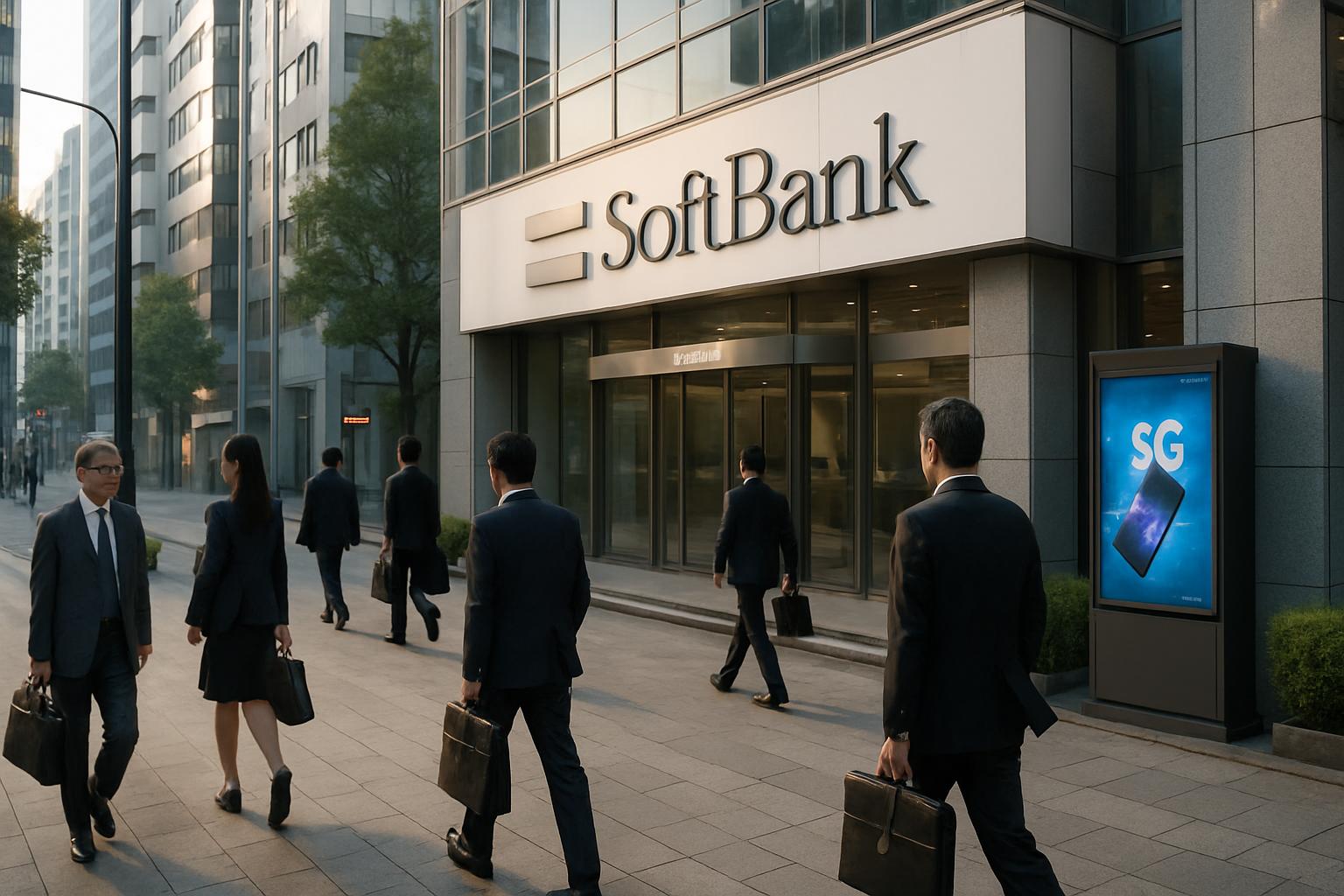
SoftBank already holds roughly 11 percent of OpenAI after December’s $22.5 billion close. Moreover, the Japanese group participated earlier with a $7.5 billion first round in April 2025. These tranches brought cumulative SoftBank investment commitments to $41 billion before the latest talks. Consequently, a fresh injection would lift exposure well beyond historic Vision Fund ticket sizes. The magnitude alone positions the deal among the largest single-party private financings ever attempted.
Revenue And Compute Growth
OpenAI CFO Sarah Friar reported revenue exceeding $20 billion during 2025. Furthermore, she highlighted a 1.9 gigawatt compute footprint, triple the prior year. Such data center scale demands enormous capital, reinforcing the chase for additional OpenAI funding. Therefore, management frames hardware expansion as directly correlated with top-line acceleration.
Analysts note that every 100 megawatts of incremental power can boost inference capacity significantly. However, rising energy costs and supply-chain lead times make pre-payment essential. Consequently, primary cash proceeds from any SoftBank investment would likely finance long-lead infrastructure. OpenAI also uses convertible notes to bridge valuation gaps while preserving governance flexibility. Nevertheless, those structures increase future dilution if valuations plateau.
OpenAI’s growth narrative leans heavily on tangible hardware metrics. Meanwhile, the quest for rapid capacity underscores why headline fundraising figures keep rising. Such scale economics, however, strain SoftBank’s own balance sheet.
SoftBank Balance Sheet
SoftBank ended September 2025 with ¥5.2 trillion in cash and equivalents. Additionally, the group maintains substantial stakes in Arm, T-Mobile, and listed tech positions. However, S&P warns that outsized AI bets could weaken credit ratios below investment-grade thresholds. Therefore, lenders will scrutinize any incremental SoftBank investment for leverage implications.
Debt maturities average ¥900 billion annually through 2029, according to company filings. Consequently, analysts expect partial syndication to sovereign wealth partners, limiting net cash outflow. In contrast, management may also recycle Vision Fund realizations to fund the check. Moreover, dollar-yen volatility complicates capital deployment and hedging costs.
Credit Risk Signals Mount
Rating agencies already flag concentration risk in unlisted AI ventures. Meanwhile, SoftBank’s equity portfolio remains sensitive to broad market swings. Masayoshi Son argues that asymmetric returns justify the exposure. Nevertheless, investors recall prior markdowns during Vision Fund One’s downturn.
Credit metrics hinge on asset sales, syndication, and timing. Therefore, transparency around funding mechanics will shape market confidence. Valuation dynamics add another layer of complexity.
Valuation Tensions Rise
Private trades last summer implied OpenAI valuations near $260 billion. Subsequently, some secondary blocks cleared above $500 billion post-money. Such dispersion hampers price discovery for fresh OpenAI funding. Consequently, negotiating a fair entry point for a giant SoftBank investment proves challenging.
Bloomberg has cited scenarios valuing the company at $750 billion with the full $100 billion raise. However, OpenAI’s ARR metric can fluctuate with enterprise consumption patterns. Moreover, margin disclosure remains limited outside selective investor briefings. In contrast, Microsoft’s 2023 stake conversion set an earlier benchmark still referenced by observers.
SoftBank leadership maintains that outsized returns justify paying a premium. Masayoshi Son recently stated that artificial general intelligence will "redefine every industry inside a decade". Therefore, another SoftBank investment would extend his thesis despite valuation volatility. Nevertheless, mutual exclusivity clauses or board seat negotiations could slow closing.
Disparate datapoints widen modeling error bars for prospective investors. Nevertheless, transparent revenue audits could narrow the spread over time. Strategic motivations may, ultimately, override pure valuation math.
Strategic Implications Ahead
Masayoshi Son envisions an interconnected platform linking chips, data centers, and foundation models. Therefore, deeper alignment with OpenAI supports SoftBank’s Stargate and Arm-centric roadmaps. Additionally, Microsoft, Nvidia, and Oracle could co-invest to secure capacity allocations. Such consortium dynamics might ease headline balance-sheet pressure.
From OpenAI’s vantage, a single-party SoftBank investment offers speed and reduced execution risk. However, concentrated ownership may attract regulatory scrutiny in key jurisdictions. Meanwhile, employees eyeing liquidity events could benefit if secondary blocks accompany primary capital.
Investor Takeaways Summary Points
- Reported SoftBank investment under discussion: up to $30 billion.
- Aggregate SoftBank stake after December 2025: approximately 11 percent.
- OpenAI annualized revenue 2025: more than $20 billion.
- Compute capacity disclosed: 1.9 gigawatts.
- Potential total OpenAI funding target: as high as $100 billion.
Consequently, deal outcome will influence wider late-stage venture sentiment. Professionals can enhance their expertise with the AI Prompt Engineer™ certification. Such knowledge helps financial analysts interrogate model architectures and capital intensity. Moreover, technical literacy reduces information asymmetry during due diligence.
Strategic alignment shapes ecosystem power structures beyond immediate headline numbers. Therefore, stakeholders must weigh synergy potential against concentration and governance risks. The final section distills critical insights for decision makers.
Rapid capital deployment defines this decade’s AI rivalry. However, the contemplated SoftBank investment could reset private market scale records again. OpenAI funding ambitions approach sovereign wealth proportions, underscoring compute’s capital hunger. Masayoshi Son appears willing to shoulder unprecedented exposure to realize his AGI vision. Nevertheless, valuation opacity and credit constraints raise execution risks. Consequently, rigorous scenario modeling and OpenAI funding sensitivity analysis remain essential for investors and operators alike. Another SoftBank investment may still close, yet final terms will determine whether benefits outweigh leverage pressure. Readers seeking deeper analytical skills should explore the linked certification and stay alert for regulatory filings.


